By Ananya Rao | Retail & Consumer Markets Correspondent
In 1996, when Walmart opened its first Chinese outlet in Shenzhen, shoppers still rose before dawn to pick the freshest produce at neighbourhood wet markets. Large-scale hypermarts barely existed. China would not join the World Trade Organization for another five years.
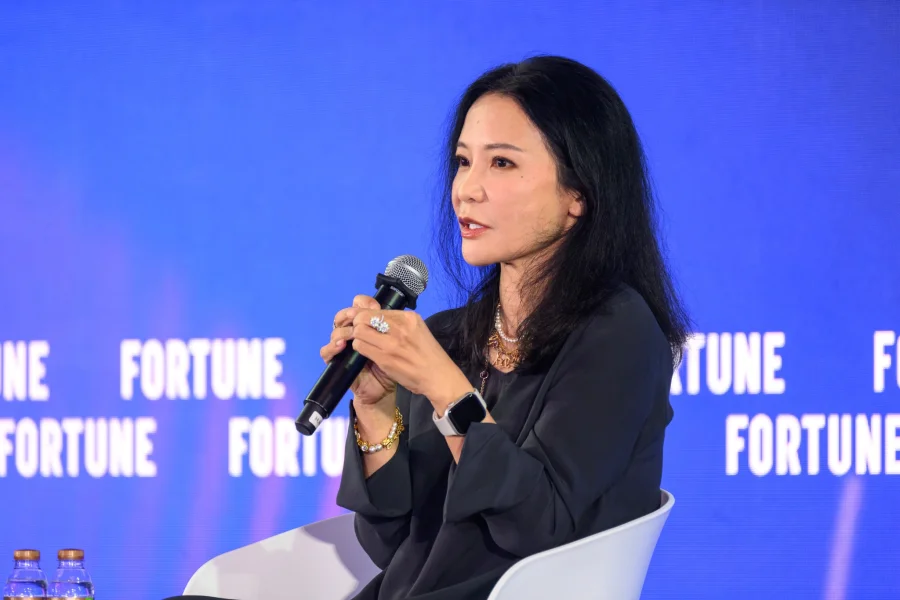
Three decades on, that early entry looks less like expansion and more like an apprenticeship. And Christina Zhu, who heads Walmart's China business, has compressed the lesson into one line: "My boss is the Chinese customer."
A Shenzhen Store That Arrived Before China's Middle Class Did
Walmart's 1996 debut came into a retail landscape that looked nothing like today's. There were no dominant hypermart chains. Fresh food was bought daily, locally and early, at wet markets.
The company was, in effect, betting on consumers who had not yet arrived. That bet only made sense once China's middle class began to expand — and it is that expansion, alongside the country's deep manufacturing base, that built one of the world's most dynamic consumer markets.
Why a 20.7% Jump in China Is Harder Than It Sounds
The interview notes that Walmart's China business grew 20.7% in the most recent quarter cited. In most markets, that is a strong number. In China, it is closer to a survival signal.
Growth of that scale suggests a retailer has managed to stay in step with shoppers in a market where tastes, formats and pricing move quickly. The report does not break down which categories or channels drove the increase.
How Relentless Competition Separates Survivors From Casualties
China's domestic competition has been described as a double-edged sword. Companies that cannot adapt fast enough are stamped out. The ones that survive become hyper-efficient, agile and globally competitive.
That is the paradox Walmart has been operating inside for 30 years: the same pressure that kills weaker players is what forces the survivors to get sharper.
For Shoppers, Suppliers and Staff, the Stakes Are Everyday
For Chinese households, a foreign retailer's adaptation is not an abstract boardroom exercise. It shows up in shelf prices, product mix, store formats and how quickly a chain reacts to changing buying habits.
For local suppliers and employees, it shapes contracts, volumes and job security. When a large chain adjusts its model, the effect travels through a long chain of small businesses.
What Walmart's China Leadership Is Actually Saying
Zhu's framing places authority with the customer rather than with the head office. In the interview, she put it directly: "My boss is the Chinese customer."
The report positions Walmart as a Fortune 500 company that is thriving in a tough retail market. No separate corporate statement expanding on the growth figure was included in the source material.
The Quote Is a Strategy, Not a Slogan
Read closely, "my boss is the Chinese customer" describes a governance choice. It implies decisions are made close to the market, by teams who live with the consequences, rather than ratified thousands of kilometres away.
In a market where competitors can copy a format within months, speed of decision-making is often the difference between relevance and retreat. That is the substance behind the soundbite.
Confirmed Facts vs What Remains Unclear
Confirmed: Walmart opened its first Chinese outlet in Shenzhen in 1996, five years before China joined the WTO; hypermarts were not widespread at the time and shoppers relied on wet markets; China's rising middle class and manufacturing strength created one of the world's most competitive consumer markets; Walmart's China business grew 20.7% in the most recent quarter cited; Christina Zhu is Walmart's China CEO and made the quoted remark.
Unclear or not established by the source: the exact quarter being referenced, whether the 20.7% is comparable-store or total growth, which formats and channels contributed, current store counts, profitability, and how much of the momentum is structural versus cyclical. Any claim beyond the above would be speculation, not reporting.
The Moat: Why Walmart China Is Difficult to Copy Quickly
Three things stand out. First, time — 30 years of operating history and supplier relationships that a new entrant cannot buy overnight. Second, scale in procurement, which supports pricing power in a market obsessed with value. Third, and most underrated, institutional habit: a business that has survived Chinese competition tends to be faster and leaner than peers who have not been tested the same way.
Walmart operates both supercentres and membership warehouse clubs in China, and the membership format has been a visible part of its competitive identity there. That mix gives it multiple ways to reach different income groups as they shift.
Risks and the Balanced View
The 20.7% figure is one data point, not a trend line. China's retail market is defined by aggressive price competition, fast-moving domestic rivals and consumers who switch channels easily.
Foreign retailers have lost ground in China before, often after mistaking early success for a durable advantage. A single strong quarter does not settle questions about long-term margin pressure, the durability of local autonomy inside a global company, or how much of the growth depends on macroeconomic conditions outside Walmart's control.
The Wider Pattern: China as a Training Ground for Global Retail
China has become a stress test for retailers worldwide. Those that adapted often exported sharper operating models elsewhere; those that did not, exited.
Walmart's China story fits a broader pattern in which surviving local competition is itself a competitive asset — an efficiency built under pressure that is hard to replicate in gentler markets.
What Shoppers, Investors and Employees Should Watch
For shoppers, the practical question is whether competition keeps prices and product variety improving. For investors, the watch items are consistency across quarters and any disclosure on margins. For employees and suppliers, the signal to track is whether local decision-making continues to be emphasised in how the business is run.
Treat a single quarter's growth as a clue, not a conclusion.
What Could Come Next for Walmart China
If the adaptation strategy holds, the near-term path is likely to involve deeper localisation of formats, supply chains and digital channels rather than a single headline move. If competition intensifies further, the pressure will show up in pricing and in how aggressively the company experiments.
Both scenarios remain open. The source material does not indicate any specific upcoming announcement.
Our Take
The most interesting thing here is not the growth number. It is the framing. A CEO of a Fortune 500 subsidiary describing the customer as her boss is a quiet admission that headquarters does not hold the answers in China — the market does.
That is a harder position to hold than it sounds, because it means ceding control in exchange for speed. Walmart's 30-year presence in China gives it something newer entrants lack: scar tissue from a market that punishes hesitation. The 20.7% figure cited in the report is encouraging, but the more durable asset may be the operating instinct built while earning it.
Frequently Asked Questions
Who is Christina Zhu?
Christina Zhu is the CEO of Walmart's China business. In the interview, she described her guiding principle with the line "My boss is the Chinese customer."
How much did Walmart's China business grow?
The report states that Walmart's China business grew 20.7% in the most recent quarter cited. The source does not specify the exact quarter or the breakdown by format or channel.
When did Walmart enter China?
Walmart opened its first Chinese outlet in Shenzhen in 1996, five years before China joined the World Trade Organization. At that time, large-scale hypermarts were rare and shoppers largely depended on local wet markets.
Why is China's retail market considered so difficult?
China's rising middle class and deep manufacturing capabilities created one of the world's most dynamic consumer markets. Competition is relentless: companies that cannot adapt quickly are eliminated, while survivors become unusually efficient and agile.