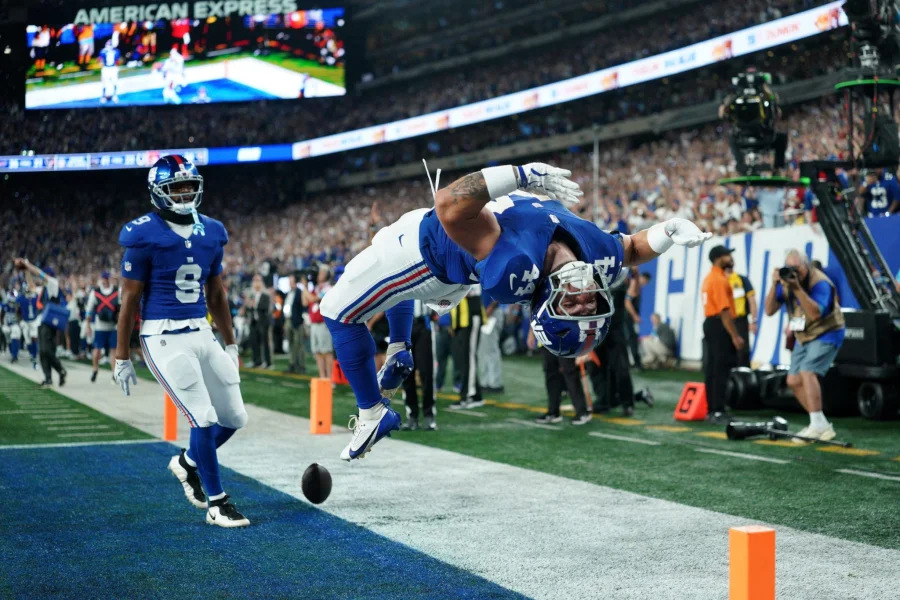
The touchdown was never the expensive part. Reaching it is.
Opening week of the NFL season delivered the highest-scoring Sunday in week one the league has ever produced — a reminder of why football remains America's most-watched sport. But a fan trying to watch all of it from home needed more than one subscription, more than one app and more than one login. A fan who wanted to be there in person needed something more basic: a bigger budget.
According to the figures behind this story, the cost of watching the NFL has risen 28.6% since 2015. The cost of attending a game has climbed 72% over the same period. Fewer games, more money. Sports has learned shrinkflation.
The 28.6% figure, and what it actually hides
The rise in the cost of watching football isn't one price hike. It's the sum of many small ones — the monthly subscription, the out-of-market package, the tier that carries the Thursday night game, the add-on that unlocks the playoff window. Individually, each looks defensible. Stacked together, they produce a 28.6% climb.
That is what makes it easy to miss. Fans rarely place a 2015 bill beside a 2025 one. The increase arrives quietly, one renewal at a time.
Seventy-two percent more to sit in the cold
Attending a game has always been the premium tier of fandom. Since 2015, the cost of doing it has risen 72% — far faster than the price of watching from a sofa.
The ticket is rarely the whole bill. Parking, concessions, service fees and, for most fans, travel and a night in a hotel sit on top of it. For a family of four, one Sunday can now rival the cost of a short holiday.
How Sunday Ticket became the clearest case study
NFL Sunday Ticket has carried out-of-market Sunday afternoon games since 1994 — three decades of letting fans watch what their local station refused to air.
The complaint now is structural. The package is being asked to deliver a smaller share of games even as its price climbs. That is the textbook definition of shrinkflation: the bag looks the same, the contents shrink, the bill grows.
Three kinds of NFL fans, three very different bills
The cord-cutting fan pays for one streaming service, then another, and still misses games. The travelling fan pays the 72%. The casual fan watches whatever is free and increasingly feels locked out of the sport's biggest moments.
The gap between those three groups is where the league's long-term risk actually sits. Loyalty is being priced, and the price is no longer uniform.
No official NFL statement — and why that silence matters
No verified, on-record NFL response to these specific figures was found in the material reviewed for this story. That absence proves nothing on its own, but it does mean the current debate is being shaped by fan data, price comparisons and media analysts rather than by the league's own account of how its packages are built.
Until that explanation arrives, the numbers stand uncontested rather than confirmed.
Why live sport became the most expensive content on television
Rights fees explain most of it. Live sport is the rare thing viewers still watch as it happens — which makes it the rare thing advertisers and streamers will overpay for.
As media companies split into rival platforms, the games split with them. Fragmentation isn't a glitch of the streaming era. For the companies holding the rights, it is the business model.
Confirmed facts vs what remains genuinely unclear
Confirmed: the 28.6% and 72% increases as reported; Sunday Ticket's existence as an out-of-market package since 1994; the record week one scoring; five consecutive years of US inflation above 2%.
Unclear: how the increases were calculated, which packages were counted, whether the figures are inflation-adjusted, and how much of the attendance rise is face-value ticket pricing versus fees and travel. Treat these numbers as directional, not audited.
The NFL's real advantage: scarcity it controls
The league's moat isn't merely popularity. It's scarcity it can manufacture. A seventeen- or eighteen-game season, most of it packed into three-hour Sunday windows, gives every fixture a weight that a 162-game season cannot replicate.
Add national broadcasts, fantasy leagues, legal sports betting and a short, high-stakes playoff bracket, and you get a product that can be sliced, bundled and resold almost indefinitely. That is the leverage behind the pricing — and the reason fans have so little counterweight.
The risk: a generation that learns to live without kickoff
Shrinkflation only works while customers fail to notice. Football has an advantage most industries don't: emotion. It also has a vulnerability most industries share — habit, once broken, rarely returns.
Already, younger viewers consume the sport through clips rather than kickoffs. Add piracy, blackout frustration and empty upper decks at mid-season games, and the 72% number starts to look less like pricing power and more like a ceiling being tested.
This was never only a football problem
Streaming platforms, airlines, hotels, concert ticketing, cricket and basketball have all followed the same curve — more money, less included. Sport simply makes the pattern visible because the bill is emotional as well as financial.
What fans can realistically do about it
Compare the total cost of a season, not the monthly line. Check how many games each package genuinely includes before renewing. Split family plans where the terms allow it. Book travel early, cancel subscriptions in the off-season, and lean on free national windows.
None of it reverses the trend. All of it slows the bleed.
What happens next
The next media-rights and packaging cycle will decide whether games are carved into more tiers or sold back in bigger bundles. Tiered pricing, exclusive windows and more paywalled games are the likeliest paths — though that is projection, not confirmed plan.
Our Take
The NFL has a legitimate argument: live sport is expensive to produce, and the market keeps paying. But a 28.6% rise to watch and a 72% rise to attend, against packages that deliver fewer games, is a bargain being renegotiated without fans at the table.
Shrinkflation is rarely fatal on its own. It works by eroding the sense that you're getting what you paid for. For a league built on habit, ritual and Sunday tradition, that erosion — not piracy, not ratings — is the number worth watching.
Frequently Asked Questions
What does shrinkflation mean in sports?
It means paying more while receiving less — fewer games inside an individual package, more subscriptions needed to see the same weekend of football, and higher prices for the same seats.
How much more does it cost to watch the NFL now?
According to the figures in this story, watching costs 28.6% more than in 2015, while attending a game in person costs 72% more. The analysis does not publicly break down its methodology.
Are NFL games getting cheaper any time soon?
There is no verified indication of that. Rising rights fees and fragmented streaming platforms point toward more tiers, not lower prices.
Can I still follow the NFL without paying for Sunday Ticket?
Yes — free national windows, local broadcasts and single-game options cover a large part of the season. The catch is that the biggest games are increasingly the ones behind a paywall.