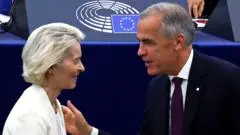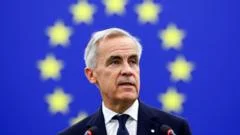
Ottawa has said yes to an idea Brussels has only just floated. Canadian Prime Minister Mark Carney welcomed an EU proposal that would make Canada an "associate member" of the bloc, describing a closer Canada-EU alliance as a "beacon for other democracies".
That phrase matters more than the label. It frames the arrangement not as a trade upgrade but as a statement about who stands with whom — and it arrived before anyone has published a single clause of what associate membership would actually mean.
Why the Word "Associate" Is Doing All the Work
The European Union has no formal category called "associate member". Its treaties describe full membership for European states, association agreements with third countries, and special arrangements for overseas territories. Canada fits none of those boxes neatly.
So the term is best read as political shorthand — a way of describing closeness that stops deliberately short of membership. The legal machinery to match the rhetoric would have to be built, and that is where the story becomes complicated.
What Canada Stands to Gain — and Give Up
For Canadian exporters, the appeal is continuity. Canada and the EU already operate under CETA, the trade pact provisionally applied since 2017, and a strategic partnership agreement. Anything labelled "associate" would sit on top of that architecture, not replace it.
For Ottawa, the deeper value is strategic: a formalised link to a 27-nation bloc at a moment when trade routes are being redrawn by tariffs and industrial policy. For Brussels, Canada offers a like-minded partner and a template it could theoretically copy elsewhere.
How the Idea Reached This Point
Canada-EU relations have deepened steadily for a decade, but mostly on economics. What changed is the wider environment — supply-chain shocks, tariff battles and a hardening divide between democratic and non-democratic trading blocs.
In that setting, "associate membership" reads less like a bureaucratic invention and more like an attempt to give a political alliance a legal home. The headline is the welcome. The substance is still unwritten.
Who This Actually Touches on the Ground
If talks ever formalise, the effects would land on specific people: Canadian manufacturers shipping into European markets, students and skilled workers moving between the two, defence firms eyeing joint procurement, and European investors holding Canadian assets.
None of that is settled. Anyone planning around this should treat it as a signal of direction, not a rule that exists today.
Where the Confirmation Stands
The welcome came from the Canadian side. What has not been publicly established is the origin of the proposal inside the EU, the level at which it was raised, and whether it reflects a formal position or a broader political discussion.
Until that is clarified, the accurate description is this: a senior G7 leader has endorsed an idea. Not a deal. Not a draft. Not a timetable.
Confirmed Facts vs What Remains Unclear
Confirmed: Carney welcomed the proposal, and used the phrase "beacon for other democracies" to describe a Canada-EU alliance.
Unclear: Who advanced the proposal within the EU, its precise legal basis, whether it covers defence and mobility or trade alone, how ratification would work across 27 member states, and what timeline — if any — exists. Any of these details circulating without official confirmation should be treated as speculation.
The Risks Nobody Is Advertising
There are real costs to going first. Deepening ties with Brussels can complicate relations with Washington at a moment when Canada's largest trading relationship is already under strain. Domestically, "associate membership" invites the sovereignty question — how much rule-taking comes with the label.
There is also the CETA lesson. That agreement has been provisionally applied for years while full ratification remains incomplete in several member states, a reminder that EU deals can stall for a decade after the handshake. A novel category would face even more scrutiny.
A Pattern Worth Watching Beyond Canada
This fits a broader shift: middle powers and blocs are experimenting with arrangements that bind them closer without demanding full integration. It is happening in trade, in critical minerals, in defence procurement and in technology standards.
The interesting test is whether "associate member" becomes a one-off courtesy for Canada or a reusable instrument the EU offers to other democracies. That answer will shape global alignment for years.
What Readers Should Do With This
Businesses with cross-border exposure should not reprice contracts on this news. Students, job seekers and investors should wait for official texts before factoring it into plans.
What is reasonable now is to follow the two primary channels — the Prime Minister's Office in Ottawa and the European Commission in Brussels — for the first formal document. That document, not the quote, will tell you what changes.
Future Outlook
The likely next step is clarification rather than negotiation: official statements defining what "associate membership" could cover, followed by a decision on whether to open talks. A formal negotiating mandate, if it comes, would take months; ratification would take far longer.
It is equally possible the idea remains a political flourish — a durable talking point that never acquires legal form. Both outcomes are live.
Our Take
The significance here is not the noun. It is the willingness of a G7 leader to endorse a category the EU has never formally used, and to frame it in the language of democratic solidarity rather than tariff schedules.
That is a meaningful signal about how alliances are being reimagined — but signals are not agreements. The story deserves attention precisely because it is unfinished, and because the gap between the rhetoric and the paperwork is where the real consequences will be decided.
Frequently Asked Questions
Is Canada becoming an EU member?
No. EU membership is open to European states under the bloc's treaties, and Canada is not a European country. "Associate member" is a political description of closer partnership, not a membership status that currently exists in EU law.
What did Mark Carney actually say?
Canada's Prime Minister welcomed an EU proposal for Canada to become an "associate member", and said a Canada-EU alliance would create a "beacon for other democracies".
When will this take effect?
There is no timeline. No proposal text, negotiation mandate or ratification schedule has been published, so any effective date would be speculation.
How is this different from CETA?
CETA is the existing EU-Canada trade agreement, provisionally applied since 2017. An associate membership arrangement would be broader and more political, potentially covering cooperation beyond trade — but its scope has not been defined.