By Staff Correspondent | Technology & Labour Desk
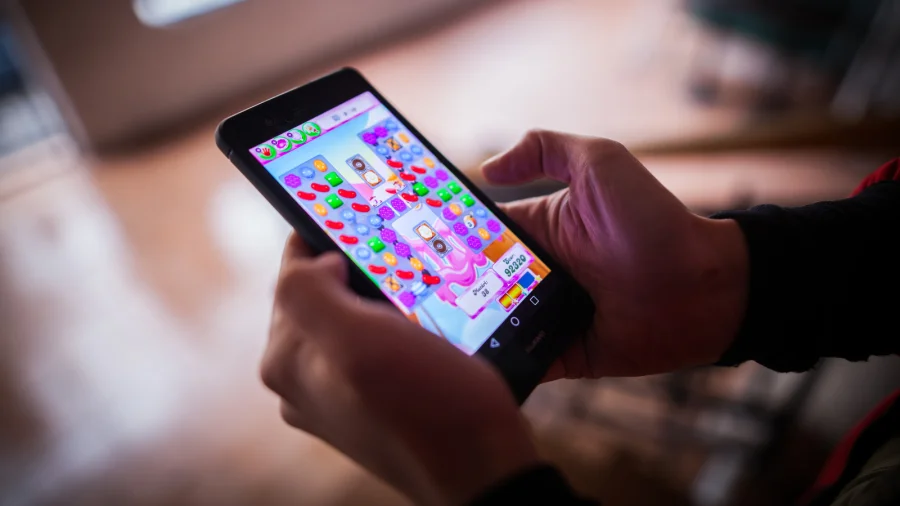
For years, the teams that build Candy Crush have sat across the table from management — negotiating, pausing, and starting again. Next week, they plan to stop working instead. Staff at King, the studio behind the game, are preparing to walk out, and the stated goal is not just a deal. It is to force a conversation that has gone nowhere for years back onto the table.
That single detail tells you most of what matters here. A strike is rarely the first move. It is what people reach for when the process itself has stopped producing anything.
The Walkout That Has Been Years in the Making
According to the details available, King staff are planning to strike next week. The aim, as framed by the story, is to get negotiations back on track after years of bargaining that has not delivered a resolution.
What we do not yet know is the shape of the action: how many employees will take part, whether it runs for a day or longer, which offices are involved, and whether it has been formally backed by a recognised union. Those are not small gaps. In industrial disputes, scale is everything — a walkout of dozens and a walkout of hundreds produce very different stories.
What the timing does suggest is that the patience inside King has run out faster than the process has moved.
Why a Walkout at King Carries Extra Weight
Candy Crush is not a game that ships once and stops. It is a live service — a product that expects something new almost constantly: fresh levels, seasonal events, balance changes, offers, support queues, moderation, and a stream of data work to keep players engaged.
That model does not run on a single creative team. It runs on engineers, designers, live-operations staff, analysts, community and support teams, quality assurance testers and localisation specialists. When they stop, the machine does not stop immediately — but it slows, and the backlog starts building.
It is also a game with an unusually broad audience: commuters, teenagers, parents, grandparents, people who have played for a decade. A labour dispute at a studio like this does not stay inside the games industry for long.
How Talks Slowed to a Standstill
The public record on this specific dispute is thin, and that matters for how the story should be read. What is described is a long bargaining process that has not produced an outcome — not a single dramatic breakdown, but a slow erosion of progress.
That pattern is familiar across the industry. Talks begin with goodwill, stretch across months, get overtaken by restructuring, leadership changes or corporate acquisitions, and eventually the two sides stop agreeing on what they are even negotiating about.
King's own corporate history adds a layer. The studio was acquired by Activision Blizzard in 2016, and then became part of Microsoft when that much larger deal closed in 2023. Each change of ownership resets assumptions — about budgets, about job security, about who actually has the authority to sign anything.
Who Is Affected — and Who Probably Isn't, Immediately
For players, the honest answer is: probably less than the headlines suggest, at least at first. Live-service games are built with buffers. Content is scheduled weeks or months ahead, and short stoppages are often absorbed quietly.
Where the strain shows up is further down the line — delayed events, slower bug fixes, longer support response times, and staff who return to a queue that grew while they were out.
The people most directly affected are King's own employees. Strike action usually means lost pay, and in many jurisdictions it means legal protections attach only if strict procedural rules have been followed. Contractors and agency staff — a significant slice of games production — often have the least protection and the least visibility.
Where King and Microsoft Have Said Nothing — So Far
No public statement from King or Microsoft confirming or responding to the planned strike has been verified in the material available. That absence should not be read as either confirmation or denial. Companies frequently stay silent until an action is formally notified.
Microsoft is, in principle, an unusual employer in this context. During the regulatory review of its Activision Blizzard acquisition, the company signed a labour neutrality agreement with the Communications Workers of America — a commitment that made it easier for studios in the US to organise. That history will shape how any dispute at King is perceived, whatever the specifics turn out to be.
If this is a UK-based dispute, the legal scaffolding matters too. Industrial action there requires a formal ballot, a majority in favour, and a turnout of at least 50% of eligible voters, with a mandate that expires after a set period. If those steps have not been taken, what is planned may be something other than a legally protected strike — and that distinction will determine how much leverage staff actually hold.
What a Strike by Live-Ops Workers Actually Reveals
The most revealing thing about a dispute at a studio like King is not the wage figure, whatever it turns out to be. It is the collision between a business model built on constant output and a workforce that is finite.
Live-service games are designed to feel endless. Behind that feeling is shift work, on-call rotas, seasonal crunch and a pipeline that never really closes. The industry has spent a decade promising players that something is always happening — and a decade discovering what that promise costs the people delivering it.
When staff at a profitable, long-established