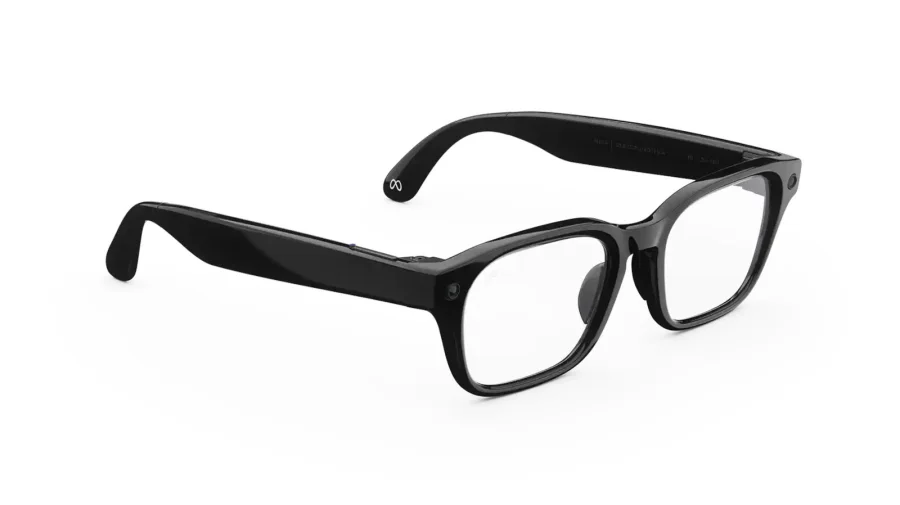
The next pair of glasses Meta ships may not be able to see anything at all. According to a report from The Information, the company is preparing to launch new smart glasses without a camera — dropping the one component that turned its eyewear from a fashion accessory into a recording device.
If the report holds, it is a striking move for a company that has spent years selling the idea that a camera on your face is a feature. It also raises an obvious question Meta has never had to answer: what exactly is left?
What The Information Report Actually Claims
The report states that Meta is gearing up to launch new smart glasses without a camera. That is the extent of the verifiable claim. There is no confirmed product name, no price, no launch window and no technical specification attached to it.
Meta has not publicly confirmed the plan. The company has a long-standing practice of declining to discuss unreleased hardware, so silence here should not be read as either confirmation or denial.
Strip Out the Camera, and the Product Changes Character
Meta's existing smart glasses, developed with eyewear giant EssilorLuxottica, lean heavily on two things: the camera and the AI assistant. The camera lets wearers capture a moment hands-free and lets the assistant answer questions about what it is looking at.
Remove it and the frames would most likely fall back on audio, voice interaction and possibly on-screen notifications. It is not clear from the report whether the camera-free pair would carry a display, speakers, or only an AI assistant.
Why Meta Is Grappling With the Camera Problem
The camera has trailed Meta's eyewear since its earliest Ray-Ban Stories. Privacy advocates have argued that recording people without their knowledge sits in a grey zone, even where a small indicator light is present.
That discomfort has practical consequences. Wearables with cameras invite arguments at gyms, offices, schools and restaurants — places where the person being filmed, not the person filming, bears the risk.
Who Actually Feels the Difference
For a wearer, a camera-free pair means no photos, no video, and no visual AI queries about a menu, a sign or a face. The glasses become an assistant you talk to rather than a device that watches for you.
For everyone else in the room, the change is quieter but larger: a person wearing these frames would no longer be a potential recording device. That single difference could decide whether such glasses are allowed indoors at all.
What Meta Has Said — and What It Hasn't
At the time of writing, Meta has not issued a statement on the report, and no executive has addressed it publicly. Every product detail currently circulating comes from the reported information, not from the company.
That distinction matters. Reporting based on unnamed sources is a strong signal of internal direction, but it is not the same as an announced product — plans can change, and products can be delayed or cancelled before launch.
Confirmed Facts vs What Remains Unclear
Confirmed: a report by The Information states Meta is preparing camera-free smart glasses.
Unclear: the product name, price, launch date, markets, whether it includes a display, whether it uses the Ray-Ban or Oakley brand, and whether it launches alongside or instead of camera-equipped models. Any claim beyond the report is speculation and should be treated as such.
Meta's Real Advantage Isn't the Chip — It's the Frame
Meta's edge in this category is easy to overlook. It does not simply build electronics; it partnered with the company that owns some of the world's most recognised eyewear brands and controls a vast retail network in opticians and stores.
Add Meta's AI assistant and its distribution across billions of accounts, and the glasses arrive with an audience, a brand and a shelf. That combination is hard for a new entrant to copy, which is why Meta can afford to test uncomfortable products in public.
The Risk in Removing the Best Feature
A camera-free pair solves a social problem but creates a commercial one. The camera is the glasses' most demonstrable capability — the thing that justifies a premium price in a shop.
Without it, Meta must convince buyers that voice, audio and AI alone are worth wearing on their face. Competitors may keep their cameras, leaving Meta with the safest product and the weakest demo.
A Category Quietly Splitting in Two
Smart glasses appear to be dividing into two lanes: camera-first devices built for capture, and camera-free devices built for audio and AI. The split mirrors an older debate in technology, where convenience and privacy have repeatedly collided.
If Meta ships both, it would be effectively letting customers choose which version of the future they want to wear — and letting the market settle an argument the company has never fully won.
What Readers Should Do Right Now
Nothing urgent. There is no product to buy, no pre-order and no confirmed availability, including in India.
If you are considering smart glasses today, buy based on what exists on the shelf, not on an unconfirmed report. If your concern is being recorded in public, remember that the rules on filming in shared spaces come from venue policies and local law, not from the glasses themselves.
What Happens Next
The clearest signals will come from Meta's own hardware announcements, retail listings and regulatory filings. Until then, treat any specific price or date circulating online with caution.
Our Take
This is not a small product tweak. Meta has spent years defending the camera on its glasses against privacy criticism, and a camera-free model would be an acknowledgement that the objection was never fully answered.
The interesting question is not whether the glasses can work without a camera — audio-first frames already do. It is whether Meta can build a wearable that people are comfortable standing next to, and still want to pay for.
Frequently Asked Questions
Are Meta's camera-free smart glasses officially confirmed?
No. The claim comes from a report by The Information. Meta has not publicly confirmed the product, and no launch details have been announced.
Why would Meta make smart glasses without a camera?
The most likely reason is privacy. Camera-equipped glasses have drawn concerns about recording people without consent, and a camera-free version would remove that objection while keeping audio and AI features.
Will Meta stop selling its camera-equipped Ray-Ban glasses?
There is no indication of that. It is equally possible the camera-free pair is an addition to the lineup rather than a replacement, though the report does not clarify this.
Should I wait to buy smart glasses because of this?
Only if your main concern is privacy. Otherwise, buying decisions are better made on products that are actually available, since the reported glasses have no confirmed date, price or specification.