By The AI & Technology Desk
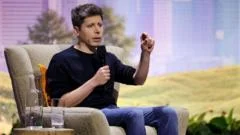
The most powerful man in artificial intelligence has now said, out loud, what critics have been saying for two years: you are right to be afraid. Then he asked you to trust the people who make it.
That sentence, from OpenAI chief Sam Altman, is doing two jobs at once. It acknowledges the fear. It also asks for custody of it.
What Altman Actually Said — And What It Concedes
According to the story as reported, Altman told audiences that the world is "right to be afraid" of AI, while arguing that people should place their trust in the companies building it.
That is not a denial of AI existential risk. It is an admission that the risk is real enough to justify public fear — a significant concession from the head of the company that made large language models a mainstream technology.
Why Fear From Inside the Building Hits Harder
When researchers or campaigners warn about AI, they are assumed to have an agenda. When the industry's own leadership says the same thing, the warning carries a different weight — and a different problem.
It creates a strange loop: the people asking you to trust them are also the people telling you the thing they build could go badly wrong.
How the Safety Debate Reached This Point
The AI safety conversation has moved in stages — first dismissed as science fiction, then treated as a niche academic concern, then pulled into the mainstream as chatbots reached hundreds of millions of users.
Each stage added a new argument: about jobs, about misinformation, about bias in automated decisions, and about the longer-term question of systems that could act beyond human oversight. The reported comments sit at the far end of that progression.
Who Pays the Price When Trust Runs Thin
Public doubt is not abstract. It shapes whether a teacher uses an AI tool in a classroom, whether a small business hands over customer data, whether a patient accepts a diagnosis assisted by software.
For ordinary users — in India and elsewhere — the practical question is rarely philosophical. It is: can I verify this, can I reverse it, and who is accountable if it is wrong?
The Industry's Defence: Incentives, Not Just Intentions
Altman and other tech CEOs have pointed to the incentives that shape AI development — arguing that the pressures inside the sector influence how fast advancements move, and that these forces are not always visible from the outside.
Read charitably, that is an argument for transparency: the public cannot judge what it cannot see. Read less charitably, it is an argument for patience — trust us, because the alternative is chaos.
Reading Between the Lines of a Trust Request
Trust, in any industry, is normally earned through third-party audits, published safety results, independent testing, and consequences when things fail. It is rarely granted on the strength of a warning.
That gap — between asking for trust and submitting to verification — is where most of the scepticism now sits.
Confirmed Facts vs What Remains Unclear in Altman's Remarks
Confirmed: Altman has publicly framed public fear of AI as justified, and has argued that trust should be extended to AI companies. He and other technology leaders have publicly discussed the incentives that shape how AI advances.
Unclear: the specific setting, full transcript and follow-up commitments attached to the comments. Also unclear is whether any new safety measure, disclosure practice or regulatory position accompanies them. Anything beyond that — political motives, internal disagreements, or future product decisions — remains speculation and should be treated as such.
Why OpenAI Is Hard to Ignore — And Hard to Replace
OpenAI's position is not built on a single product. It rests on a combination: early brand recognition, a very large user base feeding usage data, deep integration through developer tools and APIs, partnerships with major technology platforms, and a research talent pipeline that competitors struggle to replicate quickly.
In plain terms: the more people use it, the more developers build on it, the more useful it becomes — and the harder it is for a rival to dislodge. That is the moat. It is also exactly why the trust question matters more here than anywhere else.
The Case Against Simply Trusting AI Companies
The counter-argument is straightforward and difficult to dismiss. History offers few examples of industries that voluntarily restrained themselves in the absence of rules, disclosure requirements or liability.
Critics also note a structural conflict: a company's commercial interest is to ship faster and broader, while safety work is often slower, quieter and harder to monetise. Warnings from inside the industry do not resolve that conflict — they describe it.
A fair reading sits somewhere in the middle. These companies do employ serious safety researchers, and some risks are genuinely hard to predict. But "hard to predict" is not the same as "trust us anyway."
This Is a Pattern, Not a One-Off Comment
Across the technology sector, leaders have increasingly adopted a dual register: alarm in public, assurance about their own stewardship. The approach has become a de facto industry posture as governments draft AI rules and public attention sharpens.
What is changing is the audience. Users are no longer simply impressed by what AI can do — they are asking what it is doing with their data, their work and their decisions.
What Students, Workers and Everyday Users Should Do Now
Nothing in these remarks changes how you should use AI tools today — but they are a reasonable prompt to use them differently.
Verify outputs before acting on them. Avoid feeding sensitive personal, financial or medical data into systems you cannot audit. Treat AI answers as drafts, not verdicts. And follow regulatory developments in your own country, because rules will determine what companies must disclose.
What Could Happen Next
The likeliest next step is not a dramatic reversal but a slow squeeze: more regulatory scrutiny, more demands for safety documentation, and more pressure on AI firms to submit to outside testing.
Whether Altman's appeal for trust is met with more openness — or more scepticism — will depend less on interviews and more on what companies publish when nobody is asking.
Our Take
Acknowledging public fear is the easy half. The harder half is accepting that fear as legitimate enough to require proof, not reassurance.
Altman's comments deserve to be read as what they are: a candid admission that the risk conversation is real, paired with a bid to remain the one holding the pen. Both can be true. But readers should hold the industry to the standard it has just acknowledged — not the one it has asked for.
If AI is genuinely consequential enough to be afraid of, it is consequential enough to be audited.
Frequently Asked Questions
What did Sam Altman say about AI fear?
He said the world is "right to be afraid" of AI, while arguing that people should trust the companies developing the technology. The two statements were made together — the acknowledgement of risk and the request for confidence.
Does Sam Altman want AI development slowed down?
The reported position is more nuanced than a simple yes or no. Altman and other tech CEOs have pointed to the incentives that shape how AI advances, which leaves open the question of whether the industry should slow down, self-regulate, or simply be trusted to proceed. No clear commitment has been attached to the comments in the material available.
Should I stop using AI tools because of this warning?
No blanket advice applies. The practical approach is caution rather than avoidance: verify outputs, avoid sharing sensitive data, keep human review in the loop for any decision that matters, and treat AI results as drafts rather than final answers.
Is anyone regulating AI companies yet?
Governments in several regions, including Europe, the United States and India, are at different stages of drafting or debating AI rules. Nothing about these particular remarks has changed existing law — the comments are part of the debate, not a regulatory event.