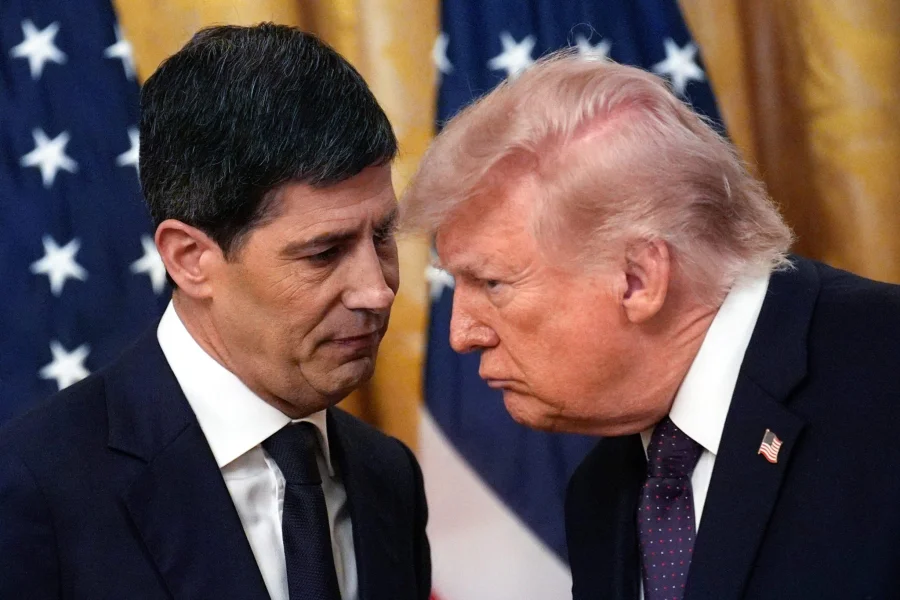
Kevin Warsh was handed the Federal Reserve chair with a very public instruction: deliver the lowest interest rates in the world. On Wednesday, he delivered a rate hike instead.
The Fed raised its benchmark federal funds rate by 25 basis points, taking it to a range of 3.75% to 4% — the first increase since 2023. The vote was unanimous. It is the first move Warsh has made on interest rates since Trump appointed him to the job.
A 25-Basis-Point Hike, and Not One Dissent
The numbers are simple to state and harder to live with. A quarter-point increase lifts the floor under the entire US lending system: what banks charge each other, and by extension what families and firms pay to borrow.
What made Wednesday unusual was the unanimity. Rate decisions are often contested; a split vote signals a committee unsure of itself. This one didn't blink.
Why Officials Felt They Had Run Out of Room to Wait
The reporting points to a committee boxed in by its own data. Inflation has run above the Fed's 2% target for roughly five years. Consumer sentiment is weak. A war in Iran is clouding the outlook. And jobs reports keep coming in strong.
When hiring is resilient and prices stay hot, cutting rates risks convincing households that inflation is here to stay. The Fed's answer, this time, was to lean the other way.
How a Trump Pick Ended Up Raising Rates
The political arc here is worth tracing. Trump named Warsh to the chair and made his preference loud and specific: the lowest rates in the world. Between that nomination and Wednesday's vote, the president called the committee "clowns" for wanting a hike.
Warsh still voted with the majority. Whether that reflects his own reading of the data or the institution's internal gravity, the outcome is the same — the first rate increase of Trump's second term, delivered by his own appointee.
Who Actually Feels This Decision
Policy rates are abstract until they reach a household budget. US credit-card balances, auto loans and small-business credit lines are typically priced off this rate. For the families already complaining about the cost of living, the next bill does not get smaller.
Mortgage rates don't track the policy rate directly, but they move with the same tide. Anyone waiting for relief on long-term borrowing now waits longer.
The White House vs. the Committee
The public language from the president was blunt — "clowns" — and it was aimed at a committee, not an individual. That framing matters. It sets the Fed up as a collective body resisting political pressure rather than a chair doing what he was told.
Officials have not responded in kind, at least not in anything reported here. Central banks generally don't.
The Inflation Math Behind an Unpopular Decision
Five years above target is a long time in monetary policy. Expectations, once households and firms start pricing in permanent inflation, become self-fulfilling. That is the argument for moving now rather than later.
The counter-argument is that a hike on top of weak sentiment and an active conflict risks slowing an economy that is already strained. Both readings come from the same data.
Confirmed Facts vs. What Remains Unclear
Confirmed: a 25 basis point increase; a 3.75%–4% target range; the first hike since 2023; a unanimous vote; Warsh now chair; Trump's public demand for low rates and his "clowns" remark.
Unclear: how the committee framed its forward guidance, whether this is a one-off or the start of a cycle, how markets closed on the day, and whether the "war in Iran" factor has escalated or eased since. None of that is established by the material available here and should not be treated as settled.
The Risk of Getting This Wrong
Raise too little and inflation entrenches. Raise too much and the labour market cracks — and the same voters who complained about prices start complaining about jobs.
There is also an institutional risk with a longer fuse: repeated political attacks on the Fed can dent confidence in its independence, which is itself part of how monetary policy works. Credibility is a tool. It can be spent.
A Pattern, Not an Isolated Move
Independent central banks have spent the past two years being pressured by governments that prefer cheap money. The tension is global, but Washington's version is unusually public.
For emerging markets like India, the transmission channel is familiar: firmer US rates tend to strengthen the dollar, pressure the rupee, and pull some foreign capital toward US assets. That is general mechanics, not a forecast for any specific market day.
What Borrowers and Savers Should Take From This
If you hold floating-rate debt priced off US benchmarks, your interest cost edges up. If you hold dollar deposits, the direction is friendlier. Either way, this is not the moment to assume rates are heading down soon.
For investors, the practical read is that the "rate cuts are coming" trade just took a hit. Plan for a higher-for-longer default until the committee itself says otherwise.
What Comes Next
The next real signal won't be a headline — it will be the Fed's own communication, and the data that follows. Watch inflation prints, jobs numbers and whether the Iran situation shifts the risk balance.
Also watch the language. A unanimous hike is a strong statement; a second one would be a strategy.
Our Take
This is a story about a president learning the limits of an appointment. Trump chose the chair expecting low rates and got a hike from a unanimous committee — which is precisely the outcome a central bank is designed to produce when it is working as intended.
The important detail isn't the quarter point. It is the unanimity, and the fact that it came from a Fed that has been publicly called names for weeks. Institutions are judged in moments like this one.
Frequently Asked Questions
What did the Federal Reserve actually do?
It raised the benchmark federal funds rate by 25 basis points, taking the target range to 3.75%–4%. This is the first increase since 2023 and the first rate action under chair Kevin Warsh.
Why did the Fed hike if Trump wanted low rates?
Because the data pointed that way. Inflation has stayed above the 2% target for about five years, jobs reports remain strong and consumer sentiment is weak — a combination that makes cutting rates hard to justify. The president's preference is not a mandate the committee has to follow.
Was the vote close?
No. The vote was unanimous — the strongest possible signal from the committee that this was a collective decision, not a chair's personal call.
What does this mean for borrowers in India?
Not directly — Indian loan rates are set by the RBI, not the Fed. But higher US rates typically firm up the dollar and can pressure the rupee, which feeds into import costs and, at the margin, into how the RBI thinks about its own policy space.