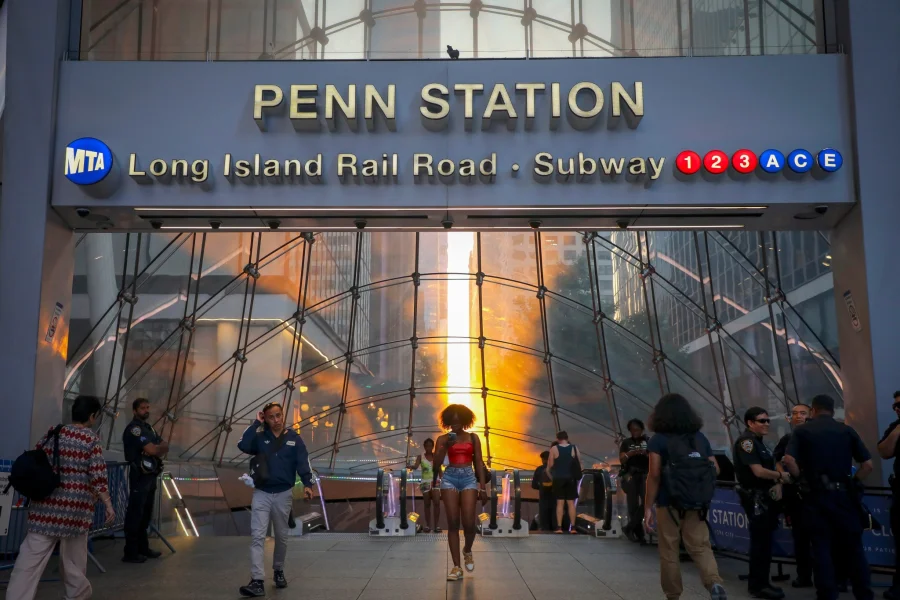
Could the busiest transit hub in the Western Hemisphere soon bear the name of President Donald Trump? The White House has officially asked U.S. Senators for permission to rename New York City’s Penn Station — and Transportation Secretary Sean Duffy has hinted the new name could be ‘Trump Station.’
What the White House Is Asking Congress
In a letter sent Wednesday, Transportation Secretary Sean Duffy urged leading U.S. Senators to approve a name change for Penn Station as part of its projected $8 billion redesign. The letter sought congressional funding approval for the rehab and other major transportation priorities, but stopped short of explicitly stating what the station’s moniker should be changed to.
Spokespersons for the transportation agency provided the letter but did not respond to follow-up questions Thursday, leaving the exact proposed name unconfirmed. However, Duffy has made no secret of his admiration for the president, and sources close to the administration suggest the name ‘Trump Station’ is the frontrunner.
Why Renaming Penn Station Matters to Millions of Commuters
Penn Station is the busiest transit hub in the Western Hemisphere, serving over 600,000 passengers daily. A name change would affect every commuter, tourist, and business traveler who passes through its underground concourses. For New Yorkers, the station is both a vital artery and a symbol of decades of neglect — its dark, cramped corridors have long been criticized as an embarrassment compared to the grandeur of Grand Central Terminal.
The $8 billion redesign aims to transform the station into a modern, spacious facility. But the name change adds a political dimension that could overshadow the infrastructure improvements.
How the Penn Station Renaming Proposal Emerged
The push to rename Penn Station is not entirely new. In 2017, a group of Republican lawmakers proposed renaming the station after President Trump, but the idea gained little traction. Now, with the administration formally requesting congressional approval, the proposal has resurfaced with more urgency.
The letter from Duffy is part of a broader effort to secure federal funding for major transportation projects, including the Penn Station redesign. The administration has framed the renaming as a way to honor the president’s contributions to infrastructure, though critics argue it is a distraction from the station’s real problems.
Who Is Affected by the Proposed Name Change
New York commuters, who already face delays, overcrowding, and aging infrastructure, would see their daily travel hub rebranded. Tourists visiting the city would encounter a politically charged landmark. And historians worry about erasing the station’s original name, which honors the Pennsylvania Railroad that built it in 1910.
For supporters, the renaming is a fitting tribute to a president who grew up in Queens and has long been associated with New York real estate. For opponents, it is an unnecessary politicization of a public space.
What Transportation Secretary Sean Duffy Has Said
Duffy’s letter to Senators did not explicitly mention ‘Trump Station,’ but his public comments have strongly hinted at it. In recent interviews, he has praised the president’s leadership and suggested that naming the station after Trump would be a “fitting honor.” The lack of a formal proposal, however, leaves room for negotiation — or rejection.
“The Secretary has made his views clear, but the final decision rests with Congress,” a transportation department spokesperson said, declining to elaborate.
What the Penn Station Name Change Really Means
Beyond the political symbolism, the renaming proposal raises practical questions. Would the station’s legal name change require new signage, maps, and transit documents? Would Amtrak, NJ Transit, and the MTA — which all operate at Penn Station — have to update their systems? The cost of such a rebranding, though small compared to the $8 billion redesign, could still run into millions of dollars.
More fundamentally, the proposal tests the limits of presidential branding in public infrastructure. While airports, highways, and federal buildings have been named after presidents before — such as Ronald Reagan Washington National Airport — renaming a major transit hub in a Democratic stronghold like New York City is unprecedented.
Confirmed Facts vs What Remains Unclear
Confirmed: The White House has formally asked Senators to rename Penn Station as part of its $8 billion redesign. Transportation Secretary Sean Duffy sent a letter seeking congressional funding approval and hinted at the name ‘Trump Station.’
Unclear: The exact proposed name has not been officially confirmed. No legislation has been introduced. The timeline for congressional action is unknown. Public opinion on the renaming has not been formally polled.
Political and Historical Context of the Renaming Push
The proposal fits a broader pattern of the Trump administration seeking to cement the president’s legacy through naming rights. In 2019, the White House proposed renaming a federal building in Washington, D.C., after Trump, though the plan stalled. If successful, Penn Station would be the most high-profile transit hub named after a sitting president.
Historians note that renaming landmarks is often controversial. In 2015, the U.S. Department of the Interior renamed Mount McKinley to Denali, sparking debate over Native American heritage. Similarly, renaming Penn Station could ignite a clash between honoring a president and preserving historical identity.
What Commuters and New Yorkers Should Know Now
For now, the name change is just a proposal. Commuters should not expect any immediate changes to signage or operations. However, those who wish to voice their opinion can contact their Senators or attend public hearings if the proposal moves forward.
If you travel through Penn Station regularly, stay informed about the redesign plans — the $8 billion project will affect train schedules, platform access, and station amenities regardless of the name.
What Could Happen Next
Congress must approve both the funding for the redesign and the name change. This could take months or years, especially given the political divide. If approved, the renaming would likely be phased in alongside the redesign, which is expected to be completed by the early 2030s.
Alternatively, the proposal could be rejected by Senators who oppose politicizing public infrastructure. In that case, Penn Station would retain its historic name, and the $8 billion redesign would proceed without the branding controversy.
Our Take
The push to rename Penn Station after President Trump is as much about legacy as it is about infrastructure. While the $8 billion redesign is desperately needed — the station is overcrowded, outdated, and unsafe — the name change risks turning a practical project into a political battleground. New Yorkers deserve a modern transit hub, not a partisan symbol. Whether Congress approves the renaming or not, the focus should remain on delivering a station that works for the millions who rely on it every day.
Frequently Asked Questions
Is Penn Station officially being renamed to Trump Station?
No. The White House has asked Congress for permission to rename Penn Station, and Transportation Secretary Sean Duffy has hinted the new name could be ‘Trump Station,’ but no official proposal has been confirmed or approved.
Why does the White House want to rename Penn Station?
The administration says the renaming would honor President Trump’s contributions to infrastructure. Critics argue it is a political move to cement his legacy.
How much will the Penn Station redesign cost?
The redesign is projected to cost $8 billion, funded through a mix of federal, state, and private sources. The name change itself would add minimal cost compared to the overall project.
Who decides the name of Penn Station?
Congress must approve any name change for federally funded transit hubs. The final decision rests with lawmakers, who may hold public hearings before voting.