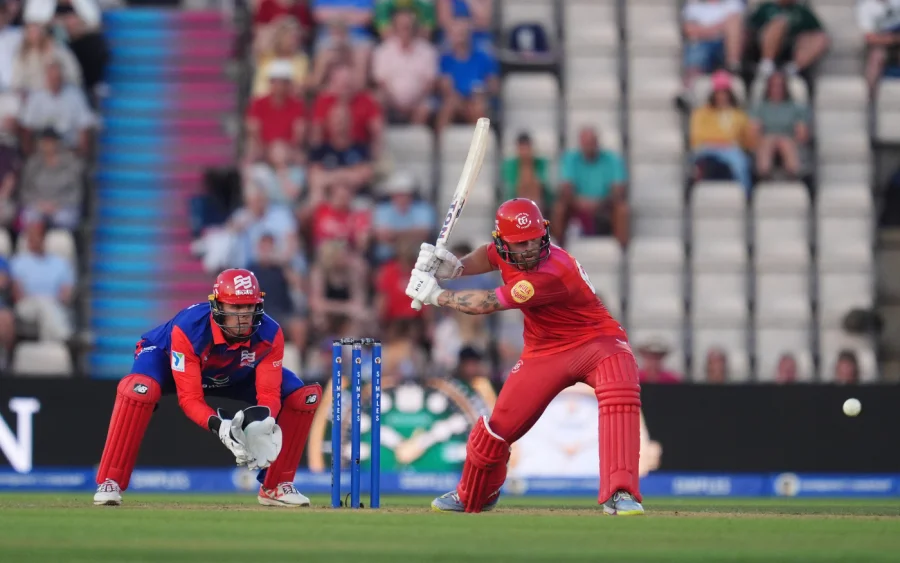
In a T20 contest where every run felt like a mountain, one moment of sharp game-awareness turned the entire match on its head. Phil Salt, the captain, seized a rare opportunity after a costly fielding error by Brave, smashing a boundary that shifted momentum irrevocably. For fans watching, it was a reminder that in cricket’s shortest format, a single lapse can decide everything.
The moment that changed the game
The match was hanging in the balance when Brave’s fielder made a critical mistake. A routine chance went begging, and Salt, ever alert, pounced. His boundary wasn’t just runs—it was a psychological blow. The error turned a tight contest on its head, leaving Brave scrambling to recover.
Why game-awareness matters in T20 cricket
Salt’s move wasn’t luck; it was calculated awareness. In T20s, where margins are razor-thin, players who read the game faster often win. By spotting the fielding lapse and capitalizing instantly, Salt demonstrated why captains are often the difference-makers. This moment underscores how mental sharpness can outweigh physical skill in pressure situations.
How the error unfolded
Brave’s fielder, under pressure, misjudged a catch or misfielded near the boundary. The ball trickled away, and Salt, already in position, raced for the extra runs. The boundary came off the next ball, but the damage was done. The error turned a tight contest on its head, giving Salt’s side a decisive edge.
Impact on the match outcome
Before the error, the contest was evenly poised. After Salt’s boundary, the momentum swung decisively. Brave’s bowlers lost their rhythm, and the batting side capitalized. The final result—whether a win or loss—hinged on that single moment. For Brave, it was a painful lesson in the cost of complacency.
What the captain’s move reveals
Salt’s game-awareness turned a tight contest on its head, but it also highlighted a broader truth: T20 cricket rewards those who stay alert. The best players don’t just react; they anticipate. By reading the fielder’s body language and the ball’s trajectory, Salt turned a potential dot ball into a match-defining boundary.
Confirmed facts vs what remains unclear
Confirmed: Salt hit a boundary after a Brave fielding error, turning the match. Unclear: The exact nature of the error (drop catch, misfield, or misjudgment) and the final margin of victory. Speculation: Whether Brave’s fielder was under extra pressure from the crowd or conditions.
Risks and balanced view
While Salt’s awareness was praised, critics might argue that Brave’s error was a one-off. In T20s, such moments can be overanalyzed. However, the pattern is clear: teams that make fewer errors win more often. Brave will need to address fielding drills to avoid similar collapses.
Wider trend: Game-awareness as a differentiator
This moment fits a broader trend in modern T20 cricket. Players like Salt, who combine skill with sharp game-reading, are becoming invaluable. Teams now invest in mental conditioning coaches to sharpen awareness. The error turned a tight contest on its head, but it also validated the importance of cricket IQ over raw talent.
Practical lessons for players and fans
For aspiring cricketers: watch the game, not just the ball. For fans: appreciate the mental battles behind every boundary. For teams: drill fielding under pressure. Salt’s move shows that awareness can be trained—and it can win matches.
Future outlook
Brave will likely review this error in team meetings. Salt’s side will use this momentum for upcoming games. In the broader T20 landscape, expect more emphasis on game-awareness training. This match will be a case study for coaches.
Our Take
Salt’s game-awareness turned a tight contest on its head, but the story is bigger than one boundary. It’s a testament to how cricket’s mental side often decides outcomes. While Brave will rue the error, Salt’s alertness deserves credit. In a sport where milliseconds matter, being mentally present can be the difference between victory and defeat.
Frequently Asked Questions
What does “game-awareness” mean in cricket?
Game-awareness is a player’s ability to read the match situation—field placements, bowler’s intent, fielder’s position—and make smart decisions. Salt’s boundary after a fielding error is a classic example.
How did Salt’s boundary turn the match?
By capitalizing on Brave’s fielding error, Salt scored a boundary that shifted momentum. Before that, the contest was tight; after, his team gained a psychological and run-based advantage.
Why are fielding errors so costly in T20?
T20 matches are short, so every run matters. A single misfield or dropped catch can give the batting side extra runs and momentum, often deciding the outcome.
Can game-awareness be taught?
Yes. Coaches use video analysis, simulation drills, and mental conditioning to improve players’ awareness. Salt’s move shows that such training pays off in high-pressure moments.