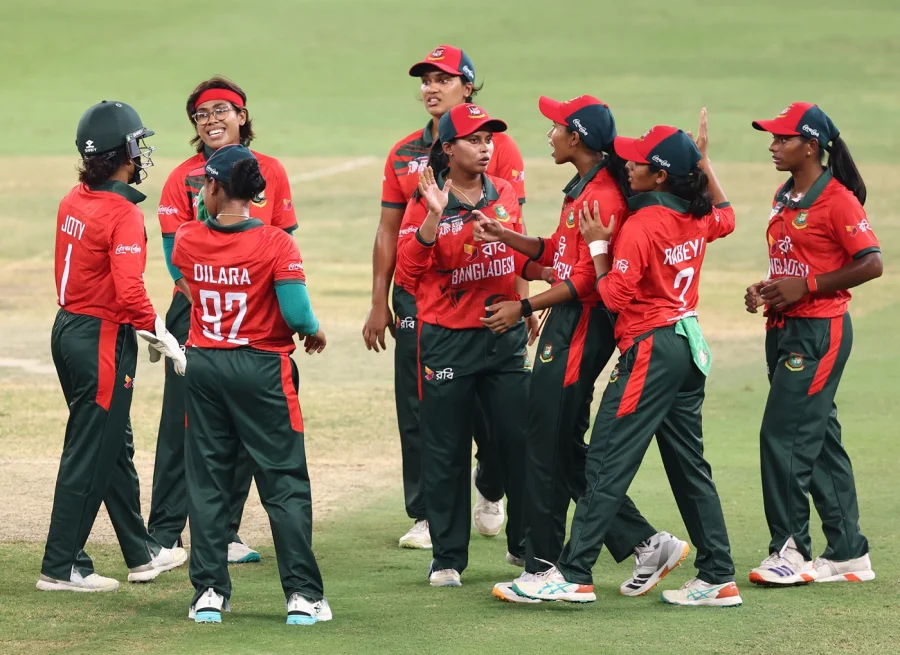
Bangladesh are in the semi-final. They did not bat, bowl, score or defend their way there — the weather did it for them. Their fixture against China was washed out, and with no result possible, Bangladesh's place in the last four was confirmed by the competition's rules rather than by anything that happened on the field.
For a team that travelled to win matches, this is an odd kind of relief. The job is done, but the questions are not.
What actually happened in the Bangladesh vs China fixture
The match could not be completed. Conditions made play impossible, the fixture was abandoned, and no result was recorded — the standard outcome when a game is washed out.
What followed was a matter of paperwork and regulation rather than sport. Bangladesh's progression was confirmed, and their next assignment is now fixed: the winner of the India vs Japan match, in the semi-final.
Why a washout is not the same as a win
It is worth being precise here, because fans watching the points table often read a washout as a victory. It is not. A washed-out match produces no winner.
Depending on the stage of the competition, the abandoned fixture may see points shared, or — if it is a knockout — the place awarded to the side better placed under the tournament's playing conditions. Which of those applied here has not been confirmed in the information available.
From abandoned fixture to confirmed semi-finalist: how the day unfolded
The sequence itself is simple, and that simplicity is the story. A fixture was scheduled. Conditions intervened. Match officials had no window to complete it.
The result was then determined off the field, Bangladesh were confirmed in the last four, and attention shifted immediately to the other match — India vs Japan — which now decides who stands across from them.
Who this helps, and who it leaves waiting
Bangladesh gain something genuinely valuable: rest. No overs, no physical toll, no late-night finish, and no fitness risk before a knockout game that could define the campaign.
China's position is far less comfortable. A washed-out fixture hands their tournament fate to standings and regulations they cannot influence — a place no side wants to be in.
And there is a third group: the fans who bought tickets, travelled and took leave for a match that never happened. Their day ended without a ball worth remembering.
What officials, organisers and team camps have said
At the time of writing, no detailed public statement from match officials, tournament organisers or either team management was available. The confirmed outcome is narrow and clear: no result, and Bangladesh through.
Anything beyond that — including the precise regulation applied, the official wording of the abandonment, and any formal reaction from the China camp — remains unverified and should not be treated as fact until confirmed by the organisers.
Confirmed facts and open questions about Bangladesh's qualification
Confirmed: the Bangladesh vs China fixture was washed out and produced no result. Bangladesh have qualified for the semi-final. Their opponent will be the winner of the India vs Japan match.
Not confirmed: the competition name or stage, the date and venue, the exact rule used to determine progression, whether China also advance, and the semi-final date, time and ground.
This distinction matters. In a story built on an abandoned match, the smallest unverified detail can harden into a "fact" online within hours.
Risks and the counter-argument: is a washout route a fair one?
There is a legitimate sporting argument against this outcome. A team can reach a semi-final without being tested in that round — and rivals who fought through completed matches may see that as an uneven path.
There is an equally legitimate counter-argument: everyone plays under the same conditions, every team knows the rules before a ball is bowled, and no side would turn down a place in the last four if offered one.
The real risk sits with Bangladesh, not the critics. Arriving at a semi-final without recent competitive time in the middle can mean rusty timing, an unsettled rhythm and decisions made cold rather than under pressure.
The bigger pattern: weather is quietly deciding tournament results
This is not an isolated oddity. Multi-team events across the region are increasingly shaped by weather windows, and the debate around reserve days, reserve venues and reworked schedules keeps returning every season.
The consequence is uncomfortable for organisers: a tournament can be remembered not for its best performances but for the matches that never finished.
What fans should do now
Wait for the official schedule before planning around the semi-final. Match timings, venues and reserve-day arrangements are frequently revised after a washout, and screenshots circulating on social media are not reliable.
For supporters of India and Japan, the priority is straightforward: that fixture now carries double weight, because it decides both a semi-final place and an opponent.
What happens next
Bangladesh will prepare for the winner of India vs Japan, with selection and tactics likely shaped by the extra rest they have unexpectedly banked.
Whether that rest becomes an advantage or a disadvantage will only be clear once they are back in the middle. Knockout cricket, like it or not, does not wait for anyone to find their rhythm.
Our Take
Bangladesh are through, and nobody should pretend otherwise — qualification is qualification, and the table does not carry an asterisk for weather.
But the semi-final now becomes a genuine test of a different kind. Bangladesh enter it without a completed match behind them, against an opponent arriving with either match momentum or, in Japan's case, the freedom of an underdog. For all the relief in this result, the hard part starts when the weather finally stays away.
Frequently Asked Questions
Did Bangladesh actually win the match against China?
No. The fixture was washed out and produced no result. Bangladesh progressed to the semi-final because of the tournament's rules governing abandoned matches, not because they won the game.
Who will Bangladesh play in the semi-final?
Bangladesh will face the winner of the India vs Japan match. Their opponent is therefore still undecided.
What does "washout" mean in a tournament?
A washout means a match is abandoned because conditions make play impossible. No winner is declared, and depending on the stage of the competition, points may be shared or the knockout place awarded under the tournament's playing conditions.
Does reaching the semi-final this way help or hurt Bangladesh?
Both are possible. The upside is rest and no injury risk before a knockout match. The downside is a lack of competitive time in the middle, which can affect timing and rhythm in a high-pressure game.