Pakistan's reply: attack as the first response
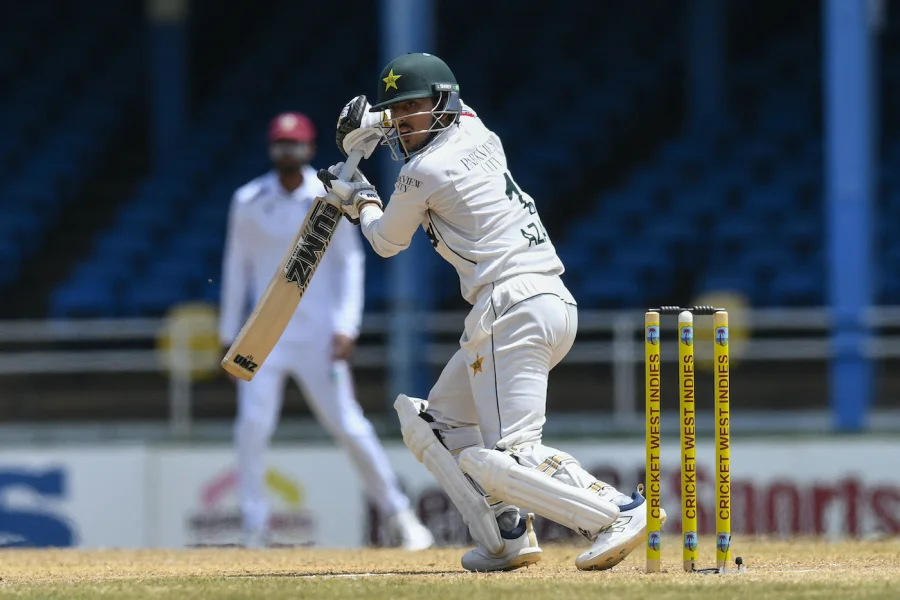
The most important detail from the session is the approach, not just the score. Pakistan's batters did not look to merely survive against West Indies' total; they looked to seize control of it.
By tea, Pakistan had lost two wickets while moving to 139, still 205 runs behind West Indies' first-innings 344, with eight wickets in hand.
Why this session could shape the match
In a Test match, the first-innings response often decides who controls the pace of the game. A cautious reply would have left West Indies on top; an attacking one brings Pakistan level — and potentially ahead — before the second innings begins.
The platform at tea gives Pakistan a genuine chance to erase the deficit and build a meaningful lead.
Tea at 139 for 2: the state of play
The available story confirms the headline numbers: West Indies 344 all out and Pakistan 139 for 2 at tea in response. Pakistan trail by 205 runs with eight wickets remaining.
The trio setting the tempo
Awais, Shafique and Babar — three recognised batters — each played a part in the aggressive reply. Their intent sent a clear message to the West Indies bowling attack: Pakistan would dictate the pace of this innings.
Confirmed facts and what remains unclear
Confirmed from the available report: West Indies posted 344; Pakistan reached 139 for 2 at tea; the trio led the attacking response.
Not confirmed from the available information: individual scores, the sequence of wickets, and specific match venue and date. Those details require the full scorecard and official match coverage.
Pakistan's evolving red-ball template
The approach fits a broader shift in Pakistan's Test batting in recent years — a move away from defensive stonewalling toward positive, scoreboard-pressing cricket. Sessions like this one show what that template looks like in practice.
The risk behind the aggression
Attack, however, carries its own danger. Two wickets are already down, and a cluster of quick losses after tea could undo the platform. The next session will test whether the aggression is sustainable — or reckless.
What fans should watch for next
The post-tea session is now the decisive phase. If Pakistan's set batters convert the platform into a lead, the pressure shifts firmly onto West Indies. One early wicket, though, and the equation changes quickly.
Our Take
This tea score matters less for the number 139 than for what it represents: a side choosing to press forward rather than play safe. Whether it becomes a match-defining moment depends entirely on what follows. Cricket rewards intent when it is backed by discipline — the next session will reveal which one wins.
Frequently Asked Questions
What was Pakistan's score at tea?
Pakistan were 139 for 2 at tea in response to West Indies' first-innings total of 344.
How many runs do Pakistan trail by?
Pakistan trail West Indies by 205 runs with eight wickets remaining.
Which batters led Pakistan's reply?
Awais, Abdullah Shafique and Babar Azam took the attack to the West Indies bowlers during the session.
What is the match situation after tea?
Pakistan have a strong platform to erase the deficit and build a first-innings lead, provided they avoid a cluster of early wickets.