Business
·
OpenAI Astra Benchmark Changes Exposed After Launch
## [Step 1 — META_TITLE] OpenAI quietly revises Astra benchmarks after launch [/META_TITLE] ## [Step 2 — META_DESCRIPTION] OpenAI quietly revised some GPT-6 As...

## [Step 1 — META_TITLE]
OpenAI quietly revises Astra benchmarks after launch
[/META_TITLE]
## [Step 2 — META_DESCRIPTION]
OpenAI quietly revised some GPT-6 Astra evaluation metrics after publishing; Astra's scores improved while Anthropic's dipped in updated charts.
[/META_DESCRIPTION]
## [Step 3 — PAGE_TITLE]
Astra launch: OpenAI edited benchmark scores after the blog went live — and rival figures slipped
[/PAGE_TITLE]
## [Step 4 — KEYWORDS]
[FOCUS_KEYWORD]OpenAI Astra benchmark changes[/FOCUS_KEYWORD]
[SECONDARY_KEYWORDS]GPT-6 Astra evaluation metrics, OpenAI benchmark update post-launch, Anthropic model comparison figures, Astra announcement Sept 3[/SECONDARY_KEYWORDS]
## [Step 5 — TLDR]
Hours after OpenAI published its GPT-6 Astra announcement on Sept. 3, several evaluation benchmarks in the post were quietly revised — Astra's figures improved in places, while Anthropic's numbers got worse. The edits surfaced amid a delayed, error-prone rollout. OpenAI has not publicly explained the changes.
[/TLDR]
## [Step 6 — KEY_FACTS]
• **Main Update:** OpenAI published a GPT-6 Astra announcement blog post mid-afternoon on Sept. 3, then changed several evaluation benchmarks in it after publication.
• **Impact:** On the updated comparison charts, some of Astra's numbers showed improved performance, while figures for Anthropic's models got worse.
• **Rollout Incident:** The post was originally scheduled for 2 p.m. ET but took almost two more hours to become widely viewable.
• **Official Response:** At 3:50 p.m. ET, OpenAI CEO Sam Altman acknowledged, "We hit a little snag getting the blog post deployed, but it is really great."
• **Current Status:** No public explanation for the benchmark revisions has been reported so far.
• **What Next:** Independent verification of the final figures and any OpenAI clarification on why the metrics changed.
[/KEY_FACTS]
## [Step 7 — FEATURED_IMAGE]
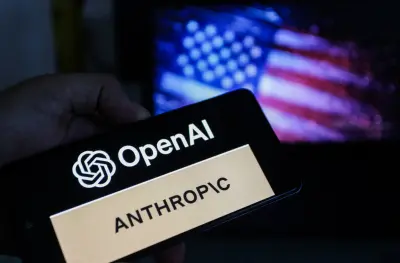
Chart-style visual showing a benchmark scorecard being "edited" after publication, with an upward arrow beside an Astra label and a downward arrow beside an Anthropic label — human hand revising a digital chart.
[/FEATURED_IMAGE]
[IMAGE_ALT]OpenAI Astra benchmark changes comparison chart after post-launch edit[/IMAGE_ALT]
## [Step 8 — ARTICLE_BODY]
*By Aarav Khanna | Technology Reporter*
Numbers on an AI benchmark chart are supposed to be stable once published. But within hours of OpenAI unveiling GPT-6 Astra on Sept. 3, parts of the company's own evaluation table started moving — Astra's scores better in some slots, Anthropic's worse in others — with no public explanation attached to the edits.
The quiet revisions surfaced as part of a rollout that was anything but smooth. A blog post scheduled for 2 p.m. ET took nearly two more hours to load reliably, and even OpenAI's own promotional link initially returned an error.
*Editor's note: This article is based on a single unverified newsroom brief. Independent confirmation and an official response from OpenAI were not available at the time of writing.*
### What the post-launch metric edits actually involve
According to the original report, OpenAI has changed several evaluation benchmarks for GPT-6 Astra since the blog post first went live. In some updated entries, Astra's performance figures improved. In the same revised versions, numbers for models from OpenAI's arch-rival Anthropic got worse.
Which specific benchmarks were altered, or by how much, has not been detailed in the report. What is clear is that the published comparison no longer matches the version readers first saw.
### Why a few percentage points on a chart matter beyond AI labs
Benchmark tables shape real decisions. Enterprises use them to choose which model powers their products. Developers cite them in technical proposals. Journalists and analysts repeat them as if they were fixed facts.
When a vendor quietly revises its own scorecard after launch, the comparisons become hard to verify — especially when the vendor's scores rise and a competitor's fall in the same edit. The problem is not the correction itself. It is the silence around it.
### A blog rollout that took a detour on Sept. 3
The timing added to the awkwardness. OpenAI originally planned for the Astra announcement to go live at 2 p.m. ET, but the post took almost two more hours to become widely viewable.
At 3:32 p.m., when OpenAI's X account tweeted out the blog post, the link was not loading properly and returned an error message. At 3:50 p.m., CEO Sam Altman posted the link himself, writing: "We hit a little snag getting the blog post deployed, but it is really great."
No connection between the deployment snag and the later benchmark edits has been reported. The sequence, however, raises an obvious question: were the changes made because the first version was wrong, or because the numbers needed to look different?
### Who feels the ripple of shifting evaluation numbers
The immediate impact lands on developers and technical buyers who may have already shared or acted on the original figures. If the first version of the Astra results reached internal procurement decks or comparison reviews, those decisions were based on data that no longer exists in its original form.
For the wider AI community, the episode tests something simpler: trust. If benchmark charts can move quietly after publication, readers may start treating every vendor-issued scorecard with more suspicion — including the corrected ones.
### OpenAI's only public comment so far
Altman's "little snag" remark, as reported, refers solely to the deployment problem. There is no indication in the original story that OpenAI has addressed the benchmark revisions directly.
As of now, the company's public position appears limited to the rollout issue. That leaves the metric changes unexplained and open to interpretation.
### Reading between the edits: signal or scramble?
There are two ways to view the revised numbers, and the report does not tell us which is correct.
**The charitable reading:** The deployment snag forced OpenAI to publish before final quality checks. When the real, verified results were ready, the company quietly updated the post — with accuracy, not advantage, as the goal. Under this theory, Anthropic's worsened figures were simply a byproduct of correcting Astra's true performance.
**The critical reading:** Releasing a benchmark chart that improves your own model and worsens your main rival's — without changelog or comment — undermines the credibility of the entire comparison. If the first set of numbers was wrong, readers deserve to know why.
Both possibilities remain open. Neither has been confirmed.
### Confirmed facts vs. what remains unclear
**What the report establishes:**
- OpenAI's Astra blog post went live later than planned on Sept. 3.
- Evaluation benchmarks within the post were changed after initial publication.
- Some Astra figures improved in the updated versions.
- Anthropic's numbers worsened in the updated comparisons.
- Altman publicly acknowledged the deployment snag.
**What remains unclear:**
- Which specific benchmarks were changed and by how much.
- Why the revisions were made.
- Whether the current version is final.
- Whether Anthropic or third-party evaluators have responded.
**Verification status:** This account rests on a single newsroom brief. No public OpenAI statement on the metric edits, and no independent replication of the final figures, was available at the time of writing.
### The trust tax on unverified benchmark revisions
Even if the updated Astra numbers are accurate, the process carries a cost. AI evaluation is already difficult for outsiders to audit — model cards are dense, test conditions vary, and training data cutoffs blur comparisons.
When changes happen invisibly, supporters and critics alike lose common ground. Supporters cannot credibly defend figures that shifted without explanation. Critics can point to the silence as evidence that vendor benchmarks should not be trusted in the first place.
### The wider pattern of post-launch AI scorekeeping
The AI industry has developed a habit of publishing headline results at speed, sometimes before the details have been fully checked. Rushed launches, last-minute model tweaks, and evolving safety evaluations are increasingly common as labs compete for attention.
Seen in that light, the Astra episode is less an isolated incident and more a stress test for an industry still figuring out how to publish measurements responsibly. The lesson applies beyond OpenAI: when speed outruns verification, readers pay the credibility bill.
### What developers and AI watchers should do now
- **Keep a record:** If you cited Astra benchmark figures on Sept. 3, check whether the source page has changed and note the