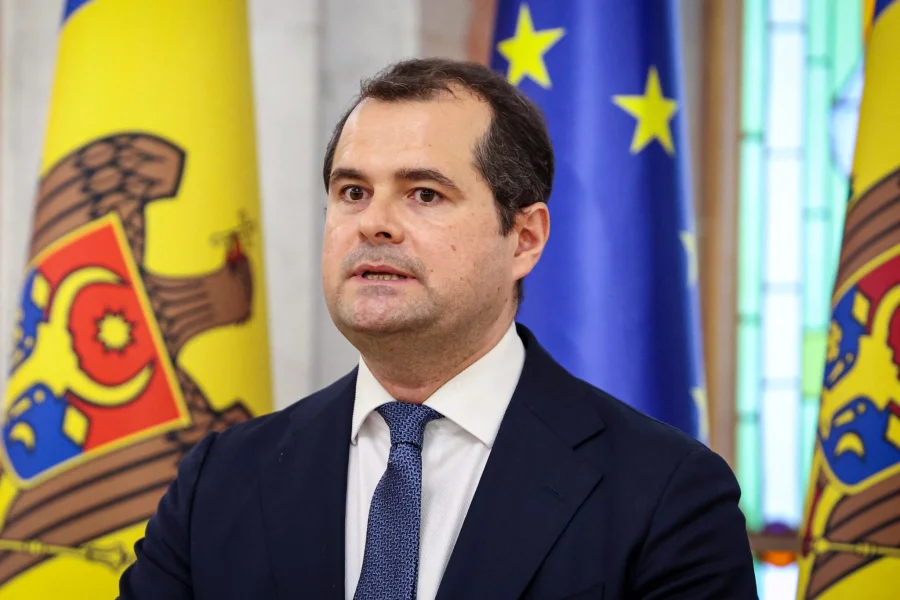
Moldova’s parliament has elected a political newcomer to lead the country at a critical juncture. Vasile Tofan, a 44-year-old businessman and investor with a Harvard MBA, was approved as prime minister on Tuesday, receiving 53 votes in favour, 21 against, and 21 abstentions in the 101-seat legislature. The vote marks a significant shift for the former Soviet republic, which is pushing to accelerate its bid to join the European Union.
Who is Vasile Tofan? A businessman with global credentials
Tofan is not a career politician. Until recently, he was a senior partner at Horizon Capital, a Ukraine-based investment firm. His educational background includes a master’s degree in business administration from Harvard Business School, as well as bachelor’s and master’s degrees in public administration from Erasmus University in the Netherlands. This combination of Western education and private-sector experience is central to his appeal.
Why this election matters for Moldova’s EU path
Moldova, a small country sandwiched between Romania and Ukraine, has been pursuing closer ties with the European Union since Russia’s full-scale invasion of Ukraine in 2022. The country was granted EU candidate status in June 2022. Tofan’s election signals that President Maia Sandu and her Party of Action and Solidarity (PAS) are doubling down on this pro-Western trajectory. For ordinary Moldovans, EU membership promises economic stability, visa-free travel, and access to European markets — a stark contrast to the influence Moscow has historically wielded.
What led to this moment: The resignation of Alexandru Munteanu
Tofan’s election comes three weeks after former Prime Minister Alexandru Munteanu stepped down. While the exact reasons for Munteanu’s resignation were not detailed in the available information, the change in leadership reflects the high-pressure environment of governing a small, geopolitically vulnerable nation. Moldova has faced energy crises, inflation, and persistent Russian disinformation campaigns aimed at destabilising the government.
Who is affected by this change?
Moldova’s 2.6 million citizens are the most directly affected. Many are watching to see whether Tofan can deliver on promises of reform, anti-corruption measures, and economic growth. The business community, both domestic and international, will also be watching closely. Tofan’s background as an investor could signal a more business-friendly approach to governance, potentially attracting foreign investment.
President Maia Sandu’s backing and the PAS mandate
President Maia Sandu, a former World Bank economist, has been the driving force behind Moldova’s EU aspirations. Her PAS party holds a majority in parliament, which allowed Tofan’s election to proceed smoothly. Sandu’s support for Tofan indicates that she trusts him to continue her agenda of European integration and institutional reform. However, the 21 abstentions in the vote suggest that not all lawmakers are fully convinced.
What Tofan’s business background means for governance
Tofan’s experience at Horizon Capital, a firm that invests in technology and consumer sectors across Ukraine and the region, gives him a unique perspective. He understands the challenges of operating in volatile markets. This could be an asset in managing Moldova’s economy, which has been hit hard by the war in neighbouring Ukraine. However, critics may question whether a businessman with no political track record can navigate the complex world of coalition-building and parliamentary negotiation.
Confirmed facts vs what remains unclear
What is confirmed: Tofan was elected by a vote of 53-21 with 21 abstentions. He is a Harvard MBA graduate and former senior partner at Horizon Capital. He is backed by President Sandu and PAS. What remains unclear: the specific policy agenda he will pursue, the composition of his cabinet, and how he will address Moldova’s energy dependence on Russian gas. It is also unclear how Russia will respond to his election.
Risks and balanced view
While Tofan’s election is a win for pro-Western forces, risks remain. Moldova is a small, poor country with a fragile economy. Its EU accession process could take years, and there is no guarantee of success. Russia has a history of meddling in Moldovan politics, including supporting separatist regions like Transnistria. Tofan’s lack of political experience could be a liability in dealing with these challenges. Some analysts may argue that a more seasoned politician would have been a safer choice.
Wider trend: Business leaders entering politics in Eastern Europe
Tofan’s election is part of a broader pattern in Eastern Europe and the former Soviet Union, where business leaders and technocrats are increasingly being tapped to lead governments. Countries like Ukraine and Georgia have seen similar moves, as voters and elites seek leaders who can bring private-sector efficiency to public administration. This trend reflects a growing disillusionment with traditional political classes.
Practical guidance for Moldovan citizens and investors
For Moldovan citizens: Expect continued focus on EU reforms, including anti-corruption measures and judicial independence. For investors: Tofan’s background could signal a more predictable business environment, but geopolitical risks remain high. Diversification and caution are advisable. For students and professionals: Tofan’s career path — from Erasmus University to Harvard to private equity — shows that international education and experience can open doors in public service.
Future outlook: What could happen next
In the coming weeks, Tofan is expected to present his cabinet and a legislative agenda. Key priorities will likely include energy security, economic stabilisation, and progress on EU accession criteria. Relations with Russia will remain tense. If Tofan succeeds, he could become a symbol of a new generation of Moldovan leadership. If he stumbles, it could set back the country’s European ambitions.
Our Take
Vasile Tofan’s election is a calculated gamble by President Sandu. By choosing a political outsider with strong business credentials, she is betting that fresh thinking and international experience can break the inertia that has long plagued Moldovan governance. The risk is that Tofan may lack the political instincts needed to survive in a hostile geopolitical environment. For now, the move signals that Moldova is serious about its EU future — but the road ahead is steep, and the margin for error is razor-thin.
Frequently Asked Questions
Who is Vasile Tofan?
Vasile Tofan is a 44-year-old Moldovan businessman and investor. He holds an MBA from Harvard Business School and degrees from Erasmus University. Until recently, he was a senior partner at Horizon Capital, a Ukraine-based investment firm.
Why was Vasile Tofan elected prime minister?
He was elected by Moldova’s parliament on Tuesday with 53 votes in favour. He is backed by President Maia Sandu and her pro-Western PAS party, which wants to accelerate Moldova’s bid to join the European Union.
What does this mean for Moldova’s EU membership?
Tofan’s election reinforces Moldova’s pro-Western direction. His main task will be to advance reforms required for EU accession, including anti-corruption measures and judicial independence. Moldova was granted EU candidate status in 2022.
What challenges does the new prime minister face?
Tofan faces a fragile economy, energy dependence on Russia, political instability, and ongoing Russian disinformation campaigns. He also has no prior political experience, which could be a challenge in navigating parliamentary politics.