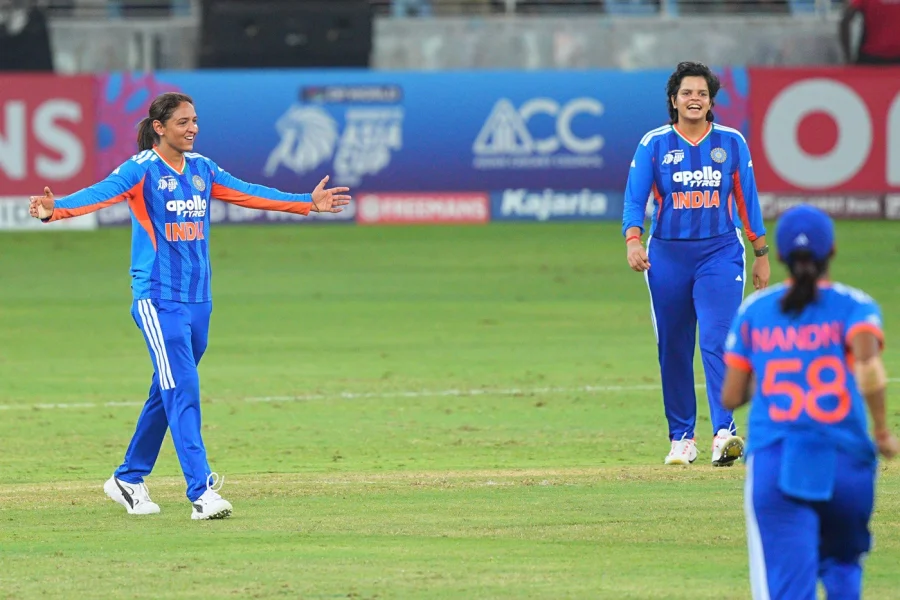
Captains rarely spend a sentence on nothing. So when Harmanpreet Kaur singled out Shafali Verma — saying it was good to see her taking responsibility — it landed as more than a compliment. It read as a message about who this India side now expects to stand up when it matters most.
What made the evening stranger was everything around the cricket. The game ended in circumstances nobody quite scripted, and the trophy was never handed over.
What Harmanpreet Kaur Said, and Why the Wording Matters
According to the report, the India captain said it was good to see Shafali Verma taking responsibility. In a dressing room, that word is loaded. "Responsibility" is captain-speak for a player who is no longer being managed — someone trusted to absorb pressure rather than be shielded from it.
Harmanpreet has spent years carrying that load herself, as captain and as the batter India turn to in a crisis. Naming a younger teammate in those terms is how leadership transitions begin to surface in public, long before any formal change is announced.
An Evening That Ended Without a Trophy Ceremony
The match concluded in unusual circumstances and the presentation did not go ahead as planned — the trophy was never handed over. That single detail turned a routine post-match moment into the thing fans kept returning to.
The precise reason the handover did not take place, and the full sequence of events around it, are not established in the material available. We are not speculating on either.
From Teenage Prodigy to Senior Hand
Shafali Verma arrived on the international stage as a teenager, a hitter whose power at the top of the order made her a headline before she was old enough to vote. She went on to captain India to the inaugural Under-19 Women's T20 World Cup title — a role that already asked her to think beyond her own innings.
That is the backdrop against which "taking responsibility" reads less like praise and more like a graduation.
What a Captain's Endorsement Changes — and What It Doesn't
For selectors, a captain's public backing is not a decision, but it is a strong input. For a young player, it is confirmation that the leadership sees her as part of the spine of the team rather than a wildcard.
For fans, it quietly reframes the conversation. Shafali has usually been discussed in terms of strike rates and sixes. Her captain's framing shifts the emphasis to judgment, temperament and match awareness.
Confirmed Facts vs What Remains Unclear
Confirmed: Harmanpreet Kaur's comment about Shafali Verma taking responsibility, and that the match ended in unusual circumstances with no trophy handover.
Unclear: the specific match and competition, the reason the presentation did not happen, and whether any formal explanation will follow. Anything else circulating — including theories about the ceremony — should be treated as unverified until it comes from an official source.
The Wider Pattern: India's Batting Is Changing Hands
Indian women's cricket is in the middle of a generational handover. Senior players who defined the last decade are being complemented — and in some roles replaced — by a group that grew up with the Women's Premier League, franchise contracts and televised age-group World Cups.
Praise from the captain is one of the clearest public markers of that shift. It tells you who the dressing room is beginning to build around.
The Balanced View: Praise Is Not Proof
One comment does not settle form, technique or consistency. Shafali's career has already included spells where her aggression was celebrated and spells where the same instinct was questioned. A captain's endorsement is a vote of confidence, not a guarantee of a place.
There is also a risk in over-reading a single post-match line. Captains and coaches often praise young players publicly to build confidence. The real test is what the team does next — in selection and in batting order.
What Fans Should Watch Next
Follow the next squad announcement and the next innings, not the next viral clip. If the captain's words reflect a genuine shift, it will show up in batting order, in overs faced, and in how Shafali is used in pressure situations.
On the trophy question, rely on official board or broadcaster statements. Unverified screenshots about the presentation add no information.
Future Outlook
The coming series will show whether the captain's praise translates into a more permanent role for Shafali — more responsibility, more overs, more decisions. On the ceremony, clarity will come only if the organising body chooses to explain what happened. Until then, the cricket and the unfinished handover will keep being discussed separately.
Our Take
On paper this is a small story: one sentence from a captain. It matters because of where it sits in the arc of a team in transition. India need a top order that can absorb pressure without losing intent, and Harmanpreet's framing suggests the leadership believes Shafali is ready for exactly that.
The unfinished trophy handover is the more uncomfortable thread. Sport runs on rituals as much as results, and when a presentation simply does not happen, fans are right to ask why. Without an official explanation, that question stays open — and it deserves an answer.
Frequently Asked Questions
What did Harmanpreet Kaur say about Shafali Verma?
Harmanpreet Kaur said it was good to see Shafali Verma taking responsibility. The comment was widely read as a sign of growing trust in the younger batter within India's leadership group.
Why was the trophy not handed over?
The match ended in unusual circumstances and the presentation never took place, so the trophy was not handed over. No official explanation has been established in the material reviewed, and the reason remains unconfirmed.
Why does a captain's praise matter so much in cricket?
In cricket, a captain's public words carry weight with selectors and shape how a player is viewed by fans and opponents. Praising a young player for "responsibility" usually signals that the team is preparing her for a bigger, more pressure-heavy role.
Does this mean Shafali Verma is guaranteed a place in the XI?
No. Selection depends on form, fitness and team balance. A captain's endorsement is a strong vote of confidence, not a guarantee, and it is the performances that follow that will decide her role.