Macau $16 Billion Plan Aims to Build Business City
Few places on earth are as tied to a single industry as Macau is to the casino. But the Chinese special administrative region is now spending $16 billion to loo...
Admin
The Tasalli
728 x 90Header Slot
TL;DR — Quick Summary
Macau's trade promotion chief says the city wants to add "business city" to its identity, not just remain a gambling and tourism destination. A $16 billion push tied to Macau's newest five-year plan is meant to accelerate that shift, with Las Vegas held up as proof that a casino town can reinvent itself.
Key Facts
Main Update
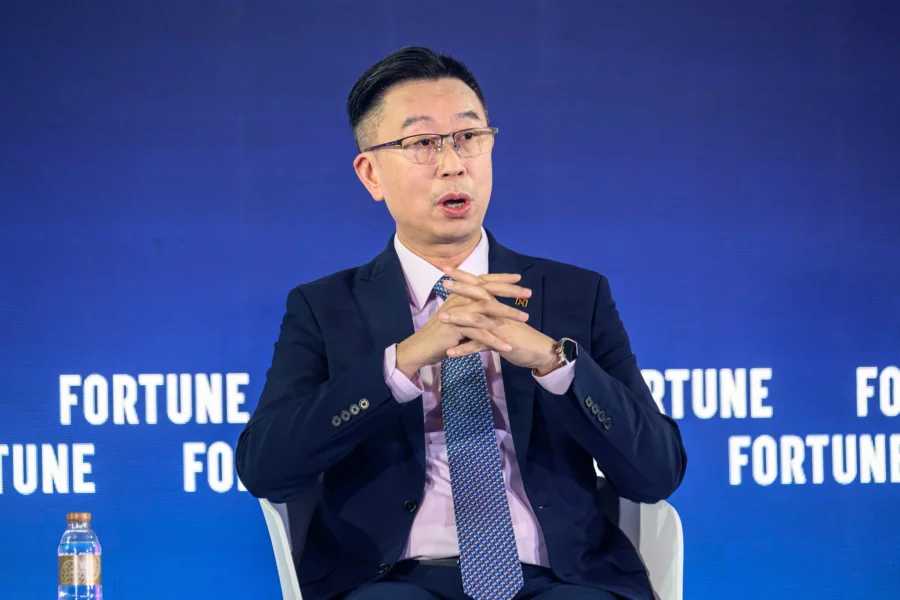
Alex Che Weng Keong, president of the Commerce and Investment Promotion Institute of the Macao SAR, told the Fortune Leaders Forum on Sept. 8 that Macau wants to move from a "tourism city" to a "business city."
The Model
Che pointed to Las Vegas, the world's other gambling capital, as an example of a casino town that became a venue for business, conferences and exhibitions.
Economic Weight
Gaming still generates roughly 45% of Macau's GDP and supplies about 80% of government tax revenue.
The Investment
Macau is spending $16 billion to support the transition, tied to its new five-year plan — the third since Portugal handed the city back to China in 1999.
Current Status
The plan is at an early stage; specific allocations of the $16 billion have not been publicly detailed.
What Next
Watch for non-gaming infrastructure, convention capacity and business-event pipeline as the city tries to diversify beyond casinos.
Few places on earth are as tied to a single industry as Macau is to the casino. But the Chinese special administrative region is now spending $16 billion to loosen that grip.
Speaking at the Fortune Leaders Forum in Macau on Sept. 8, Alex Che Weng Keong, president of the board of directors of the Commerce and Investment Promotion Institute of the Macao SAR, laid out the ambition directly: Macau should become a "business city," not just a tourism city. The pitch is aimed at changing how the world sees — and uses — the city.
From gambling tables to conference tables: Macau's next act
For decades, Macau's economy has been built around visitors chasing luck at the baccarat table. Its hotels, transport and labor force all orbit the gaming floor.
Che's comments signal a deliberate expansion of that identity. The goal, he said, is for Macau to host business travelers, trade delegations, exhibitions and conferences — the kind of high-value activity that builds economic resilience beyond the casino turnstile.
The numbers that explain why Macau must diversify
The urgency is easy to measure. Gaming still accounts for roughly 45% of Macau's GDP, and the industry supplies about 80% of the government's tax revenue. That concentration leaves the city's finances unusually exposed to swings in Chinese consumer confidence, regulatory moods and regional competition.
Beijing has long pushed Macau toward economic diversification, and the city's new five-year plan — the third since Portugal transferred Macau to Chinese administration in 1999 — is the latest attempt to turn that pressure into concrete investment.
Las Vegas shows what a casino city can become
The role model Che cited is one Macau knows well: Las Vegas. The U.S. gambling capital, he argued, has shown that a casino town "can also become a world-class venue…for business, exchange, conferences, and exhibitions."
Vegas built that reputation over decades, layering massive convention infrastructure and corporate events onto its entertainment base. Macau, with its dense cluster of resort-hotels and its position next to mainland China's enormous business market, sees a similar path — but wants to get there faster.
What the $16 billion is supposed to build
The headline commitment is sizeable: $16 billion earmarked to help the city reposition itself. The investment is tied to Macau's latest five-year development plan, though precise details on how the money will be split across projects have not been made public.
What is clear is the intent: build out the venues, facilities and business ecosystem needed to make Macau a genuine destination for corporate events and trade — not just a place tourists pass through on the way to a casino floor.
What is confirmed, and what is still unclear
Confirmed: Che's remarks at the Sept. 8 forum; the stated goal of shifting from "tourism city" to "business city"; the Las Vegas comparison; gaming's roughly 45% share of GDP and 80% contribution to tax revenue; the existence of a $16 billion spend tied to the new five-year plan.
Unclear: How the $16 billion will be allocated across sectors, what timelines are attached, and whether the gaming industry will continue to dominate the city's finances well beyond the plan's horizon. These details have not been specified in public reporting.
The hurdles between Macau and a business-led future
Realistic obstacles remain. Gaming is not just Macau's biggest industry — it is the city's gravitational center. Pivoting toward conferences and trade requires skilled labor, international connectivity, business-friendly services and years of consistent promotion. Competitors like Hong Kong and Singapore already have mature regional event industries. None of those challenges make the goal impossible; they make it a long game.
Who feels the change first — and what to watch
Business travelers and event organizers would be the first to notice a difference, as Macau tries to sell itself as a meeting point between mainland China and global markets. Residents could gain from a more varied job market than one dominated by casino operators and their suppliers.
For outside observers, the metric to watch is simple: what share of Macau's revenue actually comes from non-gaming activity in five years? If the $16 billion moves that number meaningfully, the "business city" label will have earned itself.
Our Take
Macau's problem has never been a lack of money; it has been a lack of economic variety. The $16 billion commitment is a serious signal that authorities understand the risk of relying on one industry for four-fifths of government income.
But the harder work is cultural and structural. A city that has marketed itself to gamblers for two decades must now convince corporate planners, exhibitors and convention organizers that it can handle seriousness as well as spectacle. Money can build the halls. The harder part is filling them.
Frequently Asked Questions
Why is Macau trying to reduce its dependence on gaming?
Gaming accounts for roughly 45% of Macau's GDP and about 80% of its government tax revenue. That extreme concentration leaves the city economy vulnerable to downturns in Chinese consumer spending, changes in cross-border travel rules and shifting regional competition. Diversification is seen as a safeguard for long-term stability.
How does Las Vegas fit into Macau's business city plan?
Alex Che Weng Keong, president of Macau's Commerce and Investment Promotion Institute, cited Las Vegas as proof that a major gambling hub can also become a world-class destination for business events, conferences and exhibitions. Macau wants to replicate that model rather than continue depending on gaming alone.
What is the Commerce and Investment Promotion Institute of the Macao SAR?
It is Macau's official body for promoting trade and investment in the city. Its president, Alex Che Weng Keong, delivered the "business city" vision at the Fortune Leaders Forum, making the institute a key voice in Macau's economic diversification strategy.
What is the $16 billion investment meant to achieve?
The $16 billion, tied to Macau's new five-year plan, is meant to help the city build the infrastructure and business ecosystem needed to attract corporate events, trade shows and investment. Exact allocation details have not been publicly disclosed, so the plan's practical impact will become clearer as projects roll out.