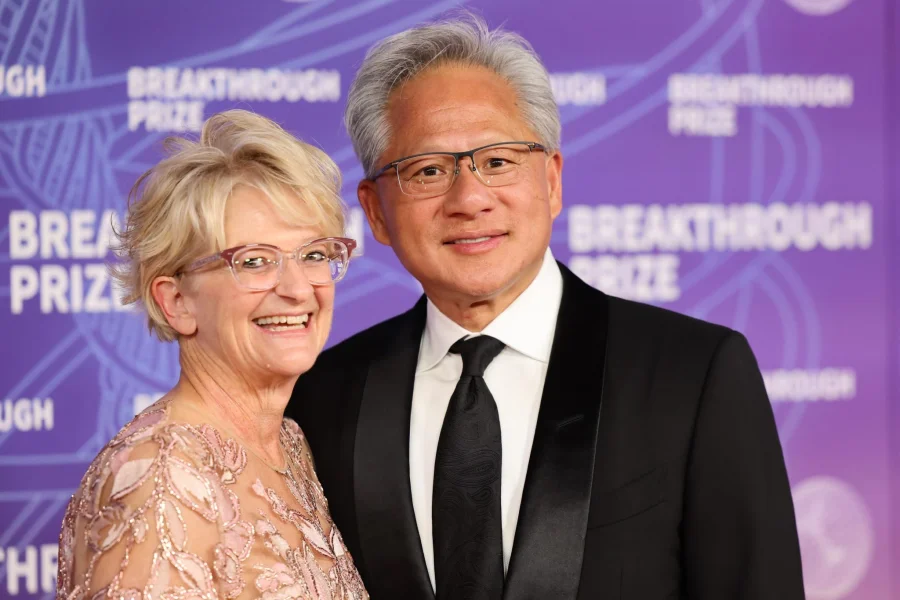
Jensen Huang, the billionaire CEO of Nvidia who built a $172 billion fortune on the AI chips powering the world’s most advanced technology, is making an unexpected bet: that art, not just engineering, decides what that technology is for.
Huang and his wife, Lori, are donating $75 million to Vanderbilt University for its art, architecture, and design campus in San Francisco. The gift, announced this week, marks a notable turn for one of the most prominent figures in the tech industry—a man whose company’s chips are at the heart of the artificial intelligence revolution.
Why an AI billionaire is investing in art
At first glance, the donation might seem odd. Huang’s fortune comes from building the hardware that powers everything from ChatGPT to autonomous vehicles. But his reasoning is deeply philosophical.
“Technology expands what we can build. Art and design determine why we build it,” Huang said in a statement. “Together they shape civilization.”
The Huangs’ gift is not just about funding a building. It is about embedding the humanities into the future of innovation—a reminder that the most powerful tools are meaningless without a sense of purpose.
A philanthropic streak with a human touch
This is not Huang’s first foray into giving. Earlier this year, he auctioned one of his iconic leather jackets—a signature look that has become synonymous with his public persona—raising nearly $1 million for the Edge Institute, a nonprofit that brings together people from tech, science, culture, and society to live and work together in experimental pop-up villages.
That donation, like the Vanderbilt gift, reflects a belief that technology alone is not enough. The Edge Institute’s model of mixing disciplines—engineers living alongside artists and sociologists—mirrors the Huangs’ broader vision.
What the Vanderbilt gift means for students
For students at Vanderbilt’s San Francisco campus, the $75 million could transform how they learn. The university’s art, architecture, and design programs will likely gain new resources, facilities, and cross-disciplinary opportunities that bridge the gap between creative thinking and technical execution.
In an era where AI is reshaping industries, the ability to ask “why” may become as valuable as the ability to build “what.” Huang’s gift suggests he believes the next generation of innovators needs both.
The bigger picture: tech’s growing embrace of the humanities
Huang is not alone in this thinking. A growing number of tech leaders have begun to champion the arts as essential to innovation. Apple’s late co-founder Steve Jobs famously credited a calligraphy class for inspiring the typography of the Macintosh. More recently, leaders in AI ethics have argued that without humanistic input, technology risks becoming detached from human values.
Huang’s donation is a high-profile endorsement of that idea—and a signal that even in the age of AI, the most important questions are not technical.
Risks and balanced view
Critics might argue that $75 million, while substantial, is a fraction of Huang’s net worth, and that more direct investment in addressing inequality or climate change could have greater impact. Others may question whether a single donation can meaningfully shift a culture that often prioritizes profit over purpose.
Still, the gesture is significant. It puts the Huangs’ money behind a belief that many in tech profess but few act on: that art and design are not luxuries, but necessities for responsible innovation.
Our Take
Jensen Huang’s Vanderbilt gift is more than a philanthropic headline. It is a statement about the kind of future he wants to build—one where the people designing AI are as thoughtful about its purpose as they are about its power. In a world racing to build faster, smarter, and more efficient machines, the question of “why” has never been more urgent. Huang’s donation is a reminder that the answer may not come from a chip.
Frequently Asked Questions
Why did Jensen Huang donate $75 million to an art school?
Huang believes that while technology expands what we can build, art and design determine why we build it. He sees the two as essential partners in shaping civilization.
How much is Jensen Huang worth?
Jensen Huang’s fortune is estimated at $172 billion, largely from his stake in Nvidia, the leading maker of AI chips.
What will the Vanderbilt donation be used for?
The $75 million will support Vanderbilt University’s art, architecture, and design campus in San Francisco, likely funding programs, facilities, and cross-disciplinary initiatives.
Has Jensen Huang donated to other causes?
Yes. He recently auctioned one of his leather jackets for nearly $1 million to benefit the Edge Institute, a nonprofit that brings together people from tech, science, and culture for collaborative experiments.