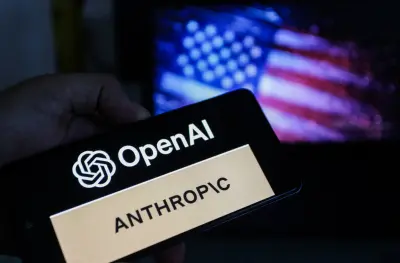
Ask most technology chiefs what they think of artificial intelligence and you will still hear the right buzzwords. Ask their finance teams, and the conversation shifts. After years of near-universal praise for AI, a growing number of CIOs and CTOs are doing something that once felt unthinkable: turning down the tap.
Samsara's ambitious AI rollout meets a budget moment
At Samsara, the tech firm with 4,100 employees, Chief Information Officer Stephen Franchetti was an early believer. He authorized Anthropic's Claude, Google's Gemini, OpenAI's ChatGPT and the AI coding agent Cursor, giving staff a wide menu of cutting-edge tools.
He also built something less glamorous but increasingly vital: an internal system that tracks AI expenses every single day. That visibility changed the conversation. What looked like innovation began to look, in part, like a cost line.
Why usage caps are replacing the "try everything" phase
The math behind the shift is simple. When thousands of employees have unlimited access to multiple premium AI models, costs multiply across subscriptions, tokens and usage tiers. Each department adds its own experiments, and the bill compounds quietly.
For Franchetti, the answer was not to abandon AI but to stage it. Non-technical employees now face usage caps. Research and development, which depends on AI for heavier coding and data analysis, keeps more room to experiment.
How we got here: from AI evangelism to expense spreadsheets
For the past two years, CIOs and CTOs publicly lauded AI as a productivity revolution. Pilots expanded. Employee enthusiasm ran ahead of policy. The dominant instinct was to say yes to every tool because falling behind felt riskier than overspending.
That era is maturing. The same executives who championed AI are now responsible for its budgets, and finance teams want proof. Daily expense monitoring, once reserved for cloud computing costs, is becoming standard practice for AI.
Who actually feels the AI squeeze
The caps land unevenly, and that is by design. An employee drafting emails or summarizing documents may not need unlimited top-tier model access. A developer debugging complex code or a data scientist running heavy analysis does.
This tiered approach protects productivity where it matters most while trimming waste elsewhere. But it also creates a new internal question: which roles truly need the most powerful AI, and who decides?
The CIO's own words: "It took us a while to settle on the right caps"
Franchetti acknowledged the balancing act openly. "It took us a while to settle on the right caps, to make sure everyone was well served," he said, adding that the approach "puts people in the position where the" — the sentence trails off, but the intent is clear enough.
His point, understood in context, is that limits force intentionality. Employees focus on tasks that genuinely require AI rather than treating every premium model as an always-on convenience.
What this really signals for enterprise AI
This is not an anti-AI story. Samsara still runs four major AI tools and encourages experimentation in R&D. The signal is about governance: AI is moving from a novelty budget to a managed operational expense.
Analysts read this as the natural next phase of adoption. First came enthusiasm, then integration, and now financial discipline. The winners will be companies that treat AI like any serious business tool — with budgets, boundaries and accountability.
Confirmed facts vs what remains unclear
Confirmed: Samsara authorized Claude, Gemini, ChatGPT and Cursor. It built a daily AI expense tracking system. Some non-technical employees now face usage caps. R&D retains broader access. Franchetti made the quoted statement about settling on the right caps.
Unclear: The exact cap levels, the scale of cost savings achieved, and how strictly the limits are enforced. Also unclear is how widespread this pattern has become across other companies, though the broader trend toward AI cost controls is well documented.
Samsara's position in the AI race
Samsara matters in this conversation because it is not a struggling legacy enterprise. It is a growth-focused tech company whose leadership had every reason to keep AI unlimited. That a CIO of a fast-moving firm is imposing caps suggests cost pressure is now touching even enthusiastic adopters.
The daily expense tracking system also gives Samsara a governance advantage. Companies that can measure AI spend in real time can adjust faster than those discovering their bills monthly.
The other side: is capping AI the right call?
Supporters argue caps control waste and force teams to prioritise high-value AI use. They point out that free experimentation can hide in unlimited budgets for months before someone notices.
Critics worry that blanket caps could blunt creativity and slow adoption. If employees must request permission or wait for approvals, the friction might push them back to manual work — or toward unapproved consumer tools. The balance between control and momentum remains the hardest part of AI governance.
A wider shift: AI moves from experiment to expense line
Samsara's story fits a visible pattern across the industry. Chief information officers spent years lauding AI's potential. Now, with costs rising, they are putting limits on how it is used — not because the technology failed, but because it succeeded enough to require a budget.
That transition, from hype to line item, may be the clearest sign yet that AI has genuinely arrived in the enterprise. Real tools get real budgets. Real budgets get real scrutiny.
What employees and IT leaders should do now
For employees: understand that AI access is a privilege tied to job function, not a right. Build workflows that use the right tool for the task, and document where AI genuinely saves time.
For IT leaders: track usage before costs spike, set tiered access by role, and review which tools actually deliver. A monthly cost review is no longer enough — daily visibility, as Samsara demonstrates, is becoming the new baseline.
What happens next
Expect more fine-tuning rather than dramatic cutbacks. Cap levels will likely adjust based on real usage data, and R&D-style teams will continue to justify broader access by pointing to measurable output.
The longer-term question is pricing. If AI providers respond to enterprise cost pressure with more flexible tiers or usage-based pricing, the conflict between adoption and budgets may soften. Until then, the cap is likely to become a standard feature of corporate AI strategy.
Our Take
The Samsara example is a small case with a large lesson. The gap between AI enthusiasm and AI reality was always going to show up somewhere, and it is showing up in procurement and finance. CIOs who lauded AI are not turning against it — they are growing up with it, learning that every powerful tool needs a boundary.
For the industry, that is healthier than the unchecked hype cycle. A technology that cannot survive a budget review was never going to transform the enterprise. One that can, like the tiered approach taking shape at Samsara, just might.
Frequently Asked Questions
Why are CIOs limiting AI usage now?
Because enterprise AI costs rise as more employees use premium tools on a daily basis. CIOs like Stephen Franchetti at Samsara are introducing usage caps to control spending while preserving access for teams that need AI most, such as research and development.
Which AI tools did Samsara adopt?
Samsara authorized Anthropic's Claude, Google's Gemini, OpenAI's ChatGPT and the AI coding agent Cursor for its 4,100 employees. The company also built an internal system to track all AI expenses daily.
Will AI access be cut for all employees?
Not necessarily. At Samsara, only some non-technical employees face caps, while R&D groups keep broader access for intensive coding and data analysis. The approach is tiered: heavy users retain flexibility, while lighter users get limits.
What should companies do to control AI costs?
Track AI spending in real time, set role-based usage caps, review which tools deliver measurable value, and adjust access based on actual usage data. Daily expense monitoring, as Samsara demonstrates, helps companies respond before costs spiral.