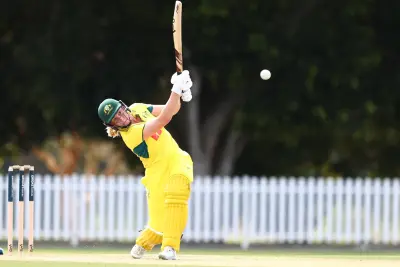
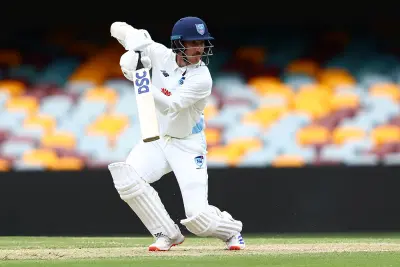
Cameron Green is out of this ODI with shoulder soreness. Josh Hazlewood has been rested. And Australia, batting first, must now cover two roles that do not replace each other neatly.
For Zimbabwe, the same team sheet tells a warmer story. Brendan Taylor is back behind the stumps, keeping wicket in his first ODI in a year.
Two absences, one return, and a decision to bat first that puts Australia's depth under immediate scrutiny.
By [Author Name] | Cricket Correspondent
Two Absences, Two Very Different Problems
Green's shoulder and Hazlewood's workload land on the same sheet, but they are not the same story.
Soreness is an early warning, not a diagnosis. There has been no confirmation of a tear, a scan result or a recovery window — only the word "soreness," which is how most bowling injuries begin.
Hazlewood's entry is different. He is rested. Rested means managed, not hurt.
Club and country have learned to separate those two words. One is a medical question. The other is a scheduling one.
Why a Rested Hazlewood Still Changes the Attack
Hazlewood is one of Australia's senior fast bowlers, and the new-ball spell is the part of an ODI innings where control is hardest to buy back once lost.
Removing him is a trade-off Australia have clearly accepted: fresher legs for what comes later, a thinner attack for what comes now.
Whether that trade pays off will only be visible once the first powerplay is done.
Batting First Puts the Middle Order in the Spotlight
Australia will bat first. That removes the cushion of a target — there is a total to build and then defend, with no scoreboard to chase against.
Green's absence is felt most in exactly that middle phase. He offers a batter who can hold an innings together and accelerate without a change in approach.
Batting first without him narrows Australia's margin for a wobble.
Brendan Taylor's Return Gives Zimbabwe a Familiar Anchor
Fifty overs behind the stumps is the most physically demanding job in the field, and Taylor steps back into it after a year away from ODI cricket.
For Zimbabwe, that is a settled pair of hands where a young wicketkeeper might have been risked.
Selection tends to follow trust in these situations, and Taylor's is the more experienced option.
What the Team News Does Say, and What It Does Not
The confirmed details are narrow. Green is out with shoulder soreness. Hazlewood is rested. Australia bat first. Taylor keeps for Zimbabwe in his first ODI in a year.
What is missing is equally important: no severity assessment for Green, no timeline, no explanation of how long Hazlewood's rest will last, and no statement on where Taylor will bat.
Those gaps should not be filled with guesswork. They are simply unanswered.
Confirmed vs Unclear: Reading the Team News Carefully
Confirmed: the two changes, the batting-first decision and Taylor's return behind the stumps.
Unclear: how serious Green's shoulder is, whether he misses further matches, whether Hazlewood's rest is part of a planned rotation or a one-off, and where Taylor fits in the batting order.
Everything else — selection logic, tactical intent, workload planning — is reasonable inference, and should be read as such.
The Risk Australia Are Running With Green's Shoulder
Fast-bowling all-rounders are the most heavily loaded players in the game. They bat, they bowl, they field in the ring, and the shoulder absorbs all of it.
Teams have learned that a sore shoulder pushed too early becomes a torn one. The counter-risk is treating every ache as an emergency and losing a player's rhythm entirely.
Australia have chosen caution today. That is not a verdict on severity — it is a verdict on timing.
Rest Is Now the Default Setting in World Cricket
A decade ago, a player missing an ODI with "rest" invited suspicion. Today it is routine, and the schedule explains why.
Back-to-back series, franchise leagues and travel have made workload management a permanent part of selection rather than an occasional favour.
Hazlewood's absence fits that pattern — and so, increasingly, will many more like it.
What Followers Should Watch For
First, how Australia's attack copes in the opening overs without Hazlewood's control. That is the most immediate test of the rest decision.
Second, Green's name on the next team sheet. His shoulder will be reassessed, and how quickly he returns is the clearest signal of how minor the complaint really is.
Third, Taylor's keeping through 50 overs — a fitness question as much as a form one.
What Happens Next
Australia's batting-first plan will be judged on how the middle order holds