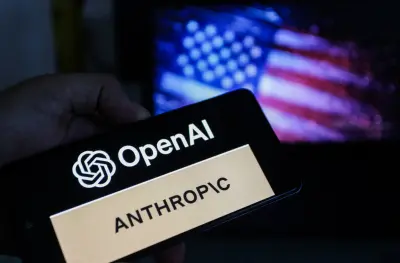
A wave of sudden, life-changing wealth is about to hit the people who built the AI boom. The harder question isn't how they made it — it's how they'll give it away. And according to two people watching from inside both worlds, the answer risks going badly wrong.
SpaceX's IPO just minted 4,400 millionaires — and more are coming
SpaceX's IPO this summer created an estimated 4,400 new millionaires overnight, according to the report. Anthropic and OpenAI are expected to follow soon, opening the door for more AI-linked fortunes.
Goldman Sachs projects a historic year for IPO proceeds, driven by the AI boom. The scale of new wealth is unprecedented — and so is the question attached to it: how much will trickle down to people who need it most?
Why the AI wealth boom is a test for giving
This isn't just a story about rich people getting richer. It's a story about whether a generation of freshly wealthy founders and engineers will fund the institutions that already lift families — or replace them with shinier experiments.
The report's authors frame it plainly: costs are rising, services are stretched thin, and the American dream is further out of reach. AI wealth could help solve these problems. Whether it does depends on the choices these new millionaires make.
Two vantage points, one warning
The commentary comes from two people with contrasting seats — one who builds and scales technology companies, the other who leads a nonprofit providing career training to help people move into the middle class.
Both see the same pattern from different angles. Tech culture prizes disruption. But philanthropy, they argue, isn't a market waiting to be broken — it's an infrastructure of trust, relationships, and delivery systems built over decades.
Who actually benefits when AI millionaires give
For the working adults enrolled in career-training programs, the difference between steady funding and flashy new experiments is tangible. A proven nonprofit already knows how to move someone into the middle class — it just needs the resources to do more of it.
The risk of disruption-driven giving is that it favors novelty over outcomes. New models get attention. Existing programs get abandoned mid-stride, leaving the people they serve in limbo.
The 'alarming misapprehension' at the heart of tech giving
The authors point to what they call an alarming misapprehension circulating in AI-wealth circles: the belief that philanthropy itself needs to be disrupted. It doesn't, they argue. It needs funding.
This is a direct rebuke to the venture-style giving trend, where donors treat nonprofits like startups to be overhauled. The message: the most effective way to create change is often to sustain what already works.
Why 'disruption' doesn't translate to philanthropy
In technology, disruption creates new markets. In philanthropy, it can dismantle services that people depend on today, with no guarantee the replacement materializes.
The deeper issue is one of accountability. Startups answer to investors. Nonprofits answer to communities. When new millionaires impose startup logic on social programs, the people most affected — students, trainees, working families — rarely get a vote.
What's confirmed vs what remains open
Reported as fact: SpaceX's IPO reportedly created 4,400 new millionaires; Goldman Sachs projects a historic IPO year driven by AI; OpenAI and Anthropic are expected to list soon.
Still unclear: The timing of OpenAI and Anthropic IPOs, how much of the new wealth will be donated at all, and the full detail of the "misapprehension" the authors describe. This article is based solely on the headline and original story provided; no external sources were verified.
Why existing nonprofits have a structural edge
The report's implicit case is moat-like: established nonprofits have trained staff, community trust, referral networks, and proven curricula. You can't replicate those overnight with an app or a grant contest.
A career-training organization that has spent years placing people into middle-class jobs knows exactly where the bottlenecks are. That institutional knowledge is the asset new wealth should buy into — not compete against.
The risks of telling millionaires where to give
A balanced view matters here. Critics of traditional nonprofits say they can be slow, under-measured, and resistant to change. Some argue that fresh approaches and experimentation are exactly what a stretched social sector needs.
Supporters of the report's view counter that "inefficiency" is often a code word for serving hard-to-reach populations. The honest position: not every existing nonprofit is effective, but the answer is rigorous funding of proven models — not abandoning the sector entirely.
A wider shift: how new money is reshaping American giving
The AI wealth wave arrives amid a broader transformation in philanthropy. Younger tech donors increasingly prefer measurable, venture-style impact over general operating support. That mindset brings discipline — but also impatience.
This story is the collision of two trends: a historic AI-driven IPO cycle and a generation of donors who believe they can engineer social change the way they built products.
What to do if you're watching this wealth wave
For nonprofit leaders: document outcomes clearly and make the case that existing infrastructure is the fastest route to scale.
For new AI millionaires: before launching a new foundation, study the organizations already delivering results in your own backyard. The report's advice is simple — fund what already exists before you try to build what doesn't.
What happens next in AI-era giving
If OpenAI and Anthropic complete their IPOs, the number of newly minted AI millionaires could dwarf the SpaceX cohort. That would make this a defining moment for American philanthropy.
The authors' position, if heeded, points to an outcome where IPO windfalls strengthen career-training and middle-class mobility programs. If ignored, it could produce a wave of redundant experiments while proven services go underfunded.
Our Take
There's something countercultural about telling the builders of the most disruptive industry in a generation to stop disrupting. But the argument holds: the American dream isn't a product to be launched — it's a promise already being kept by underfunded institutions that simply need more fuel.
The real test of AI-era wealth won't be the size of the IPO. It will be whether the new millionaires see philanthropists as partners in an existing system — or as founders of a better one.
Frequently Asked Questions
What is the main argument in "AI's new millionaires want to disrupt philanthropy"?
The article argues that AI-generated wealth — from IPOs like SpaceX's, and potential OpenAI and Anthropic listings — should fund proven, existing nonprofits rather than trying to disrupt philanthropy with new models. The authors warn that an "alarming misapprehension" about disruption could divert resources from organizations that already work.
How many millionaires did the SpaceX IPO create?
According to the original report, SpaceX's IPO created an estimated 4,400 new millionaires overnight. It was part of what Goldman Sachs projects to be a historic year for IPO proceeds, driven by the AI boom.
Why do AI millionaires want to disrupt philanthropy?
The report suggests many tech founders apply startup logic to giving — favoring new, venture-style models and measurable impact over supporting established institutions. The authors caution that this approach can endanger existing services that people rely on today.
What should new AI millionaires do with their wealth, according to the article?
They should fund what already exists — proven nonprofits with trained staff, community trust, and demonstrated results, especially career-training programs that help people move into the middle class. The message: reinforce the infrastructure that works before building anything new.