
Summary
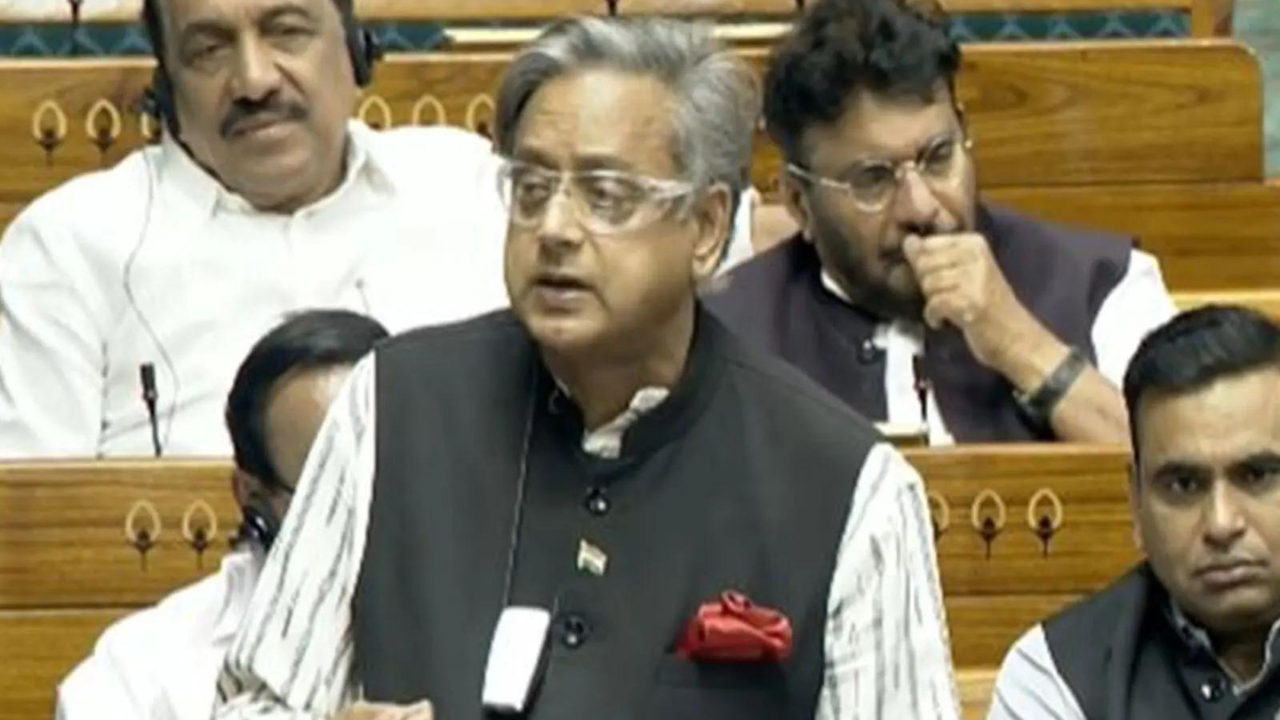
Senior Congress leader Shashi Tharoor has voiced strong criticism against the central government's plan to link the Women’s Reservation Bill with the census and the redrawing of voting districts. He described the move as a "gift wrapped in barbed wire," suggesting that while the policy looks good on the surface, the conditions attached to it make it difficult and painful to implement. Tharoor argues that these requirements will cause unnecessary delays, preventing women from gaining their rightful place in Parliament for many years. This debate highlights a growing concern over how political power is shared across different states in India.
Main Impact
The primary impact of this situation is a significant delay in the actual start of women's reservation in Indian politics. Although the law to give women 33% of seats in the Lok Sabha and state assemblies was passed with great fanfare, it cannot be used yet. By making the law dependent on a new census and a process called delimitation, the government has pushed the benefits of this reform into the distant future. This delay affects thousands of women who were hoping to run for office under the new quota system in the upcoming elections.
Key Details
What Happened
Shashi Tharoor spoke out against the government’s strategy during a public discussion regarding the future of Indian elections. He used the term "political demonetisation" to describe the upcoming redrawing of constituency boundaries. His main point is that the government is using the promise of women's seats as a way to push through other changes to the voting map that might be controversial. He believes the two issues—women's rights and the redrawing of voting areas—should be kept completely separate to ensure the reservation happens as soon as possible.
Important Numbers and Facts
The Women’s Reservation Bill aims to set aside one-third, or 33%, of all seats in the lower house of Parliament and state legislative assemblies for women. However, the national census, which was supposed to take place in 2021, has been delayed for several years. Without this census data, the "delimitation" or redrawing of the voting map cannot legally happen. Experts suggest that if these two processes must happen first, women might not see the 33% quota in action until the 2029 general elections or even later. This timeline is what Tharoor and other opposition leaders find unacceptable.
Background and Context
To understand this issue, it is important to know what "delimitation" means. In simple terms, it is the process of changing the boundaries of voting areas to make sure each representative stands for roughly the same number of people. As the population grows, some areas need more representatives than others. However, this is a very sensitive topic in India. States in the south have been successful at controlling their population growth, while some states in the north have seen their populations skyrocket. If the voting map is redrawn based strictly on current population numbers, southern states fear they will lose their political influence in Parliament. By linking women’s reservation to this process, the government has tied a popular social reform to a very difficult political problem.
Public or Industry Reaction
The reaction to Tharoor’s comments has been mixed but intense. Many women’s rights activists agree with him, stating that the reservation should be implemented immediately based on the current voting map. They argue that women have waited decades for this law and should not have to wait another ten years because of administrative hurdles. On the other hand, supporters of the government argue that the census and delimitation are legally required steps to make sure the new seats are distributed fairly and accurately. Political analysts note that this issue is becoming a major talking point between the ruling party and the opposition, especially regarding the balance of power between different regions of the country.
What This Means Going Forward
Looking ahead, the path for women’s reservation remains uncertain. The first major step will be the start of the national census. Once the census is finished, the government will have to set up a commission to redraw the voting boundaries. This process is expected to be long and full of legal challenges, especially from states that feel they are being punished for having smaller families. If the government does not decouple the women's quota from these processes, the promise of more women in leadership will remain just a promise on paper for the foreseeable future. There is also the risk that this delay could lead to further political tension between the northern and southern parts of India.
Final Take
The debate over the Women’s Reservation Bill is no longer just about gender equality; it has become a complex battle over how India counts its people and divides its political power. While everyone seems to agree that women deserve more representation, the "barbed wire" of conditions mentioned by Shashi Tharoor suggests that the road to reaching that goal is filled with obstacles. For the law to truly matter, it needs to be put into practice soon, rather than being used as a tool in a larger game of political mapping.
Frequently Asked Questions
What is the "barbed wire" Shashi Tharoor mentioned?
He used this phrase to describe the conditions the government added to the Women’s Reservation Bill. He means that while the bill is a "gift" (a good thing), the requirements for a census and redrawing boundaries are like "barbed wire" that makes it hard to use and causes delays.
Why is the census causing a delay for women's seats?
The government decided that the 33% reservation for women can only start after a new census is completed and the voting districts are redrawn based on that new data. Since the census has been delayed, the reservation is also stuck.
What is delimitation and why is it controversial?
Delimitation is the process of redrawing the boundaries of election areas to match population changes. It is controversial because states with faster-growing populations might get more seats in Parliament, while states with slower growth might lose power and influence.



