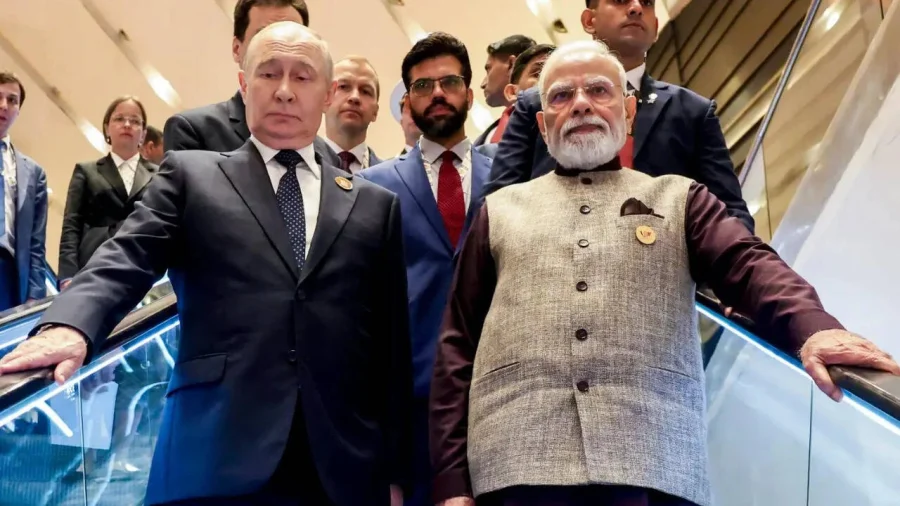
A birthday greeting is usually a formality. Vladimir Putin's message to Prime Minister Narendra Modi was not. In it, the Russian president said it was "impossible to overstate" Modi's contribution — a sentence that says as much about Moscow's current position in the world as it does about the man receiving it.
Modi's birthday falls on 17 September. But the significance here lies less in the date than in the wording, and in who chose to say it publicly.
What the Message Said — and What Stood Out in the Wording
The phrase at the centre of the message is unusually emphatic for a diplomatic greeting. Putin's line that Modi's contribution is "impossible to overstate" places the Prime Minister — personally — at the centre of the India-Russia story, rather than merely crediting the two governments.
That framing is deliberate. State-to-state language is formal and replaceable. Language that credits an individual leader suggests a relationship anchored to a person as much as to a policy.
Behind the Greeting: A Friendship That Has Outlasted Western Pressure
Russia has been under sweeping Western sanctions since its full-scale invasion of Ukraine in 2022. In that period, India has not joined the sanctions regime, has continued buying Russian crude at scale, and has kept defence and diplomatic channels open.
Western capitals have pressured Delhi to distance itself. Delhi has instead described its position as strategic autonomy — engaging Russia where it serves Indian interests, while deepening ties with the United States, Europe and the Gulf.
Against that backdrop, a warm personal message from the Kremlin is not just sentiment. It is a reminder of where Moscow believes its reliable friends still are.
From Soviet-Era Trust to Sanctions-Era Trade: the Backdrop
India and Russia share a relationship older than either country's current government. The Soviet Union was a major arms supplier and diplomatic backer of India through the Cold War, and that institutional memory survives in both capitals.
What has changed is the economics. Energy has moved to the front of the relationship, alongside long-standing defence ties. What has not changed is the frequency of high-level contact — including summit-level meetings between the two leaders.
Who This Message Is Really Meant For
Greetings from a head of state are addressed to one person and read by many. Analysts often note that such messages carry an audience beyond the recipient: domestic publics, rival capitals, and partners weighing how firmly Delhi is aligned with Moscow.
For Indian readers, the practical relevance is narrower but real — India's energy import bill, defence supply chains and diplomatic room to manoeuvre all run through this relationship.
How Delhi Reads Such Gestures — Balance, Not Bloc
New Delhi has consistently resisted being slotted into a camp. It buys Russian oil, participates in the Quad, holds summits with European leaders, and maintains a defence relationship with the United States.
That balancing act is the actual context for the birthday message. Warm words from Moscow do not automatically mean a shift in Indian foreign policy — and Indian officials have generally been careful not to let them be read that way.
Confirmed Facts vs What Remains Unclear
Confirmed: A birthday message was sent by Putin to Modi carrying the phrase "impossible to overstate your contribution." That much is the substance of the story as it stands.
Unclear: The full text of the message, any additional details it contained, and whether there was a reciprocal Indian statement are not established here. Readers should treat interpretations of the message's intent as analysis, not fact.
The Risk of Reading Too Much Into a Birthday Note
There is a genuine counterpoint. Birthday greetings are routine diplomacy, sent by dozens of leaders to dozens of counterparts every year. Overreading one message can distort how we assess an entire bilateral relationship.
India also faces real costs from its Russia ties — payment friction under sanctions, pressure from Western partners, and questions about the reliability of Russian defence deliveries. Warm rhetoric does not resolve any of that.
The Wider Pattern: Personal Diplomacy in a Multipolar World
Putin's message fits a broader trend of leader-to-leader diplomacy, where personal rapport is used to signal alignment, shore up partnerships, or simply stay visible amid isolation.
For Moscow, which has seen much of its Western diplomatic access close, maintaining visible warmth with a major democracy like India has strategic value beyond the greeting itself.
What Readers Should Watch Next
Watch for three things: whether the Indian side publicly reciprocates the tone, whether the two governments announce any concrete engagement — a visit, a trade meeting, an energy deal — in the coming weeks, and whether Western capitals respond.
Concrete follow-through, not the message itself, will tell you whether this was diplomacy or just courtesy.
Future Outlook
Nothing in a birthday message changes policy on its own. But the tone is consistent with a pattern that has held for the past few years: Russia treating India as a priority partner, and India treating Russia as one of several.
Expect more of the same — visible warmth, careful Indian phrasing, and continued balancing between Moscow and the West.
Our Take
The story is small, but the signal is not. A birthday message that explicitly credits one leader's contribution tells you how Moscow wants this relationship remembered — and by whom.
The more useful question for Indian readers is not what Putin said, but what Delhi does next with the goodwill it clearly still holds in Moscow.
Frequently Asked Questions
What did Putin say in his birthday message to PM Modi?
According to the message, Putin said it was "impossible to overstate" PM Modi's contribution — wording that places the Prime Minister personally at the centre of the India-Russia relationship.
Why does a birthday message matter in diplomacy?
Because it is public, personal and readable by third parties. Leaders use such messages to signal warmth, continuity and importance — especially when formal diplomatic channels with other countries are strained.
Does this change India's foreign policy?
No. A greeting is not a policy document. India has continued to balance its Russia ties with deepening partnerships with the US, Europe and the Gulf, and there is no indication this message alters that approach.
What should we watch for next?
Look for concrete follow-through — a bilateral visit, a trade or energy announcement, or a public Indian response. Warm words without any of that remain just warm words.