
Summary
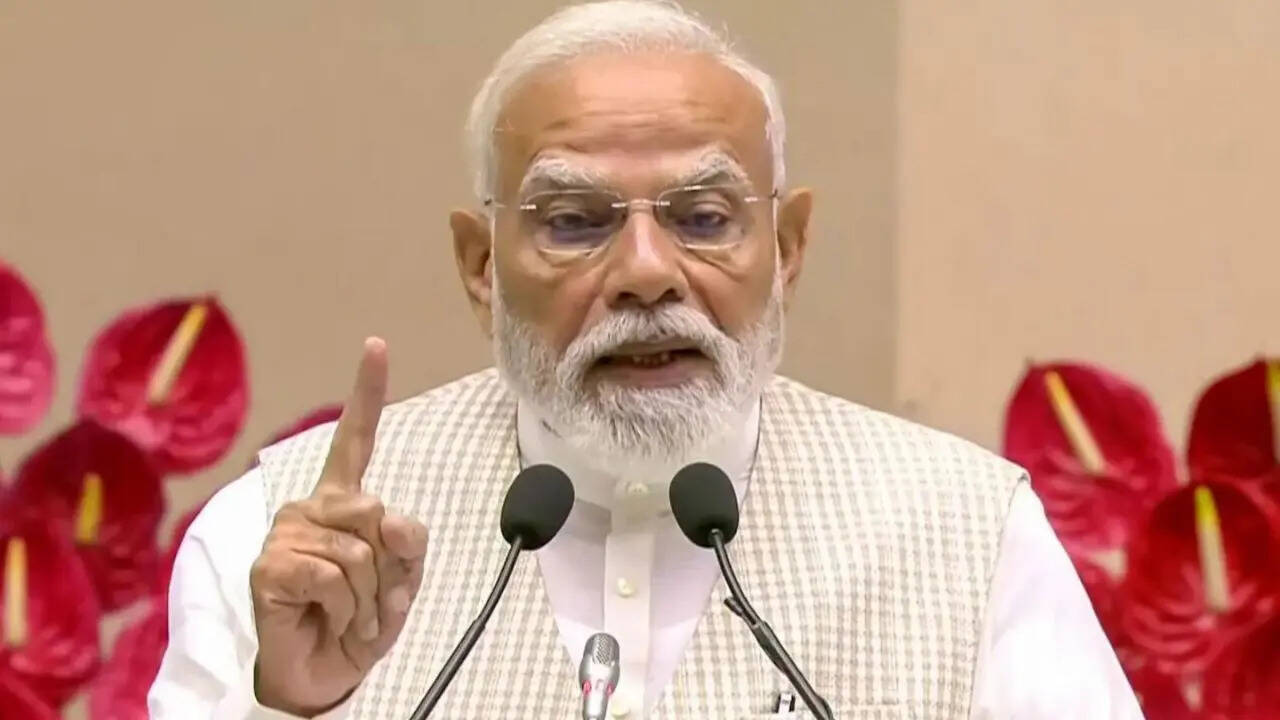
Prime Minister Narendra Modi recently spoke about the importance of the Women’s Reservation Act, linking it to the vision of Dr. B.R. Ambedkar. During his address, the Prime Minister explained that giving women a guaranteed place in politics is a key part of making India a fair and inclusive country. He noted that this law is a tribute to Ambedkar’s work for equality and social justice. The government aims to have the law fully active by the 2029 national elections to help India become a developed nation.
Main Impact
The main impact of this move is a major shift in how India will be governed in the future. By reserving one-third of the seats in the Lok Sabha and state assemblies for women, the law ensures that women have a direct say in making the country's rules. This change is expected to bring new perspectives to the government and focus more attention on issues that affect families and communities. It also sends a strong message to the world that India is serious about gender equality in its highest offices.
Key Details
What Happened
Prime Minister Modi used the occasion of Ambedkar Jayanti to talk about the Nari Shakti Vandan Adhiniyam, which is the official name of the Women’s Reservation Act. He explained that Dr. Ambedkar always believed that the progress of a community should be measured by the progress made by its women. By connecting the new law to Ambedkar’s legacy, the Prime Minister is looking to build broad support across different parts of society. He emphasized that the law is not just about politics, but about giving every citizen an equal chance to lead.
Important Numbers and Facts
The Women’s Reservation Act proposes to set aside 33 percent of seats for women in the lower house of Parliament and in all state legislative assemblies. Currently, the number of women in these positions is much lower than their share of the population. The Prime Minister confirmed that the goal is to see this law fully implemented by the 2029 general elections. To reach this goal, the government must first complete a national census and a process called delimitation, which involves redrawing the boundaries of voting districts based on the new population data.
Background and Context
The idea of reserving seats for women in India’s Parliament has been discussed for nearly thirty years. Many different governments tried to pass similar bills in the past, but they often faced strong opposition or lacked enough votes. The current version of the bill was passed with a huge majority in both houses of Parliament in late 2023. This was seen as a historic moment because it finally turned a long-standing demand into a law. Dr. B.R. Ambedkar, who was the main architect of the Indian Constitution, also fought for women's rights through the Hindu Code Bill in the 1950s. Linking the current law to his name reminds people that the fight for equality has deep roots in India's history.
Public or Industry Reaction
The reaction to the Prime Minister’s statements has been mostly positive, especially among women’s rights groups and social activists. Many people feel that the connection to Dr. Ambedkar adds more weight to the law and shows a commitment to the poorest and most marginalized women in society. However, some political critics have asked why the law cannot be used sooner. They point out that waiting until 2029 feels like a long time for a change that is needed now. Despite these debates, there is a general sense of hope that this law will change the face of Indian politics forever.
What This Means Going Forward
Looking ahead, the next few years will be focused on the technical steps needed to make the law work. The government needs to conduct a census, which is a massive task in a country as large as India. After the census, the delimitation commission will decide which specific seats will be reserved for women. This process must be transparent and fair to ensure that all regions are represented correctly. Once these steps are finished, the 2029 elections will be the first time in history that at least one-third of the candidates winning seats in the Lok Sabha will be women. This will likely lead to more laws and policies that focus on education, healthcare, and safety for women.
Final Take
Connecting the Women’s Reservation Act to the ideals of Dr. B.R. Ambedkar is a powerful way to show that India is moving toward a more balanced society. While the wait until 2029 requires patience, the promise of a more inclusive democracy is a major step for the nation. This law ensures that the voices of half the population will no longer be quiet in the halls of power, making the dream of a developed India much more reachable.
Frequently Asked Questions
What is the Women’s Reservation Act?
It is a law that reserves 33 percent of the seats in the Lok Sabha and state assemblies for women to ensure they have better representation in government.
Why did PM Modi mention Dr. B.R. Ambedkar?
He mentioned Ambedkar because the leader was a strong supporter of women's rights and equality, and the Prime Minister believes this law fulfills Ambedkar's vision for India.
When will the law actually start working?
The government plans to have the law fully in place for the 2029 national elections, after the next census and the redrawing of voting districts are completed.



