
Summary
India is preparing to make a major change to its political system that will give women a much larger voice in government. Prime Minister Narendra Modi announced that Parliament will hold a special three-day session to speed up the implementation of the Women’s Reservation Act. The goal is to ensure that 33% of seats in the Lok Sabha and state assemblies are reserved for women by the 2029 elections. This move aims to end years of waiting and bring more balance to how the country is governed.
Main Impact
The most significant impact of this decision is the new timeline for gender equality in Indian politics. Under the original version of the law passed in 2023, women would likely have had to wait until 2034 to see these reserved seats. By amending the law now, the government is moving that date forward by five years. This means that hundreds of women will enter the halls of power much sooner than expected, fundamentally changing the way laws are debated and passed in India.
This change is expected to make the political system more inclusive. When more women are involved in making decisions, the government can better address the needs of all citizens. The Prime Minister described this as a move toward a more equal society where social justice is a natural part of the work culture rather than just a political promise.
Key Details
What Happened
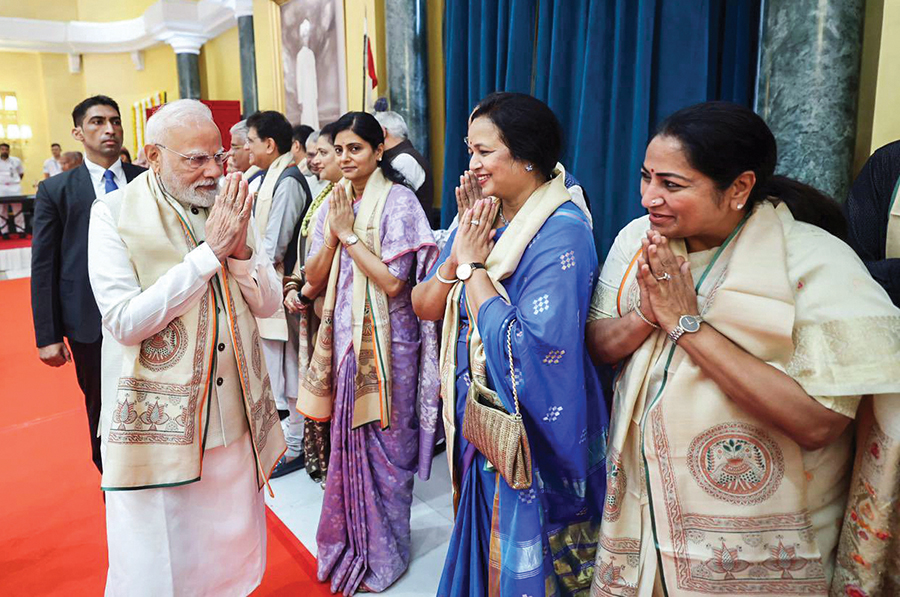
Prime Minister Narendra Modi spoke at a large gathering of women called the ‘Nari Shakti Vandan Sammelan.’ During his speech, he explained that the Parliament would meet for a special session from April 16 to April 18, 2026. The main purpose of this meeting is to pass amendments to the ‘Nari Shakti Vandan Adhiniyam,’ which is the official name of the Women’s Reservation Act. These changes are necessary to make the law work for the upcoming 2029 national elections.
Important Numbers and Facts
The upcoming changes involve several key figures that show the scale of this reform. Once the amendments are passed and the new system is in place, the total number of seats in the Lok Sabha is expected to rise to 816. Out of these, 273 seats will be specifically reserved for women candidates. This ensures that at least one-third of the most powerful legislative body in the country consists of women. The Prime Minister noted that when the law was first introduced in 2023, it received support from almost all political parties, showing a rare moment of national unity on this issue.
Background and Context
To understand why this special session is happening, it is important to look at the history of the Women’s Reservation Act. The law was officially passed in September 2023. However, there was a catch: the law said the reservation could only start after the country finished its next census and a process called "delimitation." Delimitation is when the government redraws the boundaries of voting areas to make sure they are fair based on the current population.
Because the census and the redrawing of boundaries take a long time, the original plan meant the reservation wouldn't be ready until 2034. Many people felt this was too long to wait. The new amendments being discussed this week are designed to break that link. By changing the rules, the government can start the reservation process in time for the 2029 elections, fulfilling a long-standing demand from women leaders and the public.
Public or Industry Reaction
There is a strong sense of excitement among women across the country. Many women are already expressing their desire to run for office and represent their communities in state assemblies and the national Parliament. The Prime Minister mentioned that a "positive atmosphere" has been created because women now see a clear path to leadership. He encouraged women to stay active in this process and to talk to their local Members of Parliament (MPs) to share their ideas and what they expect from the government.
Political experts also see this as a vital step for India’s democracy. While there has been some debate in the past about how to implement the reservation, the current move to speed up the process has gained broad interest. The Prime Minister emphasized that the goal is to finish this work through dialogue and cooperation, which helps maintain the dignity of the Parliament.
What This Means Going Forward
Looking ahead, the passage of these amendments will trigger a massive shift in how political parties select their candidates. Parties will need to find and train many more women to run for office. This will likely lead to new faces and new ideas in Indian politics. The 2029 election will be a historic event, as it will be the first time the 33% reservation is put into practice at the national level.
There are still steps to take, including the formal voting in Parliament over the next few days. If everything goes as planned, the legal hurdles that were causing the delay will be removed. This will clear the way for a more balanced government that reflects the actual population of the country. It also sets a standard for other nations looking to improve gender representation in their own governments.
Final Take
The decision to speed up women's reservation is a defining moment for India. It shows a commitment to making sure that "woman power" is not just a phrase, but a reality in the halls of government. By moving the implementation to 2029, the country is choosing to act now rather than later. This change will likely influence Indian society for many years, ensuring that the voices of women help lead the nation into the future.
Frequently Asked Questions
What is the Women’s Reservation Act?
It is a law that sets aside 33% of the seats in the Lok Sabha and state legislative assemblies for women. Its goal is to increase the number of women in government.
Why is the government holding a special Parliament session?
The session is being held to change the law so that the reservation can start in 2029. Without these changes, the reservation would not have started until 2034.
How many seats will be reserved for women in the Lok Sabha?
After the changes and the increase in the total number of seats, there will be 273 seats reserved for women out of a total of 816 seats.



