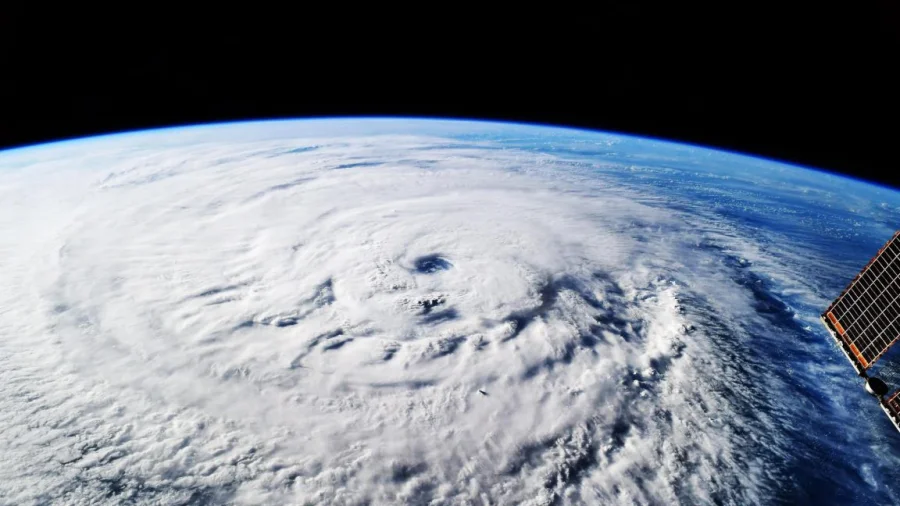
Five days before Hurricane Melissa tore into Jamaica, a Google DeepMind model told forecasters exactly where the storm would go — and how violent it would become. WeatherNext, built by DeepMind and Google Research, predicted a Category 5 landfall with 80 percent confidence. Most other models were still arguing over whether the storm would stay weak or explode. That moment — when an AI system outperformed the consensus of conventional forecasting — is why meteorologists are now paying close attention.
A Caribbean storm that split the forecasters
In early October 2025, a storm system brewed over the Caribbean Sea. Forecast models could not agree on its future. Some showed it remaining weak and drifting toward Haiti. Others suggested it could intensify and head for Jamaica. Those two outcomes meant very different preparations for two different countries.
WeatherNext settled the question in a way that surprised even its creators. The model chose the more dangerous path: Jamaica — and as a major hurricane.
An 80 percent call made five days out
Five days before landfall, the AI model predicted with 80 percent confidence that the system would hit Jamaica as a Category 5 hurricane. That is not just a stronger storm; it is among the most destructive categories on the Saffir-Simpson scale.
For forecasters, the confidence value was remarkable. Most operational models at that lead time express significant uncertainty about both track and intensity.
Hurricane Melissa's devastating arrival
When Melissa made landfall, the forecast proved accurate. The hurricane caused catastrophic flooding and landslides across Jamaica. Buildings, roads and communities were hit hard, with the storm leaving a trail of destruction across the island nation.
The AI model could not stop the hurricane. But the earlier warning meant authorities and residents knew several days in advance that they were in a Category 5 storm's path.
The Nature paper that documents the breakthrough
On Thursday, researchers published the findings in Nature, one of the world's most respected scientific journals. The paper reports that WeatherNext can predict cyclones with unprecedented accuracy, based on the model's performance in real and simulated forecasting scenarios.
The study's publication signals that the results have cleared rigorous peer review — not just internal benchmarks at Google.
How WeatherNext differs from traditional weather models
Conventional hurricane forecasting relies on physics-based simulations that calculate atmospheric equations across massive grids. These models are powerful but computationally heavy and can diverge widely on storm tracks.
WeatherNext works differently. It is trained on decades of historical weather data and learns patterns directly from observations. Once trained, the AI can produce forecasts quickly, which allows forecasters to run many simulations and compare outcomes. This approach appears to handle complex storm systems like hurricanes with surprising consistency.
Why that extra lead time matters for communities
For people living on the Jamaican coast, five days of warning can mean the difference between shelter and exposure. Earlier alerts give residents time to secure homes, stock supplies, evacuate vulnerable areas and move boats and livestock to safety.
The Hurricane Melissa case is also a rare example where an AI forecast handed forecasters and communities a concrete advantage before a major disaster unfolded.
Confirmed facts vs. what remains unclear
Verified: WeatherNext predicted a Category 5 landfall in Jamaica five days ahead with 80 percent confidence. Hurricane Melissa caused catastrophic flooding and landslides in Jamaica. The results were published in Nature on Thursday.
Still unclear: The full scope of the paper's accuracy statistics, how WeatherNext compares across all storm types and basins, and whether national weather services will adopt it for operational warnings.
Risks and the balanced view
AI weather models are not immune to failure. They rely on historical data, and climate change is producing storms outside that historical envelope. An unusually rare or rapidly evolving system could still fool a machine-learning model.
Meteorologists also point out that AI forecasts should complement, not replace, human expertise. The most reliable warnings will likely combine physics-based models, AI predictions and experienced forecasters.
A wider shift toward AI-driven weather prediction
WeatherNext is part of a broader push in meteorology. Major technology companies and research labs have been working on machine-learning weather models that run faster and sometimes more accurately than traditional systems.
The Hurricane Melissa result strengthens the case that these AI models are moving from research experiments to genuinely useful forecasting tools.
What forecasters and residents should take away
For weather agencies, the lesson is to evaluate AI models seriously as ensemble members, especially in the critical 3-to-7-day window. For the public, the story is simpler: if forecasters issue an early hurricane warning, the time to act is immediately — not when the storm appears on the horizon.
Future outlook
If replicated in more storms and regions, DeepMind's WeatherNext could help reduce hurricane deaths and economic losses by extending reliable warning times. But integration into official systems will take time, testing and regulatory acceptance.
The bigger question is whether the model's success with Melissa will hold across the next hurricane season.
Our Take
The DeepMind hurricane breakthrough matters because it demonstrates a genuine, life-saving application of AI — not in a lab, but in a real disaster. The fact that it surprised weather scientists is telling. This is not a marginal improvement; it is a fundamental difference in how forecasting could work.
The credibility of this achievement rests on the Nature publication. Peer-reviewed, transparent results will allow the scientific community to stress-test WeatherNext against future storms. If the model continues to deliver, hurricane warnings could become earlier, clearer and more reliable.
Frequently Asked Questions
What is DeepMind's WeatherNext?
WeatherNext is an artificial intelligence model developed by Google DeepMind and Google Research. It is trained on historical weather data to predict weather events, including hurricanes, faster and sometimes more accurately than traditional physics-based models.
How did WeatherNext predict Hurricane Melissa?
Five days before Hurricane Melissa hit Jamaica, WeatherNext predicted with 80 percent confidence that the storm would reach the island as a Category 5 hurricane. Other forecast models were uncertain and split between Haiti and Jamaica at the time.
Was Hurricane Melissa really a Category 5 at landfall?
Based on the original report, the storm caused catastrophic flooding and landslides across Jamaica. The report describes the AI's prediction of a Category 5 landfall as accurate, though precise wind speed measurements at landfall were not stated in the source material.
Why are weather scientists surprised by this breakthrough?
The result was surprising because the AI model made a high-confidence, correct forecast five days in advance while traditional forecast models were still uncertain about the storm's track and intensity. The findings were published in Nature, a peer-reviewed scientific journal, adding credibility to the claims.
[NEWS_SCHEMA] { "@context": "https://schema.org", "@type": "NewsArticle", "headline": "The AI that called Hurricane Melissa's Category 5 path five days early", "description": "Google DeepMind's WeatherNext predicted Hurricane Melissa's Category 5 landfall in Jamaica five days early. A Nature paper reveals how the AI model is reshaping cyclone forecasting.", "image": "https://example.com/images/deepmind-weathernext-hurricane-melissa.jpg", "datePublished": "2026-05-09", "dateModified": "2026-05-09", "author": { "@type": "Person", "name": "Staff Reporter", "url": "https://example.com/author/staff-reporter", "sameAs": [] }, "publisher": { "@type": "Organization", "name": "Newsroom Despatch", "logo": { "@type": "ImageObject", "url": "https://example.com/logo.png" } }, "mainEntityOfPage": { "@type": "WebPage", "@id": "https://example.com/deepmind-hurricane-breakthrough" }, "articleSection": "Technology", "keywords": "DeepMind hurricane breakthrough, WeatherNext AI, Hurricane Melissa prediction, AI cyclone forecasting, Google DeepMind Nature paper" } [SOURCES] Original news briefing (provided source material) — Newsroom DespatchNature — Peer-reviewed journal where the WeatherNext study was published
Google DeepMind — Developer of WeatherNext