
Summary
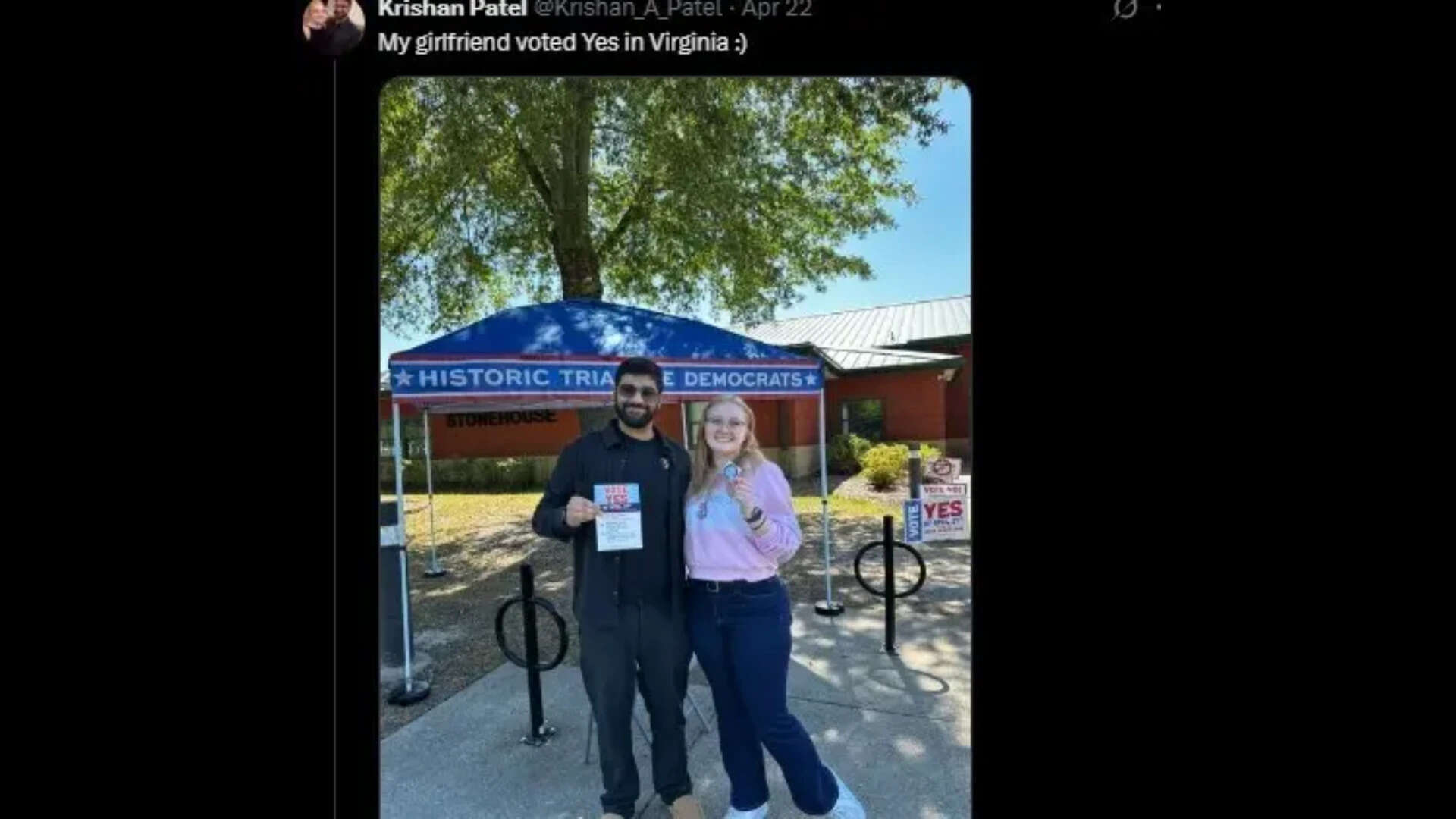
A simple social media post about voting in Virginia has sparked a massive online debate about identity and belonging. An Indian-origin man shared a photo of his girlfriend participating in a local redistricting election, expecting to celebrate a moment of civic duty. Instead, he was met with a wave of negative comments and trolling from users who questioned his ties to the United States. The man eventually defended himself by stating he is as American as anyone else, highlighting the challenges many immigrants face even when they fully participate in the democratic process.
Main Impact
This incident shows how polarized social media has become, especially regarding the topic of immigration and national identity. What should have been a routine post about a local election turned into a battleground over who counts as a "real" American. The backlash against the man suggests that for some people, heritage and race still play a larger role in their view of citizenship than legal status or community involvement. This event has forced a wider conversation about the treatment of the Indian-American community, which is one of the most successful and active groups in the country.
Key Details
What Happened
The situation began when a man of Indian descent posted a picture on a popular social media platform. The image showed his girlfriend at a polling station in Virginia during a redistricting election. These elections are held to decide new boundaries for voting districts, which can change who represents a specific area in government. Shortly after the photo was shared, the comments section was filled with mean-spirited remarks. Many users told the man to "go back" or suggested that he and his girlfriend were not truly part of the American fabric. The man did not stay silent; he replied to the critics by asserting his identity and his right to be involved in the political system of the country he calls home.
Important Numbers and Facts
The Indian-American community has grown significantly over the last decade, now making up a vital part of the U.S. population. In Virginia specifically, the immigrant vote has become a deciding factor in many local and state elections. Redistricting elections are often complex and do not always get high turnout, making every vote count more than usual. While the exact number of negative comments was not counted, the post received thousands of interactions, showing how quickly such topics can go viral. Data shows that Indian-Americans have one of the highest rates of education and income in the U.S., yet they still face frequent online harassment related to their origins.
Background and Context
To understand why this happened, it is important to look at the current state of American politics. Redistricting is a process that happens every few years to make sure voting districts have an equal number of people. It is a very political process because where the lines are drawn can help one party win over another. Because these elections are so important, emotions often run high. At the same time, there has been a rise in online nationalism. Some groups believe that only people whose families have been in the country for many generations are "true" citizens. This creates a difficult environment for people of Indian origin or other immigrant backgrounds who are trying to be active in their local communities.
Public or Industry Reaction
The reaction to the trolling was split into two main groups. On one side, many people came to the man's defense. They pointed out that voting is the most American thing a person can do and praised the couple for being involved in local politics. Civil rights groups and community leaders also spoke up, noting that this kind of harassment is a form of xenophobia that discourages people from participating in democracy. On the other side, the trolls continued to use harsh language, often hiding behind anonymous profiles. This divide shows that while many people welcome diversity, there is still a vocal group that uses social media to spread exclusion and anger.
What This Means Going Forward
This event serves as a warning about the risks of sharing personal moments online in a divided society. For the Indian-American community, it may lead to more caution when posting about political activities. However, it could also have the opposite effect by encouraging more people to stand up and claim their place in the public square. Moving forward, social media companies may face more pressure to handle "identity-based" trolling more effectively. If people feel unsafe sharing their participation in elections, it could hurt the overall health of the democratic system. The man’s firm response has already become a point of pride for others in similar situations, suggesting that the community will not be easily silenced.
Final Take
Being American is about more than just where a person was born; it is about contributing to the community and following the laws of the land. When someone participates in an election, they are doing their part to make the country better. Attacking someone for their heritage while they are performing a civic duty is not only unfair but goes against the values that the country was built on. This story reminds us that words matter and that everyone deserves respect when they step up to vote.
Frequently Asked Questions
Why was the man trolled for the photo?
He was targeted by people who used his Indian heritage to claim he was not a "real" American, despite the fact that he and his girlfriend were participating in a legal U.S. election.
What is a redistricting election?
It is an election or a voting process used to decide the new boundaries of political districts. These boundaries determine which voters are grouped together to elect a representative.
How did the man respond to the negative comments?
He defended himself by stating that he is just as American as his critics and that his heritage does not make him any less of a citizen or a participant in the country's democracy.

