Zanskar does not appear often in the official diary of a senior Ladakh officer — which is precisely why a visit by the Director of the Sheep Husbandry Department, UT Ladakh, is drawing attention. The tour was made public by the Union Territory administration itself, in a release titled "Director Sheep Husbandry Department UT Ladakh Visits Zanskar."
For a region where livestock is not a side income but the primary one, a departmental head's presence on the ground is a signal worth reading. The difficulty is that the signal is, so far, mostly gesture.
What is confirmed is narrow and clear: the Director of the Sheep Husbandry Department visited Zanskar. The purpose of the tour, the people met, the facilities reviewed and any commitments made have not been spelled out.
What the Administration's Release Actually Confirms
The disclosure is an acknowledgement of a senior departmental officer's travel to Zanskar. It stops there. There is no quoted statement from the Director, no list of villages covered, and no announcement of schemes, sanctions or deadlines.
That absence is not unusual for departmental tours. It is, however, the reason readers should treat anything beyond the visit itself as unconfirmed rather than reported.
Why a Zanskar Stop Is Not a Routine Official Trip
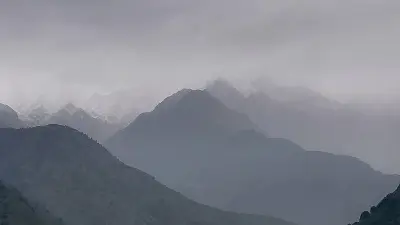
Zanskar sits in the high reaches of Kargil district, ringed by passes that close under snow for months at a stretch. Reaching the valley is a logistics exercise in vehicles, weather windows and oxygen-thin roads — not a day's errand.
When a department head undertakes that journey, the normal reading is that something on the ground warranted senior eyes: breeding infrastructure, staffing at veterinary posts, fodder logistics, or animal health in a season that punishes both flocks and people.
How Livestock Quietly Holds Up Ladakh's Rural Economy
In Ladakh, sheep and goat rearing is not a subsidiary activity. It supplies wool, meat, dairy and — across the Changthang belt — the fine pashmina fibre that reaches international markets through long, fragile supply chains.
For a Zanskar household, a flock functions as savings account, income source and insurance at once. When a breeding programme stalls, a fodder supply misses a season, or a veterinary position stays vacant, the damage lands on a single family within months.
The Herders Standing Behind the Headline
The people most directly affected by any Sheep Husbandry decision are pastoral households, many of them smallholders running mixed flocks of sheep and goats alongside limited agriculture.
Their concerns are rarely abstract. They are feed during the lean winter, timely vaccination, access to quality breeding stock and a fair return on wool and fibre. Whether this particular visit touched on any of them has not been stated publicly.
What the Department Has Said — and What It Hasn't
So far, the administration has confirmed a visit by designation and nothing further. There is no attributable quote, no outcome note and no follow-up schedule in the material available.
In departmental practice, that is normal. Results of such tours tend to surface weeks later as administrative orders, revised scheme guidelines or sanctioned works rather than immediate announcements.
Why Terrain Rewrites Every Livestock Policy Decision
Altitude and distance change the arithmetic of animal husbandry in Ladakh. Fodder that is cheap in the plains becomes costly once it is trucked over a pass. Vaccines need cold chains that survive days of rough road.
Even a small failure in that chain — a delayed truck, a closed road, a broken solar refrigerator — can mean a lost season for a herding family. Any review of sheep husbandry in Zanskar ultimately runs into these physical limits.
Confirmed Facts vs What Remains Unclear
Confirmed: the Director of the Sheep Husbandry Department, UT Ladakh, visited Zanskar, as disclosed by the Union Territory administration.
Unclear: the date, duration and route of the visit; the officials and herder groups met; the sites inspected; and whether any scheme, funding or policy commitment was made. These details are not available in the source material and should not be assumed.
Risks and the Balanced View
The honest caveat here is that visits do not, by themselves, improve livestock outcomes. A senior tour can generate momentum and internal accountability — or it can be one more entry in a travel file if nothing follows it.
Herders in remote Ladakh have learned to judge such developments by what arrives in the valley: vaccines, feed, breeding animals, veterinary staff and payments. Until that happens, this remains a development to note rather than celebrate.
The Wider Pattern: Field Visits as a Governing Tool
Field inspections by senior officers have long been a standard instrument of administration in Ladakh's remote districts, where distances are vast and ground-level data is hard to gather from a secretariat office.
Seen in that light, this visit fits a familiar pattern: the departmental leadership travelling to the periphery to see conditions first-hand, with policy consequences — if any — arriving later.
What Herders and Local Families Should Do Now
For pastoral households in Zanskar, the practical move is to watch for official follow-ups through district and block-level offices rather than rely on unverified accounts of the visit.
Where concerns exist — feed shortages, pending vaccination, breeding stock — they are best raised in writing with the local Sheep Husbandry office, so that they enter the record that departmental reviews are meant to address.
Future Outlook
If the tour was a review exercise, its output may appear as administrative instructions, revised allocations or a district-level follow-up. If it was consultative, herder feedback could shape future programme design.
Neither can be confirmed yet. The next concrete signal to watch is an official statement, order or scheme notification from the department or the UT administration.
Our Take
This is a modest administrative story with a genuinely important subject underneath it. Sheep and goat rearing is one of the few livelihoods in Zanskar that works without subsidy from tourism or government employment, and it depends on a chain of services — breeding, fodder, veterinary care, marketing — that is easy to neglect from a distance.
A Director-level visit to that valley is a recognition, at minimum, that the department considers the area worth the journey. The value of that recognition will be decided later, by what reaches the herders.
Frequently Asked Questions
Who visited Zanskar?
The Director of the Sheep Husbandry Department, Union Territory of Ladakh, according to the administration's release. The release identifies the officer by designation rather than name.
When did the visit take place?
The date has not been specified in the available source material. Without an official timestamp, any specific date circulating elsewhere should be treated as unverified.
Where exactly is Zanskar and why is it significant for sheep husbandry?
Zanskar is a high-altitude sub-division in Kargil district, Ladakh, connected to the rest of the region by mountain passes that are snow-bound for much of the year. Its households rely substantially on sheep and goat rearing for wool, meat, dairy and cash income, which makes departmental support there economically meaningful.
Did the department announce any new scheme or funding?
No announcement has been made public. Readers should wait for an official order, notification or departmental statement before treating any programme claim as confirmed.