
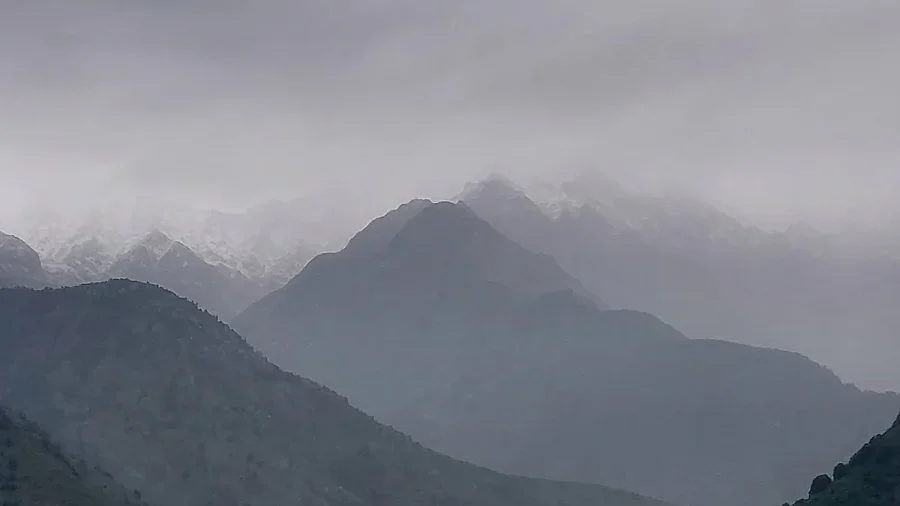
Kashmir's winter did not announce itself in Srinagar. It arrived high up, on the Apharwat slopes above Gulmarg, where a thin layer of snow settled overnight — and further north in Gurez, where fresh snowfall was reported at Koebal Gali in Tulail in the early hours of Thursday.
For tourists, it is a photograph worth posting. For the people who earn their living from this landscape, it is the starting gun for the most unpredictable season of the year.
Gulmarg's Apharwat Slopes and Gondola Phase 2 Get the First Dusting
Snow fell during the night across the upper reaches of Gulmarg, the popular ski resort in north Kashmir's Baramulla district, officials said. The Apharwat area and the Gondola Phase 2 route were among the spots covered by a thin white layer.
In Gurez, snowfall was reported at Koebal Gali in Tulail during the early morning hours, according to weather updates shared from the valley. The snowfall added to the scenic appeal of the destination as the region marked the arrival of colder weather.
Rain in the Valley, Snow on the Peaks — How the Same Weather Split
While the high ground turned white, overnight rain lashed the plains of the Kashmir Valley. That contrast is not a contradiction; it is how mountain weather usually works.
The same weather system can deliver rain at lower altitudes and snow higher up, because temperature drops with height. Gulmarg and the Tulail belt of Gurez sit well above the valley floor — enough for precipitation to fall as snow while Srinagar and the surrounding plains only get wet.
Why One Snowfall Can Shape Kashmir's Whole Winter Economy
Kashmir runs on two tourist seasons, and the winter one is built almost entirely on snow. Gulmarg's gondola, its ski slopes and its hotel trade depend on the white cover staying long enough for visitors to plan trips around it.
That is why the first snowfall is watched more closely here than the headline temperature. It signals to travel operators, guides and hotel owners that bookings can be marketed with confidence — and it signals to everyone else that the difficult months have begun.
Who Feels This First: Ski Guides, Orchardists, Shepherds and Gurez Families
The first people to feel the shift are rarely the ones taking pictures. Ski instructors and ponywallahs in Gulmarg see it as work arriving. Hotel and homestay owners see it as the start of their busiest stretch.
Orchardists read early snow and a cold snap differently — as something to monitor closely after the harvest. Pastoral communities moving livestock towards lower pastures also treat the first mountain snow as a cue to shift routes.
And in Gurez, snow is not scenery. The valley's link to the rest of Kashmir runs through high passes that are known to shut for long stretches in the harshest weeks of winter, cutting off everyday access to markets and medical care. An early dusting is a reminder of what is coming, not a crisis in itself.
Officials Confirm the Snow as a Weather Warning Runs Alongside It
Officials confirmed the overnight snowfall in the higher reaches. Alongside the snowfall reports, weather bulletins carried a warning of flash floods and landslides amid heavy rain.
That combination deserves attention. The system that paints the peaks white is the same one that can loosen hillsides and swell streams in the lower valleys — particularly where rain falls hard and fast on already saturated ground.
The Snowline Explained: A Moving Line, Not a Fixed One
The "snowline" is simply the altitude above which precipitation falls as snow rather than rain. It is not a permanent feature on a map; it rises and falls with each weather system and each drop in temperature.
In practice, that means the first snow always appears on the highest ridges — Apharwat, the upper gondola section, the passes above Tulail — and only later creeps down towards populated areas. If the current cold spell holds, the line will descend. If it breaks, the snow can retreat for weeks before returning.
What Is Confirmed About the Snowfall — and What Is Not
Confirmed: snowfall overnight in the upper reaches of Gulmarg, including the Apharwat area and the Gondola Phase 2 route; fresh snowfall reported at Koebal Gali in Tulail, Gurez; and overnight rain across the plains of the Kashmir Valley, according to officials.
Not confirmed: how much snow accumulated at each location, how far down the snowline actually reached, whether the snowfall has caused any disruption, and whether this marks the start of a settled cold spell. No official assessment of depth or impact has been released so far, and any figure circulating without attribution should be treated with caution.
The Risks Hiding Behind the Photographs
Early-season snow is often thin, wet and slippery — more dangerous underfoot than the deep powder of mid-winter. Roads to higher reaches can turn treacherous quickly, and conditions change within hours.
There is a second, less visible risk. Heavy rain in the plains, of the kind reported overnight, carries its own warnings of flash floods and landslides. For travellers and residents alike, the season's opening note is beauty with a caution attached.
A Snow Calendar That Keeps Moving — What One Event Can and Cannot Tell Us
Residents of Kashmir have long tracked when the first snow arrives and when the last one leaves, because both dates shape farming, travel and tourism. Those dates are not fixed, and they vary noticeably from year to year.
One thing this snowfall cannot do is settle any larger question about long-term climate patterns. A single early event is weather, not proof of a trend. But it does restart an annual conversation in the valley about how predictable — or unpredictable — the seasons have become, and that conversation is worth having carefully rather than dramatically.
If You're Travelling to Gulmarg or Gurez in the Coming Weeks
Check the forecast and road status before you leave, not after. Carry proper layers and footwear that grips, keep a buffer in your itinerary, and treat gondola and ropeway operations as weather-dependent rather than guaranteed.
If your plans involve Gurez, factor in that access is seasonal and can change with a single bad spell. Build flexibility into bookings, and don't rely on a single route or a single day's weather.
What Could Happen Next
If the current system persists, further snowfall in the higher reaches is a realistic possibility, with rain continuing in the plains — and the snowline gradually moving lower as winter takes hold. If temperatures rise instead, the white cover at these altitudes can disappear within days.
The one thing that is genuinely predictable about Kashmir's mountain weather is that it changes. Forecasts over the next few weeks will matter far more than today's photograph.
Our Take
The first snowfall in Gulmarg and Gurez is a genuinely lovely thing, and there is no reason to be cynical about the excitement it generates — tourism is a livelihood here, and a good winter matters.
But the story is bigger than the postcard. It is the moment the valley's economy, its farmers, its shepherds and its mountain communities start adjusting to a season that gives with one hand and takes with the other. Read alongside the rain warning issued for the plains, it is also a reminder that in Kashmir, the weather is never just scenery.
Frequently Asked Questions
Has it snowed in Gulmarg this season?
Yes. Officials said snow fell during the night across the upper reaches of Gulmarg, including the Apharwat area and the Gondola Phase 2 route. It was described as the season's first snowfall in these higher reaches.
Where exactly did the snowfall occur?
The snowfall was reported from the upper reaches of Gulmarg in Baramulla district, and from Koebal Gali in Tulail, in the Gurez sector, during the early morning hours.
Did it snow in Srinagar or the Kashmir Valley plains?
No. The plains of the Kashmir Valley received overnight rain instead. Snowfall at this stage is confined to higher altitudes, where temperatures are low enough for precipitation to fall as snow.
Is it safe to travel to Gulmarg right now?
Travel is generally possible, but conditions in the higher reaches can change quickly and early-season snow is often thin and slippery. Check official forecasts and road status before travelling, and treat gondola and ropeway operations as weather-dependent.

