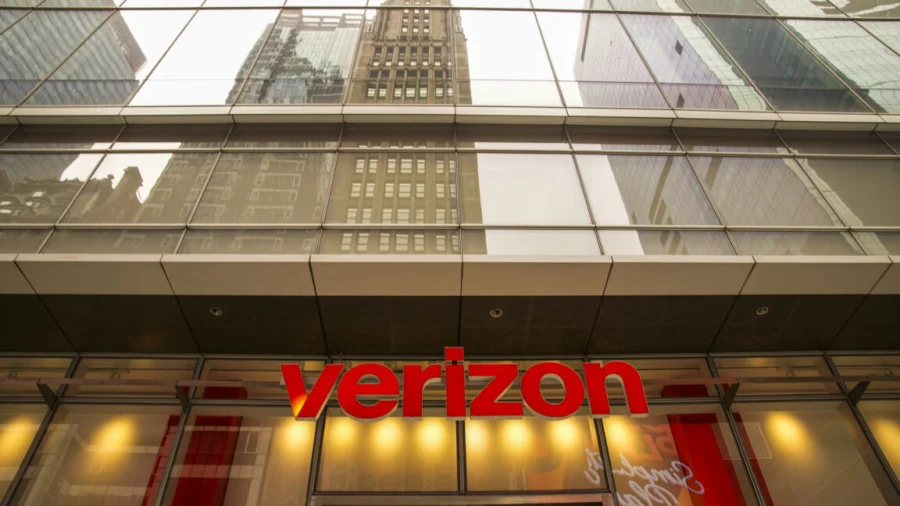
Verizon is making its biggest bet yet on the artificial intelligence boom. The telecom giant revealed on its second-quarter 2026 earnings call a deal worth more than $1 billion to link Google data centers using Verizon’s dark fiber routes—and it’s tearing out old copper lines from central offices to turn them into small AI inference hubs.
The Google dark fiber deal: What was announced
Verizon publicly disclosed a partnership with Google under a new “AI Connect” initiative. The agreement involves providing dark fiber—unlit, high-capacity fiber optic cables—to interconnect Google data centers. CEO Dan Schulman described the deal as the first of many, emphasizing that it represents a “significant” revenue opportunity over the next several years.
Why dark fiber matters for AI workloads
Dark fiber offers dedicated, scalable bandwidth with low latency—critical for training and running AI models that process massive datasets across distributed data centers. For Google, which is investing heavily in AI infrastructure, Verizon’s existing fiber network reduces the need to build new cabling from scratch.
The central office transformation: Copper to AI inference hubs
Verizon also confirmed it is removing copper wiring from its central offices and repurposing those spaces into small data centers optimized for AI inference—the process of running trained AI models to make predictions or decisions. This move leverages Verizon’s vast physical real estate and power infrastructure, offering a distributed computing model that can reduce latency for edge AI applications.
Who benefits and who is affected
For Google, the deal secures dedicated fiber capacity to support its expanding AI data center network. Verizon gains a new, high-margin revenue stream beyond its core consumer and business telecom services. The broader AI infrastructure ecosystem—chipmakers, cloud providers, and network equipment vendors—may also see ripple effects as telecoms adapt networks for AI.
Official response and CEO outlook
Dan Schulman, CEO of Verizon Communications, told analysts during the earnings call: “We expect to announce additional AI-related deals by the end of the year that would be worth multiple billions of dollars in revenue over the next several years.” The statement signals Verizon’s confidence that the Google deal is not a one-off but the beginning of a larger AI infrastructure business.
Why this deal signals a shift for telecom giants
For years, telecom carriers have struggled to monetize their fiber assets beyond traditional broadband. The Google deal shows how AI demand is creating a new revenue model: selling dedicated physical-layer connectivity to hyperscale cloud providers. It also positions Verizon to compete with companies like Lumen Technologies and Zayo Group, which already focus on dark fiber for data centers.
Confirmed Facts vs What Remains Unclear
Verizon confirmed the $1 billion+ value of the Google dark fiber deal and the central office conversion plan. What remains unclear: the exact timeline for the conversions, the financial terms beyond the headline figure, and whether Google is the exclusive or primary partner for the AI Connect initiative. Verizon has not disclosed how many central offices will be converted or the projected revenue from the initiative.
Company moat: Why Verizon’s fiber and real estate matter
Verizon owns one of the largest fiber networks in the U.S., with extensive underground routes and thousands of central office buildings. This physical infrastructure creates a high barrier to entry: building new fiber is expensive and time-consuming. By repurposing central offices as AI inference nodes, Verizon adds a second moat—prime real estate with power and security already in place.
Risks and balanced view
Not everyone is convinced. Some analysts caution that dark fiber deals are low-margin compared to retail broadband, and conversion of central offices involves significant upfront cost. There is also execution risk: repurposing old telecom facilities for modern AI compute requires retrofitting cooling, power, and security systems. Competition from other fiber providers and cloud giants building their own networks could erode Verizon’s advantage.
Wider trend: Telecoms as AI infrastructure partners
The Verizon-Google deal fits a broader pattern. AT&T has explored edge computing partnerships, while Lumen has inked multi-billion-dollar deals with cloud providers. As AI workloads move from centralized mega data centers to distributed edge locations, telecom carriers with dense fiber and real estate become critical enablers. This could reshape how telecoms are valued—from utility-like dividend stocks to growth-oriented infrastructure plays.
Practical guidance for investors and industry watchers
Investors should monitor Verizon’s Q3 and Q4 earnings calls for additional AI deal announcements and updates on central office conversion costs. Tech industry professionals should watch whether Verizon’s AI Connect becomes a repeatable model for other carriers. For Google customers, the deal may improve latency and reliability for AI services running on Google Cloud.
Future outlook
If Verizon successfully executes its plan, the company could generate billions in new revenue from AI infrastructure over the next three to five years. However, much depends on whether it can scale the central office conversion quickly and whether Google and other hyperscalers continue to outsource connectivity rather than building their own fiber.
Our Take
This is more than a single deal—it’s a pivot. Verizon is betting that its physical network assets, long seen as slow-growth, can become indispensable for the AI era. The $1 billion Google contract is a proof point, but the real test will be whether Verizon can close those “multiple billions” in additional deals and execute the central office transformation without bleeding cash. If it works, Verizon could redefine itself as an AI infrastructure company. If it stumbles, the fiber and real estate will still have value, but not at the premium the market now anticipates.
Frequently Asked Questions
What is dark fiber and why is it important for AI?
Dark fiber refers to unused fiber optic cables that can be “lit” by the customer. For AI, it provides dedicated, high-capacity, low-latency connections between data centers, essential for training large models and running inference across distributed systems.
How much is the Verizon-Google deal worth?
Verizon disclosed the deal is worth over $1 billion. Specific payment terms and duration were not revealed.
What is Verizon’s AI Connect initiative?
AI Connect is Verizon’s new business unit focused on selling dark fiber and repurposed central office space for AI inference workloads. The Google deal is its first major contract.
Will Verizon convert all its central offices into data centers?
Verizon said it is converting some central offices into small data centers for AI inference, but did not specify how many. The process involves removing copper wiring and installing cooling and power systems.
How does this affect Google Cloud customers?
By using dedicated dark fiber, Google can reduce latency and improve reliability for AI services. End users may experience faster AI responses, especially for edge applications.