
Summary
The Viduthalai Chiruthaigal Katchi (VCK) has officially released its manifesto, outlining a strong stance on state rights and social justice. The party has voiced its firm opposition to the proposed delimitation process, which could change how many representatives each state sends to Parliament. Additionally, the VCK has reaffirmed its support for the two-language formula, emphasizing the importance of Tamil and English while rejecting the compulsory use of Hindi. These points form the core of the party's plan to protect the political and cultural identity of Tamil Nadu.
Main Impact
The VCK's manifesto highlights a growing concern among southern states regarding their influence in national politics. By opposing the redrawing of electoral boundaries based on population, the party is trying to prevent a situation where states with successful population control lose their voting power. This move positions the VCK as a key defender of federalism, which is the system where power is shared between the central government and the states. The impact of this stance is significant because it challenges the central government's current direction and seeks to give more control back to local leaders.
Key Details
What Happened
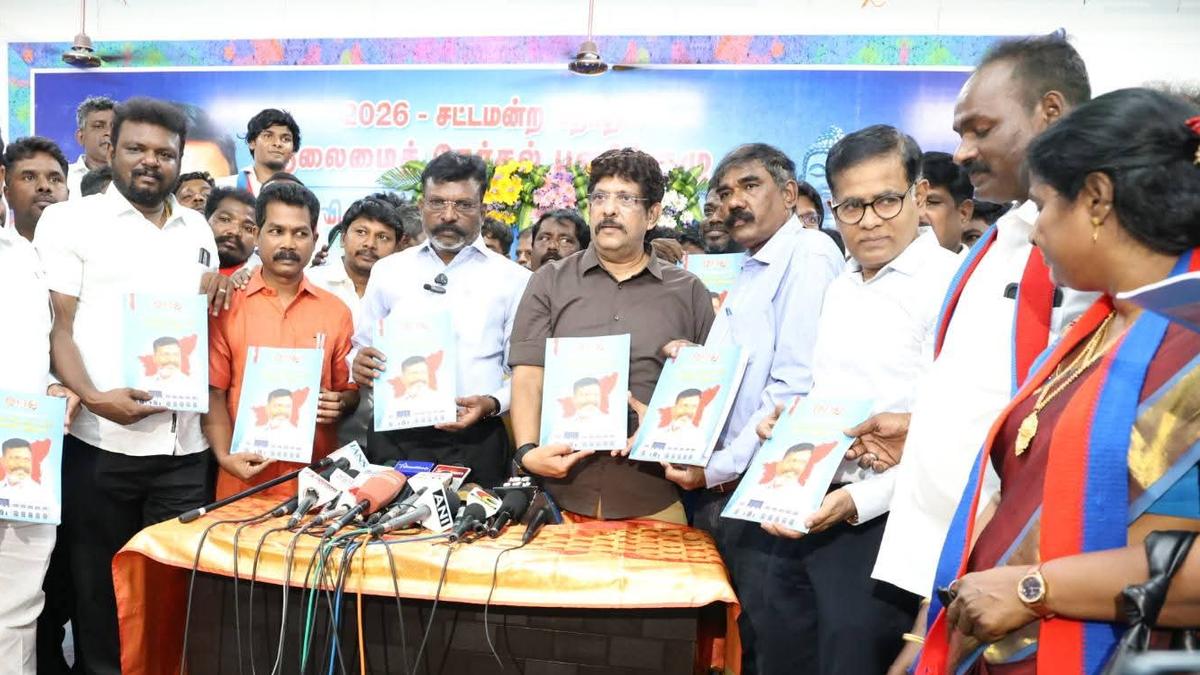
The leader of the VCK, Thol. Thirumavalavan, presented the manifesto to the public, detailing the party's promises and demands. The document serves as a roadmap for what the party hopes to achieve in the coming years. A major part of the announcement focused on the "delimitation" plan. This plan involves changing the size and number of voting districts across India. The VCK believes this will unfairly benefit states with high population growth while punishing those that have followed family planning rules. The party also made it clear that they will continue to fight for the two-language policy, which has been a standard in Tamil Nadu for decades.
Important Numbers and Facts
The current freeze on the number of seats in Parliament is set to end soon, with the next update expected after 2026. If the new seats are assigned strictly by population, southern states could lose a large percentage of their relative influence. The VCK manifesto also touches on education, demanding that it be moved from the "Concurrent List" back to the "State List." This would mean the state government, not the central government, has the final say on schools and exams. Furthermore, the party called for the removal of the National Eligibility cum Entrance Test (NEET), which they argue makes it harder for rural students to become doctors.
Background and Context
To understand why these issues matter, it is important to look at how India is governed. Every few decades, the government looks at census data to decide how many Members of Parliament (MPs) each area should have. This is called delimitation. However, states in the south have worked hard to slow down population growth to improve their economy and health standards. If the government adds more seats to states with more people, the south will have fewer MPs compared to the north. This makes people in the south worry that their needs will be ignored in the future.
The language issue is also a long-standing topic in Tamil Nadu. For over 50 years, the state has used a two-language system: Tamil for local culture and English for global communication. The VCK and other local parties believe that forcing Hindi on the state would hurt the local culture and create an unfair advantage for people from Hindi-speaking regions.
Public or Industry Reaction
The manifesto has received strong support from various social activists and regional political groups. Many people in Tamil Nadu feel that the VCK is speaking up for the common person's rights. Supporters of the party have praised the focus on the Constitution and the protection of minority groups. On the other hand, some critics argue that a national population-based system is the only fair way to represent every citizen equally. Despite these different views, the VCK's message has sparked a wide conversation about how to balance the needs of the whole country with the rights of individual states.
What This Means Going Forward
Looking ahead, the VCK plans to use these points to build a stronger alliance with other regional parties. They want to create a united front that can pressure the central government to change its policies. If the VCK gains more influence, we might see more debates in Parliament about state autonomy and the fair distribution of tax money. The next few years will be critical as the 2026 deadline for delimitation approaches. The party's success will depend on whether they can convince voters that these structural changes are the biggest threat to their future prosperity.
Final Take
The VCK manifesto is more than just a list of election promises; it is a call to protect the balance of power in India. By focusing on delimitation and language rights, the party is highlighting the specific fears of the Tamil people. Their goal is to ensure that progress in health and education does not lead to a loss of political voice. As the political climate changes, the VCK remains committed to the idea that a strong India requires strong and respected states.
Frequently Asked Questions
What is delimitation and why does VCK oppose it?
Delimitation is the process of redrawing the boundaries of parliamentary seats based on the latest population data. VCK opposes it because states that successfully controlled their population growth might end up with fewer representatives, losing their political influence.
What is the two-language formula mentioned in the manifesto?
The two-language formula is a policy that promotes the use of the state language (Tamil) and the international language (English). The VCK supports this to prevent the mandatory imposition of Hindi in the state.
What are the VCK's demands regarding education?
The VCK wants education to be moved back to the State List so that the state government has full control over it. They also want to abolish the NEET exam to help local and rural students get better access to medical education.



