
By Staff Reporter | India Desk
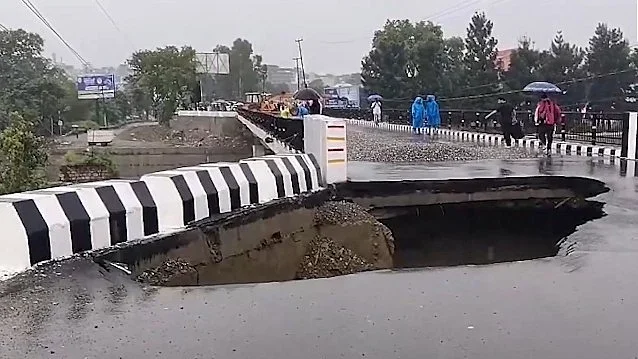
The hills were already waterlogged when the rivers began to roar. On Thursday, the Alaknanda and the Bhagirathi — the two great arteries of the Garhwal region — were flowing in spate, and across Uttarakhand, landslides were silently slicing the state's road network into fragments.
Alaknanda and Bhagirathi swell as rain refuses to relent
Relentless monsoon showers kept the region under a thick blanket of cloud through the day. Officials said the Alaknanda and Bhagirathi rivers, along with several other streams, swelled dangerously as rainwater rushed down the hills.
Debris and boulders came loose from saturated slopes, snapping connections between towns and villages at multiple points.
132 roads cut off, including four national highways
The numbers tell the story of a state struggling to stay connected. As many as 132 roads were blocked across Uttarakhand, officials said, and four of them were national highways — the arterial routes that carry traffic and supplies through the mountains.
Each closure means a detour, a delayed ambulance, a cancelled journey. For hill towns, the road network is not just infrastructure; it is survival.
Orange alert in Dehradun, Chamoli and Bageshwar; yellow for the rest
The India Meteorological Department (IMD) sounded an orange alert for heavy rainfall in Dehradun, Chamoli and Bageshwar districts. A yellow alert remained in place for the rest of the state.
An orange alert signals the likelihood of very heavy rain that can disrupt daily life — exactly what these districts witnessed through the day.
Schools shut up to Class 12 in three districts
The knock-on effect reached classrooms almost immediately. Schools up to Class 12 in Dehradun, Bageshwar and Chamoli were shut as authorities decided that keeping children off the roads was safer than risking travel on landslide-prone routes.
For parents in the hills, the closure is familiar monsoon anxiety — the weather has rarely felt more unpredictable.
District administrations switch to precautionary mode
With the weather showing little sign of easing, district administrations moved into precautionary mode. Officials are monitoring river levels, vulnerable slopes and blocked stretches, even as rain continues to complicate ground operations.
The immediate focus, they indicated, is on preventing a bad situation from turning into a crisis.
Why this monsoon spell is testing the Himalayan state
Uttarakhand's geography leaves it uniquely exposed. Steep slopes, young mountains and narrow valleys mean even moderate rain can trigger landslides. When the rain is this heavy, the margin for error disappears.
The swollen rivers are the visible part of the danger; the invisible part is the ground itself, slowly loosening under the downpour.
Confirmed facts vs what remains unclear
What is verified: rivers including the Alaknanda and Bhagirathi are in spate; 132 roads, including four national highways, are blocked; IMD alerts are in place; and schools in three districts are shut.
What remains unclear: the full scale of damage, whether any casualties have occurred, and how long the rain will persist. Officials have not released those details in the information available so far.
The risks still lurking in the hills
Blocked roads are rarely the end of the story. A fresh spell of rain can trigger new landslides on already weakened slopes, and rivers in spate raise the risk of flash flooding in low-lying stretches near the water.
Authorities will be watching both the weather and the rivers closely through the night.
Himalayan monsoon disruption: a troubling pattern
This is not the first time Uttarakhand's monsoon has turned destructive, and the wider trend is worrying. Climate researchers have pointed to increasingly erratic and intense rainfall across the Himalayan region, where fragile terrain amplifies every downpour.
Each year, the state's road network is tested by the same seasonal fury — but the tests appear to be getting harder.
What residents and travellers should do now
For those in the affected districts: avoid non-essential travel, especially on hill roads and near rivers. Rely on updates from the district administration and the IMD rather than unverified social media posts.
Travellers should check road conditions before setting out and steer clear of landslide-prone stretches until alerts are lifted.
Outlook: when will the rain ease?
The immediate forecast offers little relief. With rain clouds continuing to blanket the region, the coming days are likely to bring further showers, keeping rivers high and slopes unstable.
Any easing will depend on how the monsoon system moves — a call only the weather office can make with confidence.
Our Take
Every monsoon, Uttarakhand's roads become the first casualty — and this week is a sharp reminder of how fragile the hills truly are. The immediate priority is safety: keeping people away from rivers and landslide zones, and restoring the blocked highways quickly.
But the bigger question is long-term. A state that depends on connectivity, tourism and mountain livelihoods cannot afford to rebuild the same vulnerable roads every year. The rain is not going to stop; the response to it must get stronger.
Frequently Asked Questions
Why are 132 roads blocked in Uttarakhand?
Heavy monsoon rain triggered landslides and falling debris across the hill state on Thursday, blocking 132 roads — including four national highways — at multiple locations.
Which rivers are in spate in Uttarakhand?
The Alaknanda and the Bhagirathi, two of the Garhwal region's major rivers, were flowing dangerously high, along with several other streams swollen by relentless rain.
What does the IMD orange alert mean for Dehradun, Chamoli and Bageshwar?
An orange alert warns of very heavy rainfall that can disrupt transport, daily life and local infrastructure. It means residents should expect road blockages, waterlogging and river swelling, and follow official safety advisories.
Are schools closed in Uttarakhand due to the rain?
Yes, schools up to Class 12 were shut in Dehradun, Bageshwar and Chamoli districts as a precautionary measure while the orange alert remains in place.

