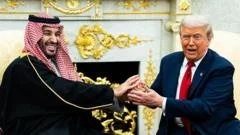
The United States is set to announce a landmark agreement that would allow Saudi Arabia to develop a civilian nuclear programme, fulfilling a long-held ambition of the kingdom. The deal, which is still being finalised, could reshape energy and security dynamics across the Middle East — but it also risks triggering concern in Israel and among some US lawmakers.
What the US-Saudi nuclear deal entails
The proposed agreement would permit Saudi Arabia to pursue uranium enrichment and reprocessing — capabilities that are typically restricted under non-proliferation norms. The civilian programme is intended to generate electricity and reduce the kingdom's reliance on oil, aligning with its Vision 2030 diversification plan. However, the inclusion of enrichment rights has made the deal contentious, as such technology can be used to produce weapons-grade material.
Why the deal matters for the Middle East
For Saudi Arabia, a civilian nuclear programme represents a strategic leap — energy independence, technological prestige, and a stronger negotiating position in the region. For the US, the deal is part of a broader diplomatic push to normalise relations between Saudi Arabia and Israel, a process that has gained momentum since the Abraham Accords. But the agreement could unsettle Israel, which views any nuclear capability in the region — even civilian — as a potential threat to its own security.
Concerns from US lawmakers and non-proliferation advocates
Some US lawmakers have already expressed reservations. Critics argue that allowing Saudi Arabia to enrich uranium could set a dangerous precedent, potentially triggering a nuclear arms race in the Middle East. Non-proliferation advocates point to the risk that enrichment technology could be diverted for military purposes, even under civilian oversight. The Biden administration has signalled that any deal would include strict safeguards, including International Atomic Energy Agency (IAEA) inspections and commitments to non-proliferation.
What remains unclear about the agreement
Key details of the deal are still under negotiation. It is not yet known what level of enrichment Saudi Arabia would be permitted, how inspections would be conducted, or whether the agreement includes a "gold standard" provision — a requirement that the kingdom forgo enrichment and reprocessing entirely. The US has historically insisted on such provisions in civilian nuclear deals, but Saudi Arabia has resisted, viewing them as a limitation on its sovereignty.
Confirmed facts vs what remains uncertain
What is confirmed: The US is actively negotiating a civilian nuclear deal with Saudi Arabia. The agreement is part of a broader diplomatic framework that includes normalisation with Israel. What remains uncertain: The exact terms of enrichment, the timeline for implementation, and the level of congressional and Israeli support. All speculation about a nuclear arms race or immediate security threats should be treated as unconfirmed.
Wider trend: Nuclear energy in the Gulf
The US-Saudi deal is part of a broader trend in the Gulf region, where several countries — including the United Arab Emirates — have pursued civilian nuclear programmes. The UAE's Barakah plant, built with US assistance, is often cited as a model because it includes a commitment to forgo enrichment and reprocessing. Saudi Arabia's insistence on enrichment rights sets it apart and raises questions about whether the US can maintain consistent non-proliferation standards across the region.
What this means for ordinary people
For Saudi citizens, a civilian nuclear programme could mean cheaper electricity, reduced dependence on fossil fuels, and new jobs in the energy sector. For Israelis, the deal may heighten security anxieties, particularly if enrichment capabilities are perceived as a step toward weaponisation. For the broader Middle East, the agreement could either stabilise energy markets or fuel a new arms race — depending on how it is implemented.
Our take
The US-Saudi nuclear deal is a high-stakes diplomatic gamble. It offers Saudi Arabia a path to energy diversification and strengthens US-Saudi ties, but it also risks undermining non-proliferation norms and alarming Israel. The success of the agreement will depend on the transparency of safeguards, the credibility of inspections, and the willingness of all parties to prioritise regional stability over strategic advantage. For now, the deal remains a work in progress — and its final shape will determine whether it is a breakthrough or a source of new tension.
Frequently Asked Questions
What is the US-Saudi nuclear deal?
The US is negotiating a civilian nuclear agreement that would allow Saudi Arabia to develop a nuclear energy programme, including uranium enrichment. The deal is part of broader diplomatic efforts to normalise Saudi-Israel relations.
Why is the deal controversial?
Critics worry that allowing Saudi Arabia to enrich uranium could lead to a nuclear arms race in the Middle East. Some US lawmakers and non-proliferation advocates argue that enrichment technology could be diverted for military use.
How does Israel view the deal?
Israel has not publicly commented, but analysts believe it views any nuclear capability in the region — even civilian — as a potential security threat. The deal is part of a broader normalisation process, but Israel may seek assurances that the programme remains strictly civilian.
What safeguards are being considered?
The US is expected to require IAEA inspections, commitments to non-proliferation, and possibly a "gold standard" provision that would require Saudi Arabia to forgo enrichment and reprocessing. However, Saudi Arabia has resisted such restrictions.