Summary
The United States and Iran exchanged direct military strikes this week, escalating tensions after a drone attack killed two American soldiers in Jordan. The U.S. launched retaliatory airstrikes against Iranian-linked targets in Syria and Iraq, while Iran claimed its own strikes hit a partially built nuclear power plant. The situation marks a dangerous new phase in the long-running conflict between the two nations.
Main Impact
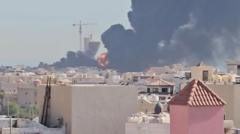
The immediate impact is a sharp increase in military activity across the Middle East. The U.S. strikes targeted facilities used by Iranian-backed militias, while Iran’s response hit infrastructure in Kuwait, setting an electricity and water plant on fire. This is the second such attack on Kuwaiti infrastructure in two days, raising fears of a broader regional conflict. The deaths of two U.S. soldiers in Jordan have also put pressure on the Biden administration to respond forcefully.
Key Details
What Happened
The chain of events began with a drone attack on a U.S. base in Jordan, near the Syrian border. Two American soldiers were killed and several others wounded. The U.S. blamed Iranian-backed militias for the attack. In response, the U.S. military launched airstrikes on multiple targets in Syria and Iraq, including weapons storage facilities and command centers used by these groups.
Iran then retaliated by striking a U.S.-linked facility in Kuwait, causing a fire at an electricity and water plant. Iran also claimed its strikes hit an under-construction nuclear power plant, though details remain unclear. Kuwait confirmed the fire but did not specify the cause.
Important Numbers and Facts
- Two U.S. soldiers killed in Jordan on July 17, 2026.
- U.S. airstrikes hit at least five targets in Syria and Iraq on July 18.
- Iranian strikes on July 19 targeted a Kuwaiti power and water plant, causing a fire.
- This is the second attack on Kuwaiti infrastructure in two days.
- Iran claims its strikes hit a nuclear power plant under construction, but no independent confirmation exists.
Background and Context
The U.S. and Iran have been locked in a shadow war for decades, often fighting through proxies in countries like Iraq, Syria, and Yemen. Tensions have risen sharply since the U.S. withdrew from the Iran nuclear deal in 2018 and imposed heavy sanctions. Iranian-backed militias have frequently attacked U.S. bases in the region, but the killing of American soldiers in Jordan is a significant escalation. The U.S. has also accused Iran of supplying drones and missiles to Russia for use in Ukraine, further straining relations.
Public or Industry Reaction
Reactions have been mixed. In the U.S., some lawmakers are calling for a stronger military response, while others warn against a wider war. In Iran, state media praised the strikes as a necessary defense. Kuwait has not directly blamed any party but has called for restraint. International organizations like the United Nations have urged both sides to de-escalate. Energy markets have reacted nervously, with oil prices rising slightly due to fears of supply disruptions.
What This Means Going Forward
The risk of a full-scale conflict between the U.S. and Iran is now higher than it has been in years. Both sides have shown they are willing to strike each other directly, not just through proxies. This could lead to more attacks on infrastructure, including oil facilities, which would affect global energy prices. Diplomatic efforts are likely to intensify, but trust between the two countries is extremely low. The situation in the Middle East remains volatile, and further escalation cannot be ruled out.
Final Take
The exchange of fire between the U.S. and Iran marks a dangerous turning point. What began as a proxy conflict has now become direct military confrontation. The deaths of American soldiers have forced a strong U.S. response, while Iran has shown it can strike back. Without immediate de-escalation, the region could slide into a broader war with global consequences.
Frequently Asked Questions
Why did the U.S. strike Iran-linked targets?
The U.S. launched airstrikes in retaliation for a drone attack that killed two American soldiers in Jordan. The U.S. says the attack was carried out by Iranian-backed militias.
What did Iran strike in Kuwait?
Iran struck an electricity and water plant in Kuwait, causing a fire. This was the second such attack on Kuwaiti infrastructure in two days.
Is there a risk of a wider war?
Yes, the risk is higher now because both the U.S. and Iran have directly attacked each other. Further escalation could lead to a broader regional conflict.