
Summary
A court in Gujarat has finally delivered a verdict in the famous Una Dalit flogging case after ten years. Five men have been found guilty and sentenced to five years in prison for their roles in the 2016 attack. While the court has recognized the crime, the victims and their families are not happy with the result. They believe the punishment is too light for the violence they had to endure.
Main Impact
The ruling by the Veraval Sessions Court marks the end of a long legal journey for the victims. This case was a major turning point in Indian social history, as it led to massive protests across the country. By sentencing the five main accused individuals, the court has sent a message that caste-based violence will be punished. However, the reaction from the victims suggests that the legal system still faces challenges in providing a sense of complete justice to marginalized communities.
Key Details
What Happened
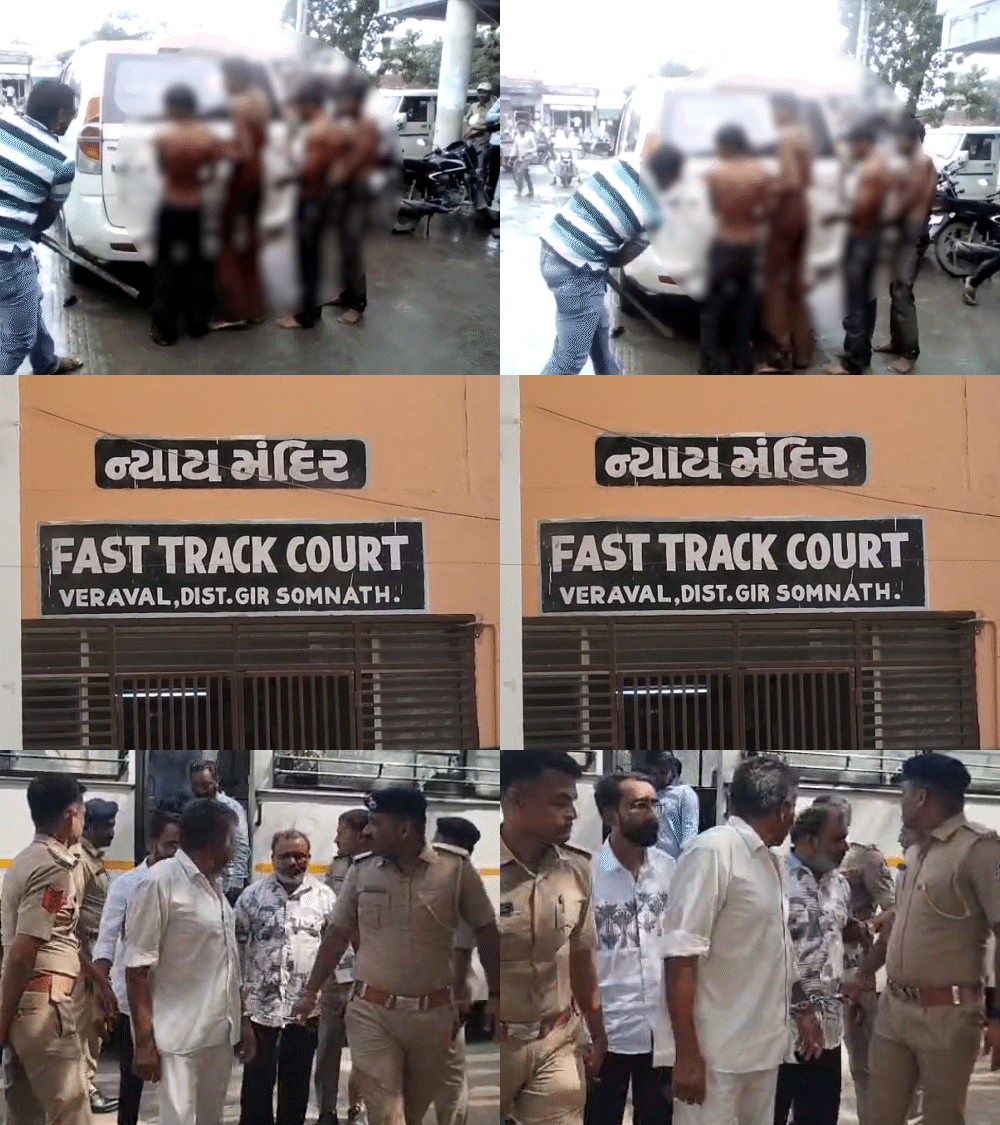
The incident took place in July 2016 in the village of Mota Samadhiyala, located in the Gir Somnath district. A group of Dalit youths was skinning a dead cow, which was their traditional work. A group of men arrived and accused them of killing the cow. The attackers then tied the youths to a car, stripped them, and beat them with sticks and iron pipes in public. The attackers even filmed the beating and shared it online. The video went viral, causing anger and protests across India. The victims were later taken to a nearby town where the beating continued before the police finally intervened.
Important Numbers and Facts
The legal process took a decade to reach this point. The Veraval Sessions Judge, Judge Pandya, wrote a detailed judgment that spans about 340 pages. The five men found guilty are Ramesh Jadav, Rakesh Joshi, Pramod Goswami, Nagji Daya, and Balwant Goswami. Each of them has been sentenced to five years of rigorous imprisonment. They were charged under the Atrocities Act, which is a special law designed to protect people from Scheduled Castes and Scheduled Tribes from violence and discrimination. The court found that the attack was pre-planned and carried out with the intent to humiliate and hurt the victims.
Background and Context
To understand why this case is so important, one must look at the social situation in India. For a long time, people from certain communities have faced violence because of their caste. The Una case became a symbol of this struggle. When the video of the beating was shared on social media, it showed the world the reality of caste-based discrimination. It led to a massive movement where thousands of people gathered to demand better rights and protection. The case also brought attention to the "Atrocities Act." This law is meant to give extra protection to people who are often targeted. In this case, the court used this law to hold the attackers accountable for their actions.
Public or Industry Reaction
The reaction to the verdict has been mixed. On one hand, some see it as a victory because the attackers are finally going to jail. On the other hand, the victims' family has expressed deep sadness. They told reporters that "this is not justice, it is injustice." They feel that five years is a very short time compared to the physical and mental pain they have suffered for ten years. Many activists also believe that the sentence should have been much harsher to prevent others from committing similar crimes in the future. There is a feeling among the victims that the legal system took too long and gave too little.
What This Means Going Forward
This verdict might not be the final step in the legal process. Since the victims are unhappy with the five-year sentence, they may choose to appeal the decision in a higher court, such as the High Court. They might ask for a longer prison term for the convicts. At the same time, the convicts also have the right to challenge their guilty verdict. This means the case could continue for several more years. For the community, this case serves as a reminder that while laws exist to protect them, getting full justice can be a very slow and difficult process. It also highlights the need for faster trials in cases involving serious violence against marginalized groups.
Final Take
The Una verdict is a significant moment for the legal system, but it leaves many questions about the meaning of true justice. While five men are now facing jail time, the emotional scars of the victims remain. The case shows that while the law can identify the guilty, it often struggles to satisfy those who have lost their dignity and safety. This ruling will likely be studied for years as a key example of how India handles caste-based crimes and the long road victims must walk to see any form of accountability.
Frequently Asked Questions
What was the Una Dalit case about?
It was a 2016 incident where Dalit youths were publicly beaten by a group of men in Gujarat. The attackers falsely accused them of killing a cow while they were actually skinning a dead animal.
What punishment did the court give to the attackers?
The Veraval Sessions Court sentenced five main accused men to five years in prison. They were found guilty under the Atrocities Act for a pre-planned attack.
Why are the victims unhappy with the verdict?
The victims and their families feel that a five-year sentence is too short for the brutal violence they suffered. They believe the punishment does not match the seriousness of the crime.



