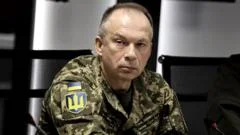
Ukraine's wartime leadership faced a sudden and dramatic shakeup as President Volodymyr Zelensky dismissed General Oleksandr Syrskyi, the country's top army commander, after days of public protests. The unrest, which began over the removal of popular Defence Minister Mykhailo Fedorov, has now escalated into the highest-level military command change since the war began.
Why the protests forced a command change
The dismissal of General Syrskyi did not happen in isolation. For days, thousands of Ukrainians took to the streets in Kyiv and other major cities, angered by the removal of Defence Minister Mykhailo Fedorov. Fedorov, widely respected for his role in modernizing Ukraine's defence procurement and maintaining Western support, was seen as a symbol of wartime competence. The protests grew louder, demanding accountability and stability. Zelensky's decision to sack Syrskyi appears to be a direct response to this public pressure.
Who is Oleksandr Syrskyi and why his dismissal matters
General Oleksandr Syrskyi was appointed as Ukraine's top army commander in February 2024, replacing General Valerii Zaluzhnyi. Syrskyi was known for his role in the successful Kharkiv counteroffensive in 2022 but faced criticism over the protracted defence of Bakhmut, which resulted in heavy casualties. His dismissal now marks the second change in Ukraine's top military leadership in just over a year, raising concerns about continuity and strategy on the battlefield.
What this means for Ukraine's war effort
The timing of the shakeup is critical. Ukraine's forces are under immense pressure on multiple fronts, with Russian troops making incremental gains in the east. A change in top command mid-war can disrupt operational planning, erode troop morale, and create uncertainty among Western allies who provide military aid. Analysts believe that Zelensky is trying to reassert civilian control over the military and address public discontent, but the move carries significant risks.
How Ukrainians are reacting to the news
On social media and in the streets, reactions are mixed. Some Ukrainians see the dismissal as a necessary step to restore trust in leadership after the Fedorov controversy. Others fear it signals deeper instability within the government. "We need unity, not more changes," one protester in Kyiv told local media. "Every time they change commanders, it feels like we lose momentum." The emotional toll on a nation already exhausted by war is palpable.
Official silence and unanswered questions
As of now, President Zelensky's office has not issued an official statement explaining the reasons for General Syrskyi's dismissal. The Defence Ministry has also remained tight-lipped. This lack of transparency has fueled speculation and further anxiety. It remains unclear whether Syrskyi was fired for performance failures, political reasons, or as a concession to the protesters. The absence of clear communication is a concern for both domestic audiences and international partners.
Confirmed facts vs what remains unclear
Confirmed: General Oleksandr Syrskyi has been dismissed as Ukraine's top army commander. The dismissal follows days of protests over the removal of Defence Minister Mykhailo Fedorov. Unclear: The exact reasons for Syrskyi's dismissal have not been officially stated. It is not known who will replace him or whether Fedorov's removal will be reversed. The long-term impact on Ukraine's military strategy remains speculative.
Risks and balanced view of the leadership shakeup
While Zelensky's move may appease public anger in the short term, it carries substantial risks. Frequent changes in top military leadership can undermine command coherence and strategic planning. Critics argue that the dismissal could be seen as a political scapegoating rather than a genuine effort to improve military effectiveness. Supporters, however, say that a leader must be responsive to public sentiment, especially in a democracy at war. The balance between accountability and stability is delicate.
Wider pattern of wartime leadership changes in Ukraine
This is not the first time Zelensky has reshuffled his top brass. The dismissal of General Valerii Zaluzhnyi in early 2024 was a major shock, and now Syrskyi's removal continues a pattern of high turnover. Some analysts see this as a sign of a president trying to consolidate power and align military leadership with his political vision. Others view it as a symptom of the immense pressure of leading a nation under invasion, where every decision is scrutinized and every failure amplified.
What Ukrainians and observers should watch for next
In the coming days, all eyes will be on who Zelensky appoints as the new top army commander. The choice will signal whether he prioritizes battlefield experience, political loyalty, or a fresh approach. Also critical is the fate of Defence Minister Fedorov — whether his removal stands or is reversed. For ordinary Ukrainians, the key concern is whether this shakeup will strengthen or weaken the country's ability to defend itself. For now, uncertainty reigns.
Future outlook: what could happen next
If Zelensky appoints a widely respected military figure, the move could stabilize the situation and restore confidence. If the new commander is seen as a political ally rather than a military strategist, it could deepen divisions. The protests may continue if Fedorov's removal is not addressed. Meanwhile, Russia is likely to exploit the perceived instability in Ukraine's command structure. The coming weeks will be decisive for Ukraine's wartime leadership and its relationship with the public.
Our take
The dismissal of General Syrskyi is a high-stakes gamble by President Zelensky. It reflects a leader trying to balance public anger with wartime necessity, but it also exposes the fragility of Ukraine's political-military cohesion under the strain of prolonged conflict. While accountability is essential, frequent command changes risk creating more problems than they solve. The real test will be whether this move leads to a more effective war effort or simply adds to the uncertainty. For now, Ukraine's soldiers and citizens deserve clarity and stability — not more upheaval.
Frequently Asked Questions
Why did Zelensky sack Ukraine's top army commander?
President Zelensky dismissed General Oleksandr Syrskyi after days of public protests triggered by the removal of Defence Minister Mykhailo Fedorov. The exact reasons have not been officially stated, but the move is seen as a response to public pressure.
Who was Oleksandr Syrskyi?
General Oleksandr Syrskyi was Ukraine's top army commander, appointed in February 2024. He was known for leading the Kharkiv counteroffensive but faced criticism over the defence of Bakhmut.
What happens now after Syrskyi's dismissal?
A successor has not been announced. The change could impact Ukraine's military strategy and morale. Observers are watching for who Zelensky appoints next and whether the protests over Fedorov's removal continue.
How does this affect Ukraine's war with Russia?
A change in top command mid-war can disrupt operations and create uncertainty. Russia may try to exploit the perceived instability. The impact will depend on how smoothly the transition is managed.