Summary
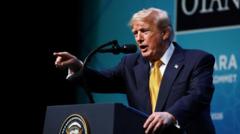
President Donald Trump has warned that the United States is prepared to launch more military strikes against Iran, speaking at a NATO summit in Brussels. He said the US would "probably" strike again but added that any future action would be "over quickly." In response, Iranian officials have warned of a "fearless" and strong retaliation, raising tensions between the two countries to a new high.
Main Impact
The latest threat from President Trump comes after the US carried out a series of airstrikes on Iranian targets earlier this week. The strikes were in response to an attack on a US military base in Iraq, which Washington blamed on Iran-backed forces. The new warning signals that the US is not backing down and is ready to escalate military action if needed. This has raised fears of a wider conflict in the Middle East, with both sides showing no signs of backing off.
Key Details
What Happened
Speaking at a NATO summit in Brussels on Wednesday, President Trump told reporters that the US military is ready to strike Iran again if necessary. He said, "We will probably strike again, but anything that happens will be over quickly." He did not give a specific timeline or target for any future strikes. The comments came just days after US warplanes hit Iranian military sites in Syria and Iraq, destroying weapons and equipment.
Important Numbers and Facts
The US airstrikes on June 27 targeted at least three locations linked to Iran's Islamic Revolutionary Guard Corps (IRGC) and its proxies. The Pentagon said the strikes destroyed drone parts, missile launchers, and ammunition storage facilities. No US casualties were reported in the initial strikes. However, Iran has said that at least 10 of its fighters were killed in the attacks. The US has about 2,500 troops stationed in Iraq, and around 900 in Syria, as part of the fight against ISIS.
Background and Context
Tensions between the US and Iran have been high for years, but they have grown worse since 2018 when President Trump pulled the US out of the nuclear deal with Iran. Since then, the US has imposed heavy economic sanctions on Iran, and Iran has responded by breaking some of the deal's limits on its nuclear program. The two sides have also clashed in the Persian Gulf and in Iraq, where Iran-backed militias have attacked US bases. The latest round of strikes is part of a cycle of attacks and counter-attacks that has been going on for months.
Public or Industry Reaction
Reaction to the president's threat has been mixed. Some US lawmakers, mostly Republicans, have supported the strikes as a necessary show of force. But Democrats and some foreign leaders have warned that more strikes could lead to a full-scale war. Iran's foreign minister, Mohammad Javad Zarif, said on Twitter that Iran's response would be "fearless" and that the country would defend itself. In Tehran, some citizens expressed anger at the US threats, while others said they were used to such tensions after years of conflict. Oil prices rose slightly on the news, as markets worried about supply disruptions in the Middle East.
What This Means Going Forward
The situation remains very dangerous. If the US carries out more strikes, Iran is likely to respond with its own attacks, possibly on US troops in Iraq or on oil tankers in the Gulf. This could quickly spiral into a wider conflict that draws in other countries. On the other hand, both sides have shown some willingness to avoid all-out war in the past. The next few days will be critical. Diplomats from European countries are trying to calm the situation, but so far, neither Washington nor Tehran has shown interest in backing down. The risk of a major military confrontation is now higher than it has been in years.
Final Take
President Trump's latest threat makes it clear that the US is ready to use military force against Iran if it feels attacked. But the promise that any strike will be "over quickly" may not hold true if Iran responds with force. The cycle of violence is dangerous, and without serious diplomacy, the region could slide into a costly and unpredictable war. Both sides need to find a way to de-escalate before it is too late.
Frequently Asked Questions
Why is the US threatening to strike Iran again?
The US says it is responding to attacks on its military bases in Iraq, which it blames on Iran-backed groups. President Trump has said the US will strike again if needed to protect American forces.
How has Iran responded to the US threats?
Iran has warned of a "fearless" response. Its leaders say they will defend the country and retaliate against any US attacks. Iran has also called on the international community to stop US aggression.
Could this lead to a full war between the US and Iran?
There is a real risk of escalation. If both sides keep attacking each other, the situation could turn into a wider conflict. However, both countries have avoided all-out war in the past, and diplomatic efforts are ongoing to reduce tensions.