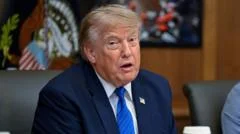
Military strikes on Iran were on the table. President Trump says he pulled them back — because Tehran and other Middle Eastern capitals asked Washington to wait, with the "perimeters" of a deal reportedly already agreed. The reversal is sudden, the claim is unverified, and the region now waits to see whether diplomacy closes the gap quickly or the threat of force returns.
A Reversal at the Edge of Military Action
Trump says Iran and other Middle Eastern countries urged Washington to hold off on any attack, framing the request as a sign that a negotiation was close. He described the deal as one to be made "rapidly." No independent confirmation of those talks has surfaced.
The president's statement suggests the strikes were not cancelled out of reluctance — but set aside for a diplomatic window he believes is open right now.
Why the Pause Matters Beyond Washington
A US strike on Iran would carry immediate fallout: oil price shocks, Gulf shipping disruption, regional security realignment and global market turbulence. By pausing, Trump has kept two futures alive at once — a negotiated settlement and a possible return to military escalation.
For governments across the Middle East, Europe and Asia, the difference between these two outcomes is enormous.
The 'Perimeters' Claim: Verified vs Unverified
What is confirmed: the president says he cancelled the strikes, and he attributes the request to Iran and other Middle Eastern nations. What is unconfirmed: the actual contents of the deal's "perimeters," which countries made the approach, and whether Tehran has formally agreed to anything.
Until officials in Tehran or other capitals speak publicly, this remains a one-sided account.
Who Feels the Difference Between Strikes and a Deal
For ordinary people, the gap between an airstrike and an agreement is stark — visible in fuel prices, flight paths, insurance costs and the daily fear of a wider conflict. Families across Iran, the Gulf and Israel are watching the same question: will the window close toward war or open toward a deal?
One-Sided Account, Region-Wide Consequences
The claim is based entirely on the US president's remarks. There is no verified statement from Iranian officials or other Middle Eastern governments confirming they asked Washington to pause. Analysts may read the move as diplomatic theatre or genuine back-channel progress — but the public record, at this moment, contains only Trump's word.
Reading the 'Rapidly' Signal in Trump's Statement
The word "rapidly" carries the weight of the entire situation. It signals that the deal is not final, that the perimeters are only a frame, and that the military option remains visible in the background. This is leverage framed as diplomacy — a short window, not an open-ended negotiation.
If the president truly expected a quick deal, the statement would be a confirmation. Instead, it is a countdown.
The Fragile Window: Risks If Talks Stall
The central risk is that "rapidly" collapses into weeks of silence. If talks stall, the strikes Trump cancelled could be re-authorised — and the reversal could be read either as a genuine opening or as hesitation. Critics on one side may see any pause as rewarding Iranian defiance; critics on the other may argue military action was never a serious option.
De-Escalation Trend Across the Middle East
The move fits a broader pattern of Middle Eastern diplomacy shifting toward negotiated frameworks rather than open confrontation. Gulf states have increasingly favoured de-escalation, and a US-Iran understanding, if reached, could reshape long-standing security alliances and regional power calculations.
Three Signals to Watch Now
Watch for an official response from Tehran — the single most important item. Then track US defence announcements and oil price movements. Markets will react within hours if either side signals the deal window is closing.
Future Outlook: Fast Deal or Flickering Threat
If the "perimeters" hold, a rapid deal could take shape in the coming days. If they do not, the president retains the option of restoring the strike plan. The region now exists in a state of uncertain pause — not resolved peace.
Our Take
This is a high-stakes reversal built on an unverified claim. The diplomatic framing is hopeful, but the word "rapidly" is doing heavy lifting. For now, the most important fact is simple: the strikes are cancelled, but the crisis is not.
Frequently Asked Questions
Why did Trump cancel the Iran strikes?
Trump says Iran and other Middle Eastern countries asked Washington to hold off on any attack, and that the "perimeters" of a deal had been agreed. The claim has not been independently confirmed.
Have Iran or other countries confirmed the request?
No. No verified statement from Iranian officials or other Middle Eastern governments has confirmed that they asked the US to pause strikes. The account currently rests only on the US president's remarks.
What does 'perimeters of a deal' mean?
It appears to refer to the broad framework or boundaries of a potential agreement. The specific contents of these perimeters have not been publicly disclosed.
Could US strikes on Iran resume?
Possibly. The president has linked the pause to rapid deal-making. If talks fail or stall, military action could be re-authorised, though no timeline has been provided.