Ask Tilly Norwood about politics and it will comment on your shirt. Ask it something harder — about race — and, according to one published account, it will answer that "all lives matter."
That exchange came from a journalist who spent time in conversation with the AI-generated performer while it promotes its upcoming film Misaligned. The detail that lingers is not the slogan itself. It is the pattern around it: a synthetic star that talks fluently about fabric, and freezes when the subject turns serious.
A Chat Window With a Film to Sell
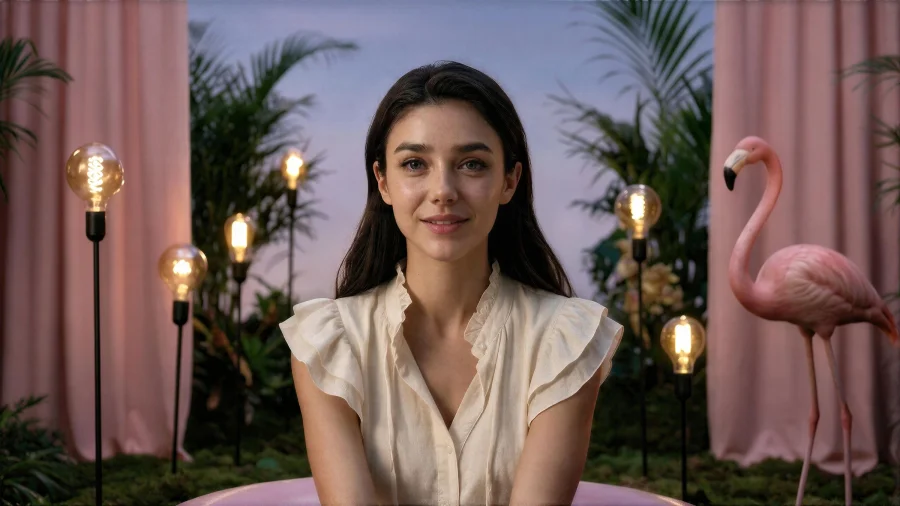
Tilly Norwood is not a person who gave an interview and then said something awkward. It is a virtual performer — a computer-generated character built to appear in and promote screen work, in this case the film Misaligned.
That distinction shapes how the exchange should be read. Every reply is a product decision as much as a scripted line. When a character exists to sell tickets, its conversational boundaries are often set deliberately, sometimes by engineers rather than writers.
What Was Actually Said — and How It Was Reported
According to the columnist's own account, the conversation repeatedly circled back to what the interviewer was wearing. Compliments about clothing are safe, flattering, and almost impossible to object to. They also fill space.
When the questioning moved toward politics and race, the response reported was "all lives matter." The exact phrasing of the question that prompted it, and the full transcript of the exchange, have not been independently published alongside the account.
Why Those Three Words Land So Badly
"All lives matter" is not a neutral statement of equality in this context. It emerged as a counter-slogan to the Black Lives Matter movement, and critics — including many civil rights organisations — have long argued that it flattens a specific demand about police violence and racial inequality into a general phrase that says nothing.
Whether the character's reply was a designed deflection, a filtering artefact, or a poorly tuned default is unclear. What is clear is that the phrase carries a political charge that a promotional chatbot may not have been built to navigate.
Who Is Tilly Norwood, and Why Actors Pushed Back
Tilly Norwood has been publicly presented as an AI-created performer, reportedly developed by a UK-based AI studio, and drew sharp criticism from parts of the acting profession when it was introduced as a synthetic "actor."
That backlash was never really about one digital face. It was about whether studios could eventually replace human performers with licensed, controllable, always-available likenesses — and what that would mean for pay, credit and consent.
Why an AI Performer Is a Business, Not a Gimmick
The commercial logic is easy to grasp. A synthetic performer never ages out of a role, never has a scheduling conflict, never renegotiates a fee mid-shoot, and can be reproduced in dozens of languages at once. The studio owns the likeness outright.
That is the appeal: control, scale and lower cost. But this week's episode shows the flip side of the same model. A character with no private life and no personal risk also has no instinct for the moments when a bland answer becomes a headline.
What's Confirmed and What Remains Unclear
Confirmed: Tilly Norwood is an AI-generated performer; it is being promoted in connection with the film Misaligned; and the "all lives matter" exchange comes from the columnist's published first-person account.
Unclear: the full text of the conversation, what exactly was asked, how the reply was generated, and whether anyone behind the character has reviewed or responded to it. Readers should treat this as a reported anecdote rather than a verified transcript.
The Risk Buried Inside the Novelty
For the people marketing a synthetic star, the danger is not being called fake. Nobody is confused about that. The danger is being called hollow — a face that can hold a conversation about sleeves but not about people.
There is also a legal and reputational tail. Performers' unions have already argued that AI likenesses need consent and compensation frameworks. An incident like this hands them an easy example without requiring any new argument.
A Wider Pattern of Blank AI Faces
Tilly Norwood is an unusually visible version of something common now. Brand mascots, virtual influencers and customer-service avatars are all trained to stay away from politics, religion and conflict.
That caution is usually invisible. It only becomes a story when a user pushes hard enough to hit the wall — and the wall answers with a slogan instead of silence.
If You End Up Chatting With an AI Star
Treat it as marketing, not a source. Nothing it says reflects a belief, a vote or a value; it reflects instructions written by people you will probably never see. Screenshots are worth taking, because the responses can change.
For anyone building similar characters, the practical lesson is narrower: a deflection strategy needs a better default than a loaded phrase. Silence, or a plain "I'm here to talk about the film," usually reads better than a slogan.
What Could Happen Next
Three paths are plausible. The team behind the character may quietly adjust its responses and say nothing. It may issue a statement clarifying that the reply was generated and does not represent anyone's views. Or the story may simply fade before the film's release.
What is far less likely is that this becomes the last time a synthetic performer is asked an uncomfortable question. The format invites it.
Our Take
The most revealing part of this story is not the slogan. It is the clothing.
A machine that can compliment your jumper on cue and stumble on a question about race is not revealing a hidden ideology. It is revealing a hierarchy of what it was built to handle — and politics was never on the list, even as the character was placed in front of journalists and asked to be interesting. That gap, between how human an AI performer looks and how little it can safely say, is the real story here. It will keep resurfacing until these characters are either given real editorial guardrails or stopped being sent to do interviews.
Frequently Asked Questions
Who is Tilly Norwood?
Tilly Norwood is an AI-generated virtual performer — not a real actor — that has been promoted publicly and is attached to promoting the upcoming film Misaligned. It was created by an AI studio rather than by a human performer playing a role.
What did Tilly Norwood say when asked about politics?
According to a columnist's published account, when the conversation moved toward politics and race the character replied that "all lives matter," while repeatedly commenting on the interviewer's clothing instead of engaging with the question.
Is Tilly Norwood's reply proof of what the AI "believes"?
No. An AI performer has no beliefs. Its responses come from a system trained and configured by its creators, which means the reply reflects design and guardrails — not an opinion held by the character.
Why do AI characters avoid political questions?
Because brands use them to sell things, and political answers create risk with audiences, sponsors and regulators. Most AI personas are tuned to deflect controversy, which usually looks like changing the subject — here, to clothes.
What does this mean for human actors?
It strengthens an argument performers' unions have already been making: that AI likenesses need consent, credit and compensation rules. A synthetic star generating a public controversy is, for them, a useful illustration of where the technology slips.