
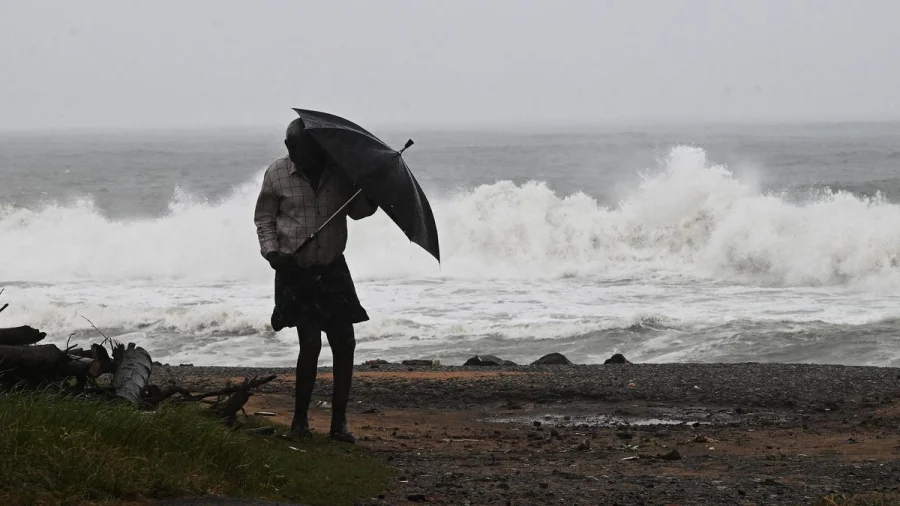
The sea can turn hostile without notice — and along Thiruvananthapuram's coastline on Tuesday, that warning has already been issued. Waves up to 1.6 metres are expected to roll in, and the shore from Kappil to Pozhiyur could face erosion before the night is over.
The alert comes from the Indian National Centre for Ocean Information Services (INCOIS), the agency that tracks ocean behaviour around India's coastline. Its message to fishermen and coastal residents is simple: stay alert, stay safe, and stay away from the waterline.
What the INCOIS swell surge warning says
According to the alert, waves ranging between 1.0 and 1.6 metres are likely along the district's coast as part of a swell surge phenomenon. The affected stretch runs from Kappil to Pozhiyur, covering some of Thiruvananthapuram's most frequented shoreline.
Sea erosion is also expected during this period. The warning remains valid till 11.30 pm on Tuesday, giving coastal communities a clear window to exercise caution.
Why fishermen and shore residents should take this seriously
Swell surges are not ordinary wind-driven waves. They are long-period waves that travel vast distances from storms far out in the ocean, and they can arrive even when the local sky is clear and the sea looks calm.
For fishing crews operating small boats, an unexpected swell can be dangerous. For families living close to the water, the bigger concern is erosion slowly — or suddenly — eating into the land they depend on.
What exactly are swell waves?
Swell waves are generated by distant weather systems — storms, cyclones, or intense winds thousands of kilometres away. Unlike local waves that rise and fall quickly, these waves carry energy across the open ocean and release it when they reach shallow water.
When a series of such waves arrives together, it produces a surge that can flood low-lying coastal areas and trigger erosion. That is precisely the pattern expected along the Thiruvananthapuram coast on Tuesday.
Kappil to Pozhiyur: the stretch on alert
The warning covers a coastal segment that is both ecologically sensitive and actively used by local communities. These beaches support fishing activities and draw visitors, making the swell surge a concern for different groups at once.
Authorities have advised people not to venture into the sea and to keep a safe distance from the shore until the alert period ends.
How INCOIS coastal alerts work
INCOIS, based in Hyderabad and functioning under the Ministry of Earth Sciences, monitors ocean conditions using satellites and seabed sensors. When data indicates long-period waves moving toward a specific coastline, the agency issues a targeted swell surge warning.
The 1.0 to 1.6 metre wave height predicted here is not extreme by cyclonic standards. But in a swell surge, the danger lies in the rhythm and reach of the waves, and in how they interact with high tide, rather than just their height.
What is confirmed and what remains unclear
What is confirmed: INCOIS has issued a swell surge alert for the Kappil to Pozhiyur stretch. Waves of 1.0 to 1.6 metres and sea erosion are likely until 11.30 pm Tuesday.
What is not yet clear is how intense the erosion will be at specific beaches and whether high tide timings will amplify the impact. No damage reports have been mentioned in the alert so far.
Safety steps for coastal communities
Fishermen should avoid launching boats during the warning window and follow instructions from harbour authorities. Coastal residents should secure loose belongings and avoid walking along the beach, particularly in the evening hours.
Local disaster management teams usually coordinate with agencies when such alerts are issued, but individual caution remains the first line of defence.
A recurring pattern along Kerala's coast
Kerala's shoreline has experienced several swell surge events in recent years. A common feature of these incidents is that they surprise people because the sea appears calm right before the surge arrives.
The Kappil-Pozhiyur alert follows that familiar pattern — a reminder that the ocean's behaviour in one place is often shaped by forces far beyond the visible horizon.
What happens next
The warning will remain active until 11.30 pm Tuesday. If the swell surge unfolds as predicted, wave activity should subside after the deadline, though erosion effects may remain visible on affected beaches for some time.
Residents should monitor updates from INCOIS and district authorities in case the alert is extended or revised.
Our Take
This alert shows why ocean warnings matter even on days when the weather looks harmless. A 1.6-metre wave may not sound dramatic on paper, but in a swell surge, the risk comes from the wave's energy and reach, not just its height.
INCOIS naming the exact coastal stretch and the exact time window is genuinely useful. But a warning only saves lives when it reaches the right people — and when they act on it. A few hours away from the shore on Tuesday evening could be all it takes to keep a routine day from turning into an avoidable tragedy.
Frequently Asked Questions
What are swell waves?
Swell waves are long-period ocean waves generated by distant storms or strong winds far out at sea. They travel thousands of kilometres across the ocean and can reach the coast even when local weather is calm, sometimes causing sudden flooding and erosion.
Which areas in Thiruvananthapuram are affected by the swell surge?
The INCOIS warning covers the coastal stretch from Kappil to Pozhiyur in Thiruvananthapuram district. Waves of 1.0 to 1.6 metres and sea erosion are likely in this area until 11.30 pm on Tuesday.
Is it safe for fishermen to go to sea during the warning?
No. INCOIS has specifically alerted fishermen to be cautious during the swell surge. Small boats are especially vulnerable to long-period waves that arrive without visible local warning, so it is safer to avoid the sea until the alert window ends.
How does INCOIS issue swell surge warnings?
INCOIS monitors ocean conditions using satellites, ocean buoys and coastal observation systems. When data shows long-period waves moving toward a coastal area, it issues a swell surge warning specifying the affected locations, expected wave heights and the validity period.



