
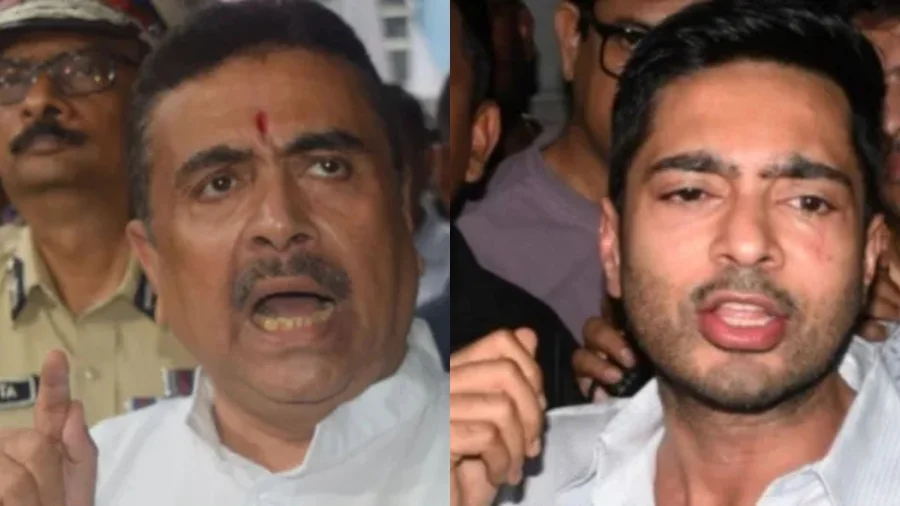
In West Bengal, a murder case and a political accusation have now been spoken of in the same breath. Suvendu Adhikari, the Leader of Opposition in the state Assembly, has publicly tied Trinamool Congress leader Abhishek Banerjee to the killing of his aide, describing those he holds responsible as a "nephew gang."
That phrase is not accidental. It points at a family relationship that everyone in Bengal politics already knows — Banerjee is Chief Minister Mamata Banerjee's nephew — and it converts a criminal allegation into a political charge aimed at the heart of the ruling party.
What Suvendu Adhikari Said — and What the Phrase Signifies
According to the claim as reported, Adhikari has linked Banerjee to the murder of his aide and used the term "nephew gang" to describe the alleged network behind it.
The wording matters less for what it proves than for what it signals. It is a slogan as much as a statement — designed to travel quickly, attach itself to a well-known name, and force the Trinamool Congress to respond on the BJP's terms.
Why an Allegation From This Particular Leader Carries Extra Weight
Adhikari is not a peripheral voice. He is the BJP's principal Opposition figure in the state legislature and one of the party's most aggressive campaigners against the Trinamool government. He was once close to Mamata Banerjee's inner circle before switching to the BJP in 2020.
That history cuts both ways. It gives his allegations visibility, and it gives his opponents an equally ready reason to dismiss them as political theatre.
The Case Itself: What the Public Record Does Not Yet Settle
Details of the aide's murder — the identity of the victim, the stage of the investigation, arrests, chargesheets and the findings of any probe — are not established in the material available for this report.
Until those specifics are on record from an investigating agency or a court, the responsible position is a simple one: the crime and the accusation are separate things, and only one of them is decided by evidence.
Abhishek Banerjee's Position in Bengal's Power Structure
Banerjee is the Trinamool Congress's national general secretary and its most prominent campaigner after the chief minister. Any allegation bearing his name is, by definition, a national-level political story, not a local one.
That is precisely why the "nephew gang" framing is potent. It compresses a complicated charge about governance, policing and political protection into two words a voter can carry to a polling booth.
Where the Trinamool Congress Stands on the Charge
No response from Banerjee or the Trinamool Congress was available in the source material reviewed. In past confrontations of this nature, the party has generally rejected such allegations as baseless and accused the BJP of politicising criminal cases.
Whether it follows that pattern here remains to be seen — and a response, when it comes, will be as much a part of the story as the original claim.
Confirmed Facts vs Open Questions
Confirmed: That Adhikari has made the allegation publicly and named the "nephew gang" framing, as reflected in the headline and primary claim.
Not confirmed: Any evidentiary link between Banerjee and the murder; the status of the police investigation; whether any charge has been filed; whether any court has recorded a finding. These remain open, and any assertion to the contrary should be treated with scepticism until a primary source confirms it.
The Risk of Trial by Allegation — for Both Sides
Political allegations of this kind carry consequences beyond the courtroom. They harden party cadres, colour public perception before evidence is tested, and can complicate an investigation if public pressure is applied to agencies.
Bengal has been here before, in both directions. The BJP and the Trinamool Congress have spent years accusing each other of shielding violence — a cycle that has made criminal cases in the state almost inseparable from political argument.
What This Means for Workers, Voters and Ordinary Families
For party workers on the ground, the immediate effect is usually heightened tension in contested districts. For ordinary voters, it adds another contested claim to an already crowded information environment — one where distinguishing a police statement from a press statement becomes genuinely difficult.
The practical advice is unglamorous but useful: trust what is filed, charged or stated officially. Everything else is positioning.
What to Watch Next
Three things will shape how this develops — whether the Trinamool Congress issues a formal response, whether investigators publicly clarify the status of the aide's murder case, and whether Adhikari repeats the allegation with specifics in a formal or legal setting rather than a political one.
Until at least one of those happens, the story remains an allegation in search of corroboration.
Our Take
The headline is loud, but the substance is still thin — and that gap is itself the news. In naming the chief minister's nephew through a "nephew gang" formulation, Adhikari has done what Opposition leaders in Bengal often do: pushed a criminal case into political territory where the burden of proof is replaced by the burden of persuasion.
That does not make the allegation false. It makes it unfinished. The murder of an aide deserves a full, documented investigation, and the family and the accused alike deserve it concluded on evidence rather than on slogans. Voters, meanwhile, are being asked to form a judgement on an accusation that no agency or court has yet publicly substantiated — and recognising that distinction is not cynicism, it is basic civic hygiene.
Frequently Asked Questions
What exactly did Suvendu Adhikari say?
He linked Abhishek Banerjee to the murder of his aide and used the term "nephew gang" to describe those he holds responsible — a reference to Banerjee's relationship as the chief minister's nephew.
Has Abhishek Banerjee or the TMC responded?
No response was available in the material reviewed for this report. Any formal reaction from the party will significantly change how the story unfolds.
Does this allegation mean Abhishek Banerjee is legally implicated?
No. A public allegation is not a legal finding. Only an investigating agency's charge or a court's conclusion can establish legal implication.
Why is the "nephew gang" phrase significant?
It is a political shorthand. It links a criminal accusation to the Banerjee family's place in Bengal's power structure, making a complex charge memorable and instantly partisan.



