
State
·
Suresh Oberoi Reveals Why He Left BJP Citing Money
For years, Suresh Oberoi was known as one of Indian cinema's most distinguished faces. Now the veteran actor has pulled back the curtain on the brief period he...
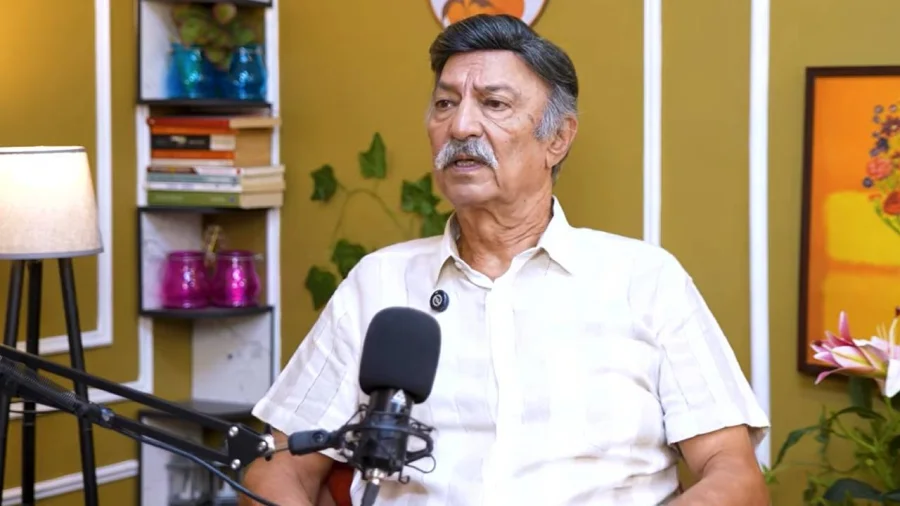
Veteran actor Suresh Oberoi has revealed why his 2004 BJP stint did not last — saying most people around him were driven by money. He remains a self-declared RSS admirer and praises Narendra Modi, Amit Shah and Yogi Adityanath even as he stays out of active politics.
Main Update
Suresh Oberoi publicly recalled his 2004 BJP stint, including his meetings with LK Advani and Atal Bihari Vajpayee.
His Remark
"Most people were interested in money" — offered as the reason he distanced himself from active politics.
Current Stance
Describes himself as a fan of the RSS and chief Mohan Bhagwat; praises PM Narendra Modi, Amit Shah and Yogi Adityanath.
Wider Views
Shared his perspective on protests, activism and public figures who speak without research.
Source Status
The account is based on the actor's own recollections as summarised in the report; no independent interview transcript has been verified.
For years, Suresh Oberoi was known as one of Indian cinema's most distinguished faces. Now the veteran actor has pulled back the curtain on the brief period he spent inside the BJP — and the reason he gives for walking away is blunt: "Most people were interested in money."
## What the veteran actor said about his 2004 BJP chapter
According to Oberoi's own account, his political stint came in 2004, a year when Atal Bihari Vajpayee was Prime Minister and LK Advani was among the BJP's most powerful figures. The actor has said he met both leaders during that time.
The experience, however, did not turn into a lasting political career. Oberoi later stepped away from active politics, and his latest remarks explain why.
## The money remark that explains his political exit
Oberoi's central observation is a harsh one. "Most people were interested in money," he reportedly said while describing the political environment he encountered.
He did not claim a single dramatic rupture. Instead, his comments suggest a quieter disappointment — a gap between the idea of public service and the transactional reality he witnessed. It is a sentiment many voters across India have expressed before, which is likely why it resonates.
## Not a break with the Sangh: admiration for Bhagwat, Modi, Shah and Yogi
Walking away from active politics did not mean walking away from the ideological family. Oberoi has described himself as a fan of the RSS and its chief, Mohan Bhagwat.
He has also voiced admiration for Prime Minister Narendra Modi, Union Home Minister Amit Shah and Uttar Pradesh Chief Minister Yogi Adityanath — leaders he sees as firm and decisive administrators. This distinction is significant: he left the party's political machinery, but not his respect for its current leadership.
## Speaking without research: Oberoi's critique of today's public discourse
Beyond his personal journey, Oberoi also turned his attention to how public figures engage with issues. He criticised those who speak on matters without adequate research, and shared his views on protests and activism.
His underlying concern appears to be that public discourse is increasingly driven by noise rather than informed argument. Coming from a veteran of the film world — an industry where celebrity opinions carry heavy weight — the warning carries an unusual degree of self-awareness.
## Bollywood and the revolving door of Indian politics
Oberoi is not the first film personality to test politics and then retreat. Indian public life has seen repeated cycles of celebrities entering electoral politics with fanfare, only to withdraw once they confront organisational realities.
What makes Oberoi's case distinctive is that he remains openly supportive of the same ideological ecosystem he left. That positions him not as a disillusioned critic, but as a sympathetic observer who found the system itself unappealing.
## What is confirmed, and what depends on Oberoi's own account
An important distinction must be made. These are the actor's personal recollections, as summarised in the report that carried his remarks. No detailed transcript of the interview, its date, or the exact platform where he spoke has been independently verified.
Readers should treat the specific claims — including the "most people were interested in money" line — as Oberoi's own memory and perspective, not as a documented finding.
## What readers should take from Oberoi's political confession
The value of these remarks is less about which party or leader is right. It is about how political participation is often framed in India — as a path to influence rather than a duty of service.
For voters, Oberoi's words may confirm long-held suspicions. For those in public life, they are a reminder that citizens notice when conviction gives way to calculation.
## Future outlook: will Suresh Oberoi ever return to politics?
Given his continued admiration for current BJP leadership, a formal return cannot be ruled out — but it looks unlikely. The actor seems comfortable in his current role: a respected cultural voice with clear opinions, unburdened by the compromises of active politics.
More probable is his continued presence as someone who comments on national issues from the outside, admired by Sangh supporters while no longer answerable to any party's internal dynamics.
## Our Take
The significance of Oberoi's remarks lies in their honesty about political incentives. When a public figure who once associated with a party says most people were interested in money, it reinforces a widely held public suspicion — that political participation is frequently transactional.
At the same time, his sustained praise for Sangh leaders shows that ideological respect and institutional critique can coexist in the same person. That nuance is worth holding onto, especially in an era where public debate often demands total alignment.
## Frequently Asked Questions
### When did Suresh Oberoi join the BJP?
Suresh Oberoi's political stint occurred in 2004, according to his own account. During this period, he met veteran BJP leaders LK Advani and then-Prime Minister Atal Bihari Vajpayee.
### Why did Suresh Oberoi leave active politics?
Oberoi has said "most people were interested in money" when describing his experience. He gradually distanced himself from active politics, though he has not detailed any single breaking point.
### Does Suresh Oberoi still support the BJP and RSS?
Yes. He has described himself as a fan of the RSS and its chief Mohan Bhagwat, and has praised Prime Minister Narendra Modi, Amit Shah and Yogi Adityanath.
### What did Suresh Oberoi say about protests and activism?
He criticised public figures who speak on issues without proper research and shared his views on protests and activism, suggesting that informed debate is often replaced by noise.



