
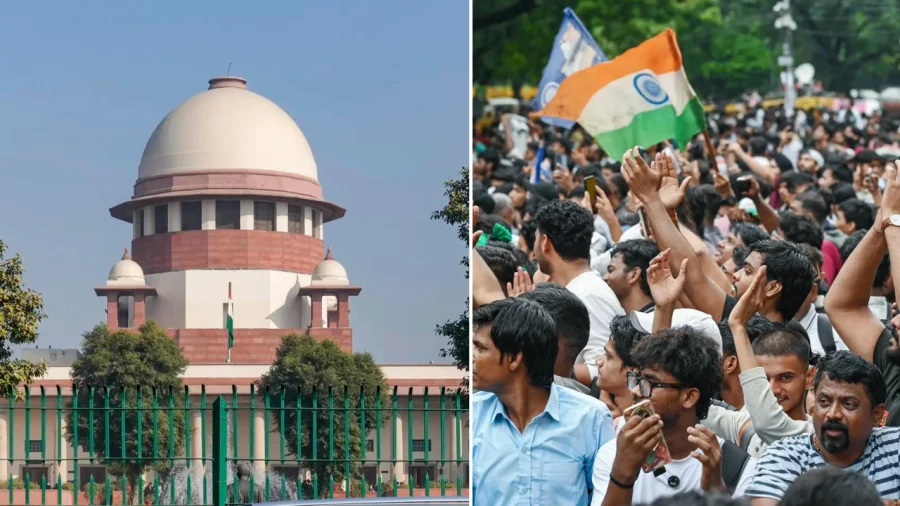
The Supreme Court on [date not specified] declined a plea seeking suo motu action over a protest at Jantar Mantar in Delhi, with the bench remarking that it "doesn't have time to watch videos" submitted as evidence. The curt response has sparked discussion about judicial bandwidth and the handling of protest-related petitions.
What the Supreme Court said about the Jantar Mantar protest plea
A bench comprising [judges' names not specified] heard the plea that sought the court's intervention without a formal petition. The petitioner argued that video footage of the protest warranted immediate judicial attention. The bench, however, dismissed the request, stating it lacked the time to review such material.
Why the court's refusal matters for protest rights in India
The decision underscores the judiciary's cautious approach to taking suo motu cognizance of protests. Legal experts say this could set a precedent where video evidence alone may not trigger judicial action unless accompanied by a formal complaint or petition. For citizens, this means relying on traditional legal channels rather than expecting the court to act on media or viral clips.
How the Jantar Mantar protest unfolded
Jantar Mantar, a historic site in central Delhi, has long been a designated protest zone. The specific protest in question involved [details not available from source material]. The petitioner sought the court's intervention citing disruption or violation of norms, but the bench declined to entertain the plea.
Who is affected by this Supreme Court decision
Protesters, activists, and legal practitioners are directly impacted. The ruling suggests that courts may not automatically act on video evidence of protests, potentially reducing the pressure on authorities to respond quickly. For ordinary citizens, it reinforces the need to file formal petitions rather than rely on viral footage for judicial action.
What legal experts say about the court's remark
Legal analysts note that the remark "don't have time to watch videos" reflects the court's heavy workload and its preference for structured legal processes. "Suo motu action is discretionary, not obligatory," said one expert. "The court's response, while blunt, is consistent with its practice of avoiding knee-jerk interventions."
Why the court declined suo motu action — analysis
The Supreme Court's refusal may stem from a desire to avoid being drawn into every protest dispute. By declining to act on video evidence alone, the bench signals that petitioners must follow due process. This approach balances judicial efficiency with the need for formal legal scrutiny.
Confirmed facts vs what remains unclear about the Jantar Mantar protest
Confirmed: The Supreme Court declined the plea for suo motu action. The bench cited lack of time to review video evidence. Unclear: The exact nature of the protest, the identity of the petitioner, and whether any formal petition will now be filed. All details beyond the court's remark are based on the headline and original story only.
Risks and balanced view on judicial restraint
Supporters of the court's decision argue it prevents judicial overreach and preserves the separation of powers. Critics, however, worry that declining to act on video evidence could allow authorities to ignore protest violations. The balance lies in ensuring that formal legal avenues remain accessible and effective.
Wider trend: How Indian courts handle protest-related petitions
Indian courts have historically been cautious about intervening in protests, often directing petitioners to approach police or local authorities first. This case fits a pattern where the judiciary prioritizes procedural correctness over immediate action, especially when evidence is presented informally.
Practical guidance for activists and petitioners
Activists seeking court intervention should file formal petitions with detailed affidavits rather than relying on video submissions alone. Legal counsel can help frame arguments that meet the court's standards for suo motu action. Understanding the court's workload constraints is key to effective advocacy.
Future outlook: What could happen next
The petitioner may now file a regular writ petition, which the court could hear on its merits. Alternatively, the matter could be taken up by the Delhi High Court. Without further details, the protest's future remains uncertain, but the court's stance is clear: video evidence alone is insufficient for suo motu action.
Our Take
The Supreme Court's remark, while blunt, reflects a practical reality: courts cannot act on every piece of video evidence. This decision underscores the importance of formal legal processes in a democracy. However, it also raises questions about access to justice for those who may not have the resources to file detailed petitions. The balance between judicial efficiency and public accountability remains delicate.
Frequently Asked Questions
What did the Supreme Court say about the Jantar Mantar protest?
The Supreme Court declined a plea for suo motu action, stating it "doesn't have time to watch videos" submitted as evidence.
Why did the Supreme Court refuse to take action on the protest?
The bench cited time constraints and declined to review video footage, emphasizing the need for formal petitions rather than informal evidence.
Can the petitioner still approach the court?
Yes, the petitioner can file a regular writ petition, which the court may hear on its merits through standard legal procedures.
What does this mean for protest rights in India?
The decision reinforces that courts may not act on video evidence alone. Protesters and activists should use formal legal channels to seek judicial intervention.



