
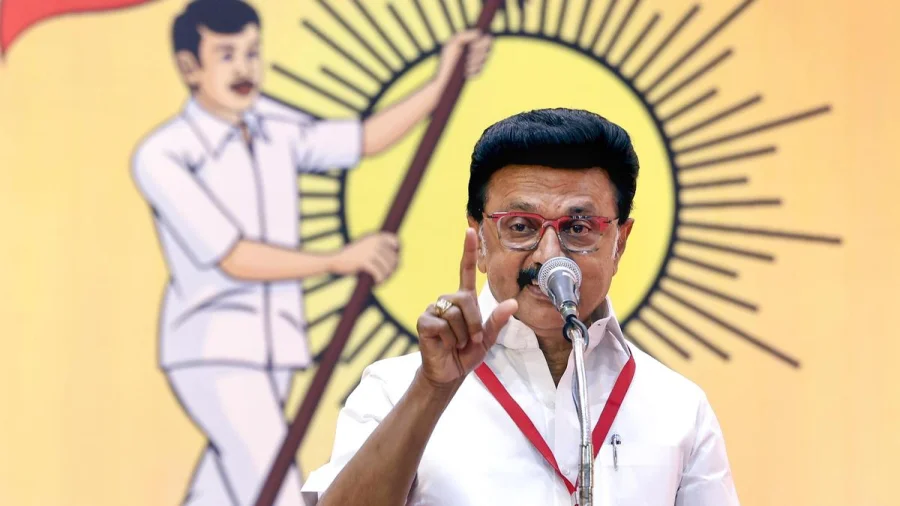
Tamil Nadu’s political landscape witnessed a sharp escalation this week as opposition leader M.K. Stalin publicly called on Chief Minister Vijay to abandon planned talks with Karnataka. “The visit will serve no purpose other than enabling the government to claim that it made a direct effort by travelling to Karnataka for talks,” Stalin said, casting doubt on the motive behind the proposed diplomatic push.
Why Stalin Is Opposing the Karnataka Visit Now
Stalin’s remarks come amid a long-running interstate dispute over water sharing and border issues. The DMK chief argued that a high-profile visit without a concrete agenda would only provide political cover for the ruling party in Tamil Nadu, rather than yield real results. He questioned whether the BJP-led central government would allow any agreement that weakens Karnataka’s position.
What’s at Stake: The Cauvery Water and Border Tensions
The core conflict dates back decades, with Tamil Nadu seeking a larger share of Cauvery River water and protesting Karnataka’s construction of new dams. Any official visit by a Tamil Nadu CM is seen as a high-stakes attempt to break the deadlock. But Stalin’s intervention suggests that internal political calculations may override the state’s collective interest.
A Timeline of Strained Relations
Earlier this year, Karnataka’s refusal to release water triggered protests in Tamil Nadu. A meeting between officials in June failed to bridge differences. The present proposal for a CM-level visit emerged last month, but Stalin’s party has consistently opposed it, calling it a “photo-op” without preconditions.
How This Affects Everyday People in Tamil Nadu
Farmers in the Cauvery delta region are watching closely. Many had hoped that direct talks between chief ministers could lead to a temporary water-sharing formula. Stalin’s warning has heightened anxiety. “We are stuck between two political battles,” said a farmer from Tiruchy, who asked not to be named. “We need water, not press conferences.”
What M.K. Stalin Actually Said — Full Context
In a statement released to the media, Stalin argued: “The visit will serve no purpose other than enabling the government to claim that it made a direct effort by travelling to Karnataka for talks.” He urged the CM to instead focus on legal remedies through the Cauvery Water Disputes Tribunal and Supreme Court. No official reply from the Chief Minister’s office has been received so far.
Analysis: Political Motives Behind the Rift
Political analysts note that Stalin, who leads the DMK, sees an opportunity to weaken the ruling AIADMK ahead of the next assembly elections. By painting the Karnataka visit as a gimmick, he aims to position himself as the true defender of Tamil Nadu’s interests. However, critics say this could backfire if the state appears divided on a matter of national importance.
Confirmed Facts vs What Remains Unclear
Confirmed: Stalin made the statement. The visit was under active discussion. Unclear: Whether the CM had already decided to travel. Whether any pre-meeting backchannel with Karnataka took place. Whether the central government had offered to facilitate talks. All such details remain unverified.
How Karnataka May React
Karnataka Chief Minister Basavaraj Bommai has not commented on Stalin’s remark. But earlier this year, Karnataka maintained it would not hold talks “under pressure.” The internal rift in Tamil Nadu could embolden Karnataka to adopt a harder line, demanding unconditional acceptance of its water-sharing formula.
Risks and Balanced View
Stalin’s opposition carries risks. If the visit is canceled, no progress occurs and the dispute festers. If it goes ahead despite his objection, the ruling party may appear defiant but risk being labeled as ignoring a senior leader’s advice. Either way, the public — especially farmers — continues to suffer. Some experts argue that only the Supreme Court can enforce a durable solution.
Wider Trend: Interstate Disputes Turning Political
This episode fits a broader pattern where water and border disputes become electoral tools. In recent years, conflicts between Karnataka and Tamil Nadu, Maharashtra and Karnataka, and Andhra and Telangana have seen chief ministers using controversies to rally regional support rather than seeking quiet diplomacy.
What Readers Should Watch For
In the coming days, watch for: (1) a formal statement from CM Vijay’s office, (2) any response from Karnataka, (3) whether the DMK moves a no-confidence motion or protest, and (4) any Supreme Court hearing on the water dispute. Citizens can also follow live updates from the Cauvery Water Management Authority.
Future Outlook
The most likely outcome is that the visit is postponed indefinitely, and the matter returns to the courts. However, if the central government intervenes with a conciliation offer, a summit might still occur — though Stalin’s opposition will make any agreement politically fragile. A mediated solution before next summer’s peak water demand remains the best-case scenario.
Our Take
M.K. Stalin’s intervention is less about policy and more about political positioning. While he raises valid questions about the visit’s purpose, the public interest demands that both parties prioritise water access over electoral optics. The real tragedy is that ordinary citizens are left waiting while leaders trade accusations. Until the issue is depoliticised, the Cauvery dispute will remain unresolved.
Frequently Asked Questions
Why did M.K. Stalin urge the Tamil Nadu CM to abandon talks with Karnataka?
Stalin argued the visit would be a political exercise with no real outcome, enabling the ruling party to claim credit without achieving any water-sharing agreement.
What is the Cauvery water dispute about?
The dispute involves sharing of Cauvery River water between Tamil Nadu and Karnataka, with Tamil Nadu demanding a higher share due to agricultural needs and Karnataka claiming insufficient rainfall.
Could the visit have helped resolve the issue?
Possibly, if both sides came with a flexible agenda. But Stalin believes that without firm preconditions and legal backing, a visit would only delay a permanent solution.
What happens next?
The state government likely will assess political fallout before deciding. In the meantime, the Cauvery Water Management Authority continues to monitor water releases, and the Supreme Court may be approached for an interim order.



