
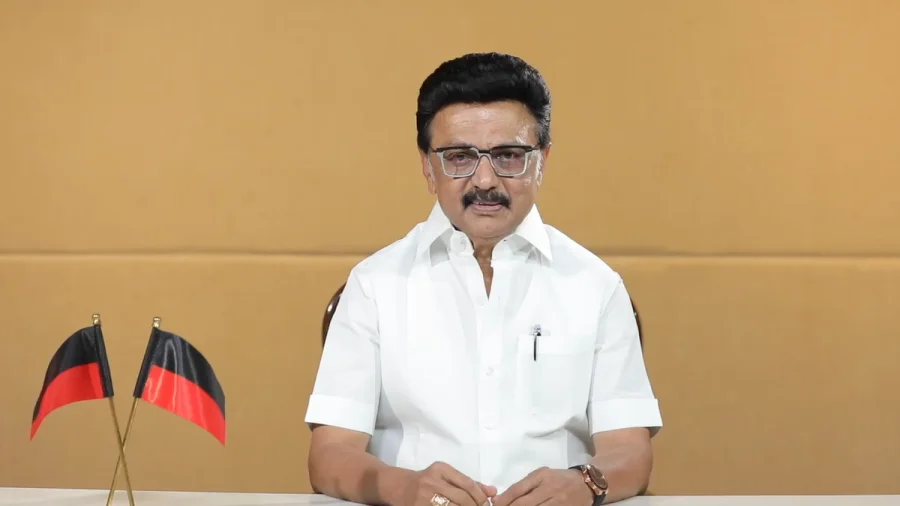
Fifty years after the Emergency, M.K. Stalin has returned to a cell he says he never really left. In a video released on social media, the DMK president said his jaws were indeed broken while he was in jail during the Emergency — and that he and others had been lodged in a leper ward.
The statement was framed as a reply to Tamil Nadu Chief Minister Vijay. What exactly prompted it is not detailed in the account available, but the video itself is unambiguous about the central claim.
A Video, A Cell, And A Claim Stalin Has Never Let Go
The substance of the video is narrow. Stalin speaks about what he says befell him in prison — a broken jaw, and shared accommodation in a ward set aside for leprosy patients, a practice that once reflected deep social stigma around the disease.
The framing matters as much as the content. This is testimony, delivered in the first person, rather than a document, a charge sheet, or a medical record.
Why An Emergency-Era Wound Still Hurts In Tamil Nadu Politics
The Emergency, the 1975–77 period when civil liberties were suspended and thousands were detained, is not distant history in Tamil Nadu. It shaped a generation of opposition leaders, and jail time served then has functioned as a political credential ever since.
When a leader revisits that period, he is not only reliving it. He is also making a claim about who stood against power when it was costly to do so.
The Leper Ward Detail Lands Harder Than The Broken Jaw
A broken jaw is an injury. A leper ward is a statement about how detainees were treated — segregated, stigmatised, and in Stalin's telling, grouped together as if the label itself were a punishment.
That specific detail is likely to draw the most scrutiny. It is also the part most easily corroborated — or contradicted — by other survivors of that period.
Vijay's Place In This Exchange — What Is Known And What Is Not
Stalin's video is described as a response to Tamil Nadu Chief Minister Vijay. The nature of Vijay's remarks — whether a denial, a question, or a broader criticism — is not established in the material available.
Until that is clear, the exchange cannot be fairly characterised as a debate with two fully stated sides.
Confirmed, Unverified, And Simply Unclear
Confirmed: Stalin made these statements in a video circulated on social media.
Unverified: the medical specifics of the injury, the exact institution, the duration of the detention, and the treatment conditions, all of which rest on his account.
Unclear: what CM Vijay said, whether any official record exists, and whether others held with Stalin have spoken on the record.
The Risk Of Reading Too Much Into A Single Video
Personal testimony about events nearly fifty years old carries real limitations — memory fades, records are lost, and political context colours retelling. Treating the video as proof of a contested historical question would be a mistake.
Treating it as irrelevant would be a bigger one. Testimony is often where the historical record begins.
The Wider Pattern: Memory As Political Currency
Across Indian politics, jail narratives from the Emergency have been invoked by leaders of several parties to establish anti-authoritarian credentials. Each retelling tends to arrive when the political present demands it.
That does not make the accounts false. It does mean readers should watch when and why they surface.
What Readers Should Take Away
If you are following this story, separate three things: what Stalin said, what can be independently verified, and what political purpose the statement serves. All three can be true at once.
For students of Indian political history, the video is a useful primary source — a leader's own recollection, stated plainly, in his own voice.
What Could Happen Next
The most likely development is corroboration or contradiction from contemporaries who were detained in the same period. That is what would move this from assertion to record.
Anything more definite — official confirmation, archival documents, medical evidence — is not established and should not be assumed.
Our Take
Stalin did not need to make this claim. He made it in his own voice, on his own platform, about a period in which he was on the losing side of power. That carries weight.
But weight is not the same as verification. The responsible position is to take the testimony seriously, report it accurately, and wait for the record — not to pre-empt it in either direction.
Frequently Asked Questions
What did Stalin say about his time in jail during the Emergency?
In a video released on social media, he said his jaws were indeed broken in prison and that he and others had been lodged in a leper ward.
Why did he release the video now?
It is described as a response to Tamil Nadu Chief Minister Vijay. The specific remarks that prompted it are not detailed in the available account.
Does any official record confirm the injury?
No such confirmation is established in the material available. The account rests on Stalin's own statement in the video.
What was the Emergency?
A period between 1975 and 1977 when civil liberties were suspended across India and large numbers of people were detained without trial. Jail time from that period remains a significant marker in Indian political memory.



