
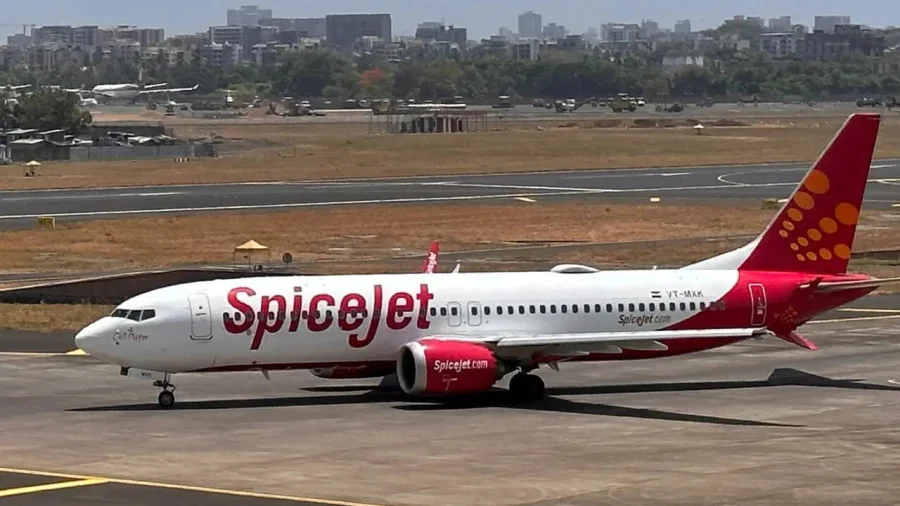
At an airport, a delay is a number on a screen. For a family that has already checked in, cleared security and handed over its bags, it is a night rewritten — a missed connecting flight, a cancelled hotel, an unexplained wait with no one at the counter.
That frustration is what appears to have boiled over at Delhi airport, where more than 200 SpiceJet passengers are reported to have protested against repeated delays to their flights. This report is based on the headline account supplied to this newsroom; independent verification of the incident's specifics was not available at the time of writing.
What We Know About the SpiceJet Delhi Airport Protest
The core of the story is straightforward: a large group of SpiceJet passengers at Delhi airport — reported at over 200 — came together in protest over repeated delays. The scale is what makes it notable. Passenger complaints are routine in Indian aviation; a protest involving hundreds of people at a single airport is not.
What is not yet established is equally important. The exact date, the terminal, the destinations involved, the duration of the delays and whether any flight was eventually operated or cancelled have not been confirmed in the material available here. Nor is there a verified account of what the airline told passengers on the ground.
Why Repeated Delays Hurt More Than a Single Cancellation
A cancellation is painful but final. You know where you stand, you claim a refund or a rebooking, and you move on. A recurring delay does something different — it traps passengers in a state of suspended planning.
Connections collapse one by one. Airport transfers expire. Hotel bookings are forfeited. Meetings, exams, weddings and hospital visits are missed. And each fresh announcement of a revised departure time erodes trust a little further, until waiting itself becomes the grievance.
How India's Passenger Rights Framework Is Meant to Work
India's civil aviation regulator, the Directorate General of Civil Aviation (DGCA), operates a passenger charter — the Civil Aviation Requirements on facilities to passengers — that sets out baseline obligations for carriers during disruption.
Broadly, these rules require airlines to provide meals and refreshments once a delay crosses defined thresholds, to offer refunds or alternate arrangements when delays stretch longer, and to communicate the reason for the disruption. The charter is widely seen as a floor, not a ceiling — it defines minimum standards rather than guaranteeing comfort.
A key nuance that often confuses travellers: compensation obligations are typically stronger for denied boarding and cancellations than for pure delays, and carriers frequently invoke "force majeure" — weather, air traffic control restrictions, security issues — to limit liability. Whether any of those exemptions apply to the Delhi incident cannot be determined from the information available.
Who Actually Absorbs the Cost of a Long Wait
The passengers most affected by a multi-hour delay are rarely the ones with flexible plans. They are daily-wage workers who have already lost a day's earnings, students travelling on tightly budgeted tickets, elderly travellers with medication schedules, and parents managing young children in a terminal with limited seating.
For them, the failure is compounded: they are not merely delayed, they are stranded without the financial cushion to absorb the consequences. That gap between policy on paper and experience on the ground is exactly where public anger accumulates.
What SpiceJet, Airport Authorities and the Regulator Have Said
This is the section where this report must be candid: no verified statement from SpiceJet, from Delhi airport's operator, or from the DGCA was available in the material supplied. Any claim circulating about what an official said should be treated as unconfirmed until a primary source is produced.
In similar past incidents, the pattern has typically involved an airline statement citing operational reasons, followed — if escalation occurs — by regulator scrutiny. That is an observed pattern, not a description of what has happened here.
Reading the Signal: What a 200-Passenger Outburst Says
Protest is often the last stage in a chain that starts with silence. Passengers usually tolerate a delay if they understand why it happened and when it will end. What they rarely accept is ambiguity — repeated revised timings with no explanation and no visible staff presence.
When a crowd of this size organises itself, it usually signals a breakdown in communication, not merely a breakdown in scheduling. That distinction matters enormously for how airlines handle the next disruption.
Confirmed Facts vs What Remains Unclear
Confirmed from the available account: A protest took place at Delhi airport involving over 200 SpiceJet passengers; the stated trigger was repeated flight delays.
Unclear and requiring verification: the date and time of the incident; the specific flights, routes and duration of delays; the sequence of announcements made; whether any carrier or regulator official responded on the spot; and whether refunds, rebookings or compensation have since been offered. Readers should treat any specific figures or quotes seen elsewhere as unverified unless independently sourced.
Why SpiceJet Still Matters to India's Aviation Map
SpiceJet is one of India's long-established budget carriers, with a network built on price-sensitive domestic routes and a brand that many first-time flyers recognise. Its value lies less in premium service than in reach — the ability to connect tier-two and tier-three cities to metro hubs at fares that compete with train travel.
That positioning is a genuine differentiator, and it is also a vulnerability. A low-cost carrier operates on thin margins where a single operational disruption — an aircraft on ground, a crew shortage, a congested slot — ripples across an entire day's schedule. When reliability slips, the airline's core promise, affordable certainty, is the first thing passengers stop believing.
The Other Side: Operational Realities Airlines Point To
A balanced reading requires acknowledging the pressures carriers operate under. Delhi airspace is among the most congested in the world; weather disruptions in winter and monsoon season cascade across schedules; crew duty-time rules are deliberately strict for safety reasons; and an aircraft grounded for a technical issue can strand passengers who were never booked on that aircraft in the first place.
None of that, however, resolves the core passenger grievance. Explanations for a delay are not a substitute for a plan to manage the people enduring it. The strongest criticism here is not that delays happen — they will — but that communication and care often collapse precisely when they are most needed. What remains unproven is the extent to which any of these factors applied in this specific incident.
From One Airport Protest to a Wider Pattern
Indian aviation has expanded quickly over the past decade, with first-time flyers forming a growing share of passengers. That growth has created a mismatch: expectations around service have risen faster than airport and airline capacity to absorb disruption.
The result is a rising volume of consumer grievances reaching portals and consumer forums. A protest involving hundreds of passengers at a major airport is best read not as an isolated flashpoint, but as a visible symptom of that widening gap.
If Your Flight Is Repeatedly Delayed, Do This
Document everything. Keep your boarding pass, ticket, and screenshots or photographs of departure boards showing revised timings. These become the evidence base for any complaint.
Ask for the reason and the revised plan in writing — at the counter or via the airline's official app or chat. A written record is far more useful than a verbal assurance.
Know your baseline entitlements. Under DGCA's passenger charter, extended delays generally trigger meals and refreshments, and longer ones may entitle you to a refund or an alternate arrangement. Ask specifically which provision the airline is applying.
Escalate in order. Raise it first with the airline's customer care, then through the Ministry of Civil Aviation's AirSewa grievance platform if the response is unsatisfactory. Consumer courts remain an option for financial loss, though the process takes time.
Stay safe first. If a protest is already under way, avoid confrontation with ground staff and keep away from restricted areas — airport security rules apply strictly, and an escalated crowd situation can create legal risk for passengers too.
What Could Happen Next
The most probable next steps are an airline statement explaining the operational cause, and individual resolution for affected passengers through rebooking, refunds or goodwill measures. If enough complaints are formally lodged, regulatory attention becomes more likely.
Given the absence of verified sources at this stage, any claim about disciplinary action, fines or compensation figures would be speculation. This story should be updated once primary confirmations are available.
Our Take
This story is significant not because delays occurred — they always will — but because more than 200 people reached the point where waiting quietly stopped feeling like an option. That is a measure of trust, not of scheduling.
Indian carriers have invested heavily in aircraft and routes. Far less has been invested in the unglamorous discipline of disruption management: honest updates, visible staff, and decisions made quickly. Until that gap closes, protests like this one will keep recurring, and the reputational cost will keep landing on whichever airline happens to be holding the boarding passes that night.
Frequently Asked Questions
Why did SpiceJet passengers protest at Delhi airport?
According to the account available, over 200 SpiceJet passengers at Delhi airport protested over repeated delays to their flights. The protest reflects cumulative frustration rather than a single incident, though specific flight details have not been independently verified.
Are airlines in India legally required to compensate passengers for flight delays?
India's DGCA passenger charter sets out obligations around meals, refreshments, refunds and rebooking during extended delays, with stronger compensation requirements for denied boarding and cancellations. For delays, airlines often cite weather, air traffic control or technical reasons, which can limit compensation liability. Exact entitlements depend on the length of the delay and its cause.
What should a passenger do if their SpiceJet flight is delayed repeatedly?
Keep your ticket and boarding pass, photograph departure boards, request the reason and revised timing in writing, and ask which passenger-charter provision applies. If unresolved, escalate to the airline's customer care and then to the Ministry of Civil Aviation's AirSewa grievance portal.
Have SpiceJet or the DGCA responded to this protest?
No verified official statement from SpiceJet, Delhi airport authorities or the DGCA was available in the material reviewed for this report. Readers should treat unconfirmed quotes or figures circulating online with caution until a primary source confirms them.



