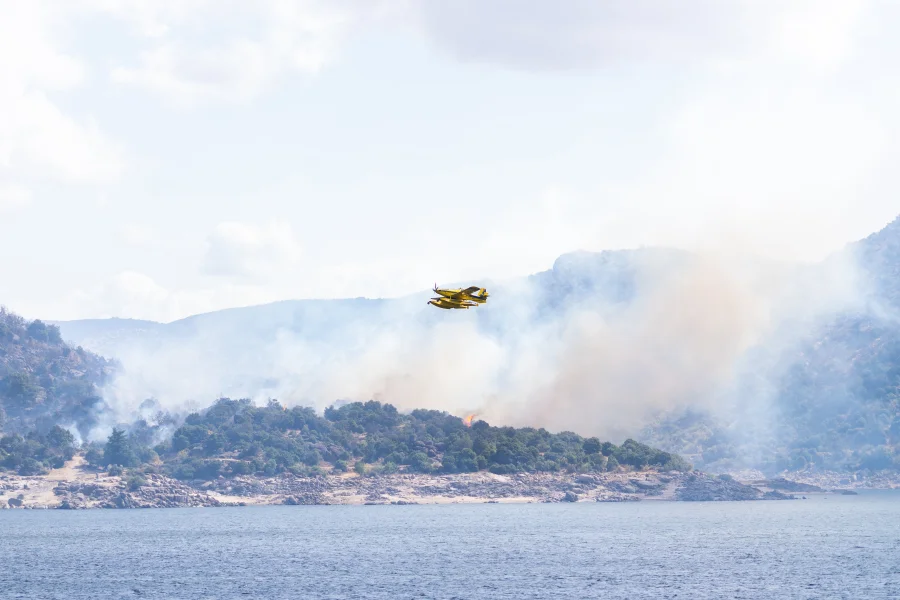
Nearly 80,000 people have been forced to leave their homes or remain confined indoors as two massive wildfires tear through Ávila and the Madrid region in central Spain. The numbers, confirmed by regional government delegates on Saturday, mark one of the largest fire-related displacements in the country in recent years. For thousands of families, the night brought no relief — only the orange glow of flames on the horizon and the smell of smoke drifting into their bedrooms.
How the evacuation numbers unfolded — Madrid and Ávila
In Madrid, 35,000 residents have been evacuated and a further 20,000 ordered to stay confined in their homes, according to Francisco Martín, the central government delegate for the region. In Ávila, the tally stands at around 27,000 people either evacuated or confined, after seven more municipalities in the southern part of the province were added overnight. The combined figure of nearly 80,000 affected individuals underscores the scale of a crisis that is still unfolding.
Why this matters — lives, livelihoods and a changing climate
Beyond the immediate danger to life and property, these fires are devastating rural communities that depend on agriculture and tourism. The psychological toll on evacuees — unsure if their homes still stand — is immense. The blazes also highlight a broader pattern: southern Europe is experiencing increasingly severe wildfire seasons, driven by prolonged drought and record heat waves. For the people of Ávila and Madrid, this is not just a weather event; it is a home invasion by fire.
The timeline of a spreading disaster
The fires began earlier in the week, fuelled by strong winds and tinder-dry vegetation. By Saturday, the flames had consumed nearly 25,000 hectares — an area roughly the size of 35,000 football pitches. Emergency crews from multiple regions have been deployed, and the Spanish military’s emergency response unit (UME) is active on the ground. Despite their efforts, containment lines have been difficult to hold due to erratic wind patterns and steep terrain.
Who is affected — real people in the path of the flames
Among the evacuated are elderly residents from care homes, families with young children, and farmers who refused to leave their livestock until the last possible moment. In small villages in Ávila, many residents have lived there for generations. “We left with nothing but the clothes on our backs,” one evacuee told local media. Confinement orders in parts of Madrid mean thousands are trapped in homes with no power or air conditioning, as smoke makes it dangerous even to step outside for fresh air.
President Sánchez on the ground — official response and warning
President Pedro Sánchez visited the advanced command post on Saturday and surveyed the burned areas. “The situation continues to be complex,” he said, adding that “we do not know” when the fires might be brought under control. His presence signals the gravity of the crisis at the highest level of government. The Interior Ministry has coordinated resources across regions, but the president’s cautionary tone suggests that the immediate danger is far from over.
What makes these fires so difficult to stop — analysis
The combination of extreme drought, high temperatures, and low humidity has created what fire experts call “extreme fire behaviour.” The flames can jump roads and firebreaks, making traditional suppression tactics less effective. Climate scientists point out that the Iberian Peninsula is warming faster than the global average, lengthening the fire season and increasing the intensity of individual blazes. Without significant changes in land management and carbon emissions, episodes like this are likely to become more frequent.
Confirmed facts vs what remains unclear
Confirmed: Nearly 80,000 people evacuated or confined; 25,000 hectares burned; President Sánchez visited the command post; delegados confirmed the numbers. Unclear: How many homes have been destroyed; the exact number of injuries; whether the fires are contained in any section; the full economic cost. Authorities have not yet released a complete damage assessment.
Risks and a balanced view
While the government response has been swift, critics note that funding for wildfire prevention and rural firefighting units has been cut in previous years. Some local mayors have expressed frustration over what they see as delayed aerial support. On the other hand, emergency services have worked around the clock under perilous conditions, and no fatalities have been reported as of Saturday evening — a testament to the effectiveness of the evacuation orders. The situation remains fluid, and any claims of mismanagement should be weighed against the unprecedented intensity of the fires.
Wider trend — wildfires transform southern Europe
Spain is not alone. In 2023, Greece, Italy, and Portugal also battled massive wildfires that forced mass evacuations. The Mediterranean basin is increasingly described as a “wildfire hotspot” by the European Forest Fire Information System. This year, Spain’s fire season began earlier than usual, with blazes in Catalonia and Valencia in June. The Ávila-Madrid fires are part of a worrying pattern that links extreme weather to human-caused climate change.
Practical guidance for those affected
If you are in or near the affected areas: Follow evacuation or confinement orders immediately. Avoid using masks that may restrict breathing in heavy smoke — wet cloth is a temporary measure. Keep an emergency bag with documents, water, and essential medicines. Use official channels (Protección Civil, @interiorgob) for updates, not social media rumours. For those outside the region: consider donating to Spanish Red Cross wildfire relief funds or local volunteer firefighter associations.
Future outlook — what could happen next
Weather forecasts show no immediate rain in the region, and winds are expected to remain gusty. This means containment may take days, and additional evacuations cannot be ruled out. Once the fires are extinguished, the focus will shift to rehabilitation — restoring destroyed ecosystems, rebuilding homes, and compensating farmers. The political debate over climate adaptation funding will likely intensify. For now, tens of thousands wait in shelters or at relatives’ homes, hoping their houses have survived.
Our Take
The Ávila-Madrid wildfires are a human tragedy unfolding in real time, but they also represent a stark warning. The fact that a developed European nation with modern firefighting resources cannot quickly contain a blaze highlights how dangerous the new climate reality has become. While the government’s response has been commendable in terms of evacuations, the long-term question remains: will Spain invest enough in prevention and resilient infrastructure to protect its people? The answer will determine whether scenes like this become the new normal.
Frequently Asked Questions
Why are nearly 80,000 people evacuated or confined in Ávila and Madrid?
Two large forest fires, fanned by strong winds and extreme drought, have made large areas unsafe. Authorities ordered evacuations for immediate danger zones and confinement for areas where smoke and fire risk are high but evacuation routes are blocked or dangerous.
How many hectares have burned so far?
According to the government delegate, almost 25,000 hectares have been charred across both regions. That is roughly 250 square kilometres — an area larger than the city of Barcelona.
Has President Pedro Sánchez taken any action?
Yes. Sánchez visited the advanced command post and the affected zones on Saturday. He described the situation as “complex” and acknowledged that authorities do not yet know when the fires will be under control.
What should I do if I live near the fire zone?
Follow instructions from Protección Civil and local authorities. Keep emergency supplies ready, stay tuned to official channels, and do not attempt to return to evacuation zones until it is declared safe. Do not use outdoor water sources that may be contaminated by ash.