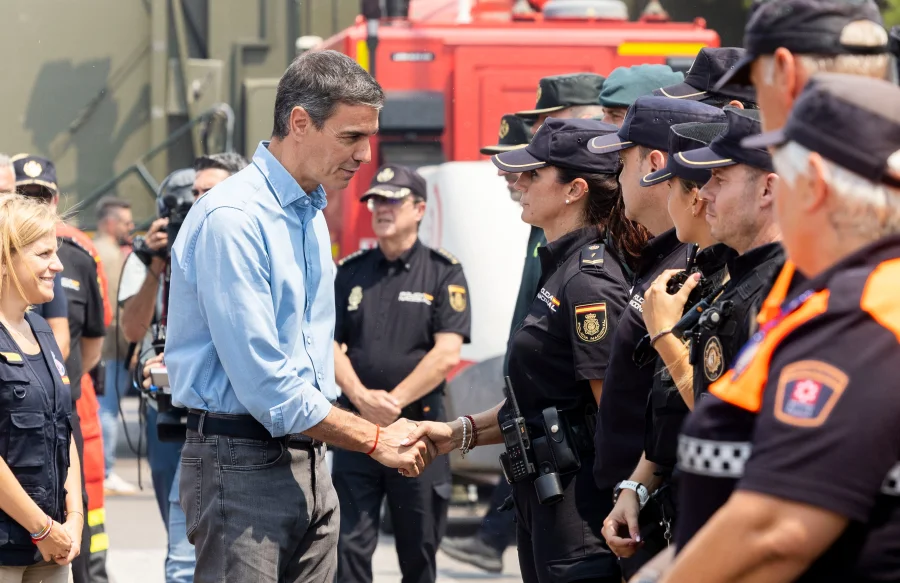
Spain is facing one of its most intense wildfire episodes this summer as two large fires in Castellón and Madrid remain out of control, forcing more than 16,000 people from their homes and burning through tens of thousands of hectares. Prime Minister Pedro Sánchez visited the affected area in Vall d’Uixó (Castellón) on Monday and warned that the fight is far from over.
Sánchez Warns of ‘Difficult Hours’ Ahead
“Quedan horas difíciles,” Sánchez said during his visit, calling for maximum caution as a heatwave is expected to worsen the situation. The prime minister’s appearance signals the severity of the crisis, as both blazes are stretching resources across the country.
Castellón Fire: 7,200 Hectares and Growing
The fire in Vall d’Uixó has already consumed more than 7,200 hectares and forced the evacuation of over 16,000 residents. Local emergency services are battling the flames on multiple fronts, but the incoming heatwave could make containment even harder.
Madrid Region Blaze Expands to 25,000 Hectares
In the Sierra Oeste of Madrid, the wildfire has destroyed around 25,000 hectares. The 112 emergency service reported that wind gusts of up to 30 kilometres per hour are “complicating extinction work”. Most efforts are now focused on the area around the San Juan reservoir in San Martín de Valdeiglesias, where two separate fires have converged.
Wind and Heatwave Complicate Firefighting
Firefighters say the combination of strong winds, dry vegetation, and rising temperatures is creating extreme conditions. The heatwave arriving in the next days could provide additional fuel for the flames, especially if the wind does not ease.
Evacuations and Human Impact
More than 16,000 people have been evacuated from both fire zones. Many have taken shelter with relatives or in temporary reception centres. The authorities have not reported casualties so far, but the situation remains fluid.
Official Emergency Response
The Spanish government has deployed additional aerial and ground firefighting units. The Military Emergency Unit (UME) is assisting in both regions. Sánchez urged residents to follow official instructions and avoid unnecessary travel near the affected zones.
Why These Fires Are Unusual
While wildfires are common in southern Europe during summer, the scale and speed of these two blazes are notable. The simultaneous occurrence in two separate regions, each with large evacuations, highlights the growing risk from climate-driven heatwaves and persistent drought.
Confirmed Facts vs What Remains Unclear
Confirmed: 7,200+ hectares burned in Castellón; 25,000+ in Madrid; over 16,000 evacuated; PM Sánchez visited; new heatwave expected; winds up to 30 km/h complicating extinction. Unclear: Exact number of active fire fronts; whether any homes have been destroyed; duration of the heatwave; precise cause of ignition (not disclosed). Speculation about arson or negligence has not been officially confirmed.
Risks and Balanced View
Authorities warn that the coming days are critical. The heatwave could accelerate fire spread, while strong winds may ground some aerial firefighting aircraft. No deaths have been reported, but the risk to rural communities remains high. Criticism from environmental groups over forest management and climate adaptation may follow, but is not part of the official narrative at this stage.
Wider Trend: Europe’s Growing Wildfire Season
These fires are part of a pattern seen across southern Europe in recent years, where hotter, drier summers are extending the wildfire season. Spain, Portugal, Greece, and France have all experienced large blazes. The situation in Castellón and Madrid could become a case study in how quickly climate change is reshaping fire risk.
Practical Advice for Affected Residents
Residents in evacuation zones should follow official orders, pack essential documents and medications, and stay tuned to local emergency channels. Those outside the immediate area are advised not to drive into smoke-hit zones and to avoid any open flames in forested regions. The 112 emergency number remains the central contact point.
Future Outlook
Firefighting teams expect the situation to worsen before it improves. If the heatwave arrives as forecast, containment could take several more days. The government has pledged additional resources, but sustained wind and high temperatures may prolong the crisis. Sánchez’s statement of “difficult hours” suggests the peak has not yet been reached.
Our Take
These twin fires underline the urgent need for better prevention and adaptation strategies as Spain faces a longer, more intense fire season. While the immediate response by emergency services has been robust, the underlying drivers – drought, heat, and land-use change – remain unaddressed. The coming days will test both the resilience of affected communities and the capacity of the national firefighting system.
Frequently Asked Questions
Where are the active wildfires in Spain right now?
The two major fires are in Vall d’Uixó (Castellón) and the Sierra Oeste of Madrid. Both remain active as of the latest reports.
How many people have been evacuated?
More than 16,000 people in total have been evacuated from both fire zones.
What is the total area burned?
In Castellón, over 7,200 hectares have burned; in Madrid, more than 25,000 hectares have been affected.
Is a heatwave expected to make the fires worse?
Yes, a new heatwave is forecast to arrive in the coming days, which could increase fire intensity and complicate extinction efforts.