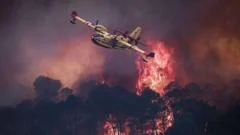
Southern Europe is burning. In less than four days, a wildfire near Bordeaux has torn through more than 162 square miles of land — an area larger than the city of Paris. Simultaneously, the Madrid region is battling its worst fires on record. These are not isolated incidents; they are part of a worsening pattern of extreme fire weather across the continent.
Bordeaux fire: 162 sq miles in four days
The blaze, which started near the town of Landiras in southwestern France, has raced through pine forests and agricultural land. Satellite imagery shows a vast scar of charred earth stretching across Gironde. Local officials have evacuated thousands of residents and tourists. Firefighters from across France have been mobilised, supported by water-bombing aircraft and specialised ground crews.
Why the Madrid fires are unprecedented
While Mediterranean wildfires are common in summer, the current fires in the Madrid region are described by regional authorities as the worst ever seen. The combination of a prolonged heatwave, low humidity, and strong winds has created explosive fire conditions. Several towns have been evacuated, and firefighters are struggling to contain multiple fronts.
How firefighters are tackling the crisis
Both France and Spain have deployed massive resources. In France, Canadair water bombers and Dash 8 aircraft make repeated drops, while hundreds of firefighters work through the night to create firebreaks. Spain has activated its Military Emergency Unit (UME), and the European Union has offered support through its Civil Protection Mechanism. Aerial mapping and real‑time satellite data are guiding ground teams.
Human impact: lives disrupted, homes lost
In the Bordeaux region, entire camping grounds have been evacuated. Vineyards and farms that survived earlier droughts are now threatened by flames. In Madrid, residents describe seeing an orange glow on the horizon as flames approach suburban neighbourhoods. Infrastructure such as roads and power lines has been damaged.
What’s driving the fires? Climate and weather
Meteorologists point to a persistent high‑pressure system over western Europe, trapping heat and blocking moisture. Average temperatures in France and Spain have been several degrees above normal for weeks. Drought conditions have dried out vegetation, turning forests into tinderboxes. Climate scientists warn that such extreme fire seasons will become more frequent without drastic emissions cuts.
Maps show the scale of destruction
Fire perimeter maps from the European Forest Fire Information System (EFFIS) reveal that the Bordeaux fire alone exceeds the total area burned in many entire wildfire seasons. Madrid fire maps indicate multiple simultaneous large fires – a scenario that overwhelms local firefighting capacity. The visual data underscores the geographic extent of the crisis.
Confirmed facts vs what remains unclear
Confirmed: The Bordeaux fire has burned at least 162 sq miles (420 sq km) in under four days. Madrid is experiencing its worst fires on record. Thousands have been evacuated in both regions. Unclear: Total number of structures destroyed. Exact cause of the Bordeaux fire (still under investigation). How quickly containment can be achieved given weather forecasts.
Emergency response: international aid mobilised
The European Commission has deployed additional firefighting aircraft from its rescEU fleet. France has also requested help from Italy and Greece. Spain has received assistance from Portugal. Meanwhile, national governments are coordinating with regional authorities to provide shelter, food, and medical support for evacuees.
Risks and balanced view
While firefighting efforts are heroic, critics question whether countries have invested enough in preventive measures such as controlled burns, forest management, and early warning systems. There are also concerns about the mental health toll on firefighters and evacuated communities. Some local officials have called for more permanent funding for climate adaptation.
Wider trend: Europe’s worsening fire seasons
This is not a one‑off event. In recent years, Portugal, Greece, Italy, and Sweden have all experienced unprecedented wildfires. Scientists link the trend to rising global temperatures and shifting weather patterns. The 2025 fire season is already shaping up to be one of the most destructive on record.
What residents and travellers should do now
Anyone within evacuation zones should follow official orders immediately. Check local fire and weather updates daily. Avoid travel to affected areas unless necessary. Those with respiratory issues should stay indoors with windows sealed. For real‑time information, use official government apps and the EU’s Copernicus Emergency Management Service.
Future outlook: what could happen next
The immediate outlook depends on weather. If winds ease and temperatures drop over the next 48 hours, firefighters may gain the upper hand. But long‑range forecasts show little relief. If the fires cannot be contained, they could threaten major infrastructure and force permanent changes in land use. France and Spain may need to reconsider building codes and forest policies.
Our Take
These wildfires are a stark reminder that climate change is not a distant threat — it’s here, burning through parts of Europe that were once considered low‑risk. The maps tell a story of scale and speed that words alone cannot. While Europe has some of the best firefighting resources in the world, even they are being stretched to their limits. The real lesson may be in prevention: better land management, smarter urban planning, and faster carbon reduction. Every wildfire season is a test, and this year the test has arrived early.
Frequently Asked Questions
How big is the Bordeaux wildfire compared to other European fires?
At more than 162 sq miles (420 sq km), it is among the largest ever recorded in France during a single fire event. By comparison, the 2023 fires in Greece burned around 80 sq miles in the same period.
Are the Madrid fires under control?
As of the latest reports, the Madrid region fires are not yet contained. Authorities describe them as the worst in the region’s history, with multiple active fronts.
What resources are being used to fight these fires?
Both countries are using water‑bombing aircraft, helicopters, bulldozers for firebreaks, and thousands of ground personnel. The EU has also activated its rescEU fleet of firefighting planes.
How can I help or get reliable updates?
Donate to recognised relief organisations like the Red Cross. For updates, use the French government’s “Météo des Forêts” app or Spain’s “Protección Civil” alerts. Avoid sharing unverified social media posts.