
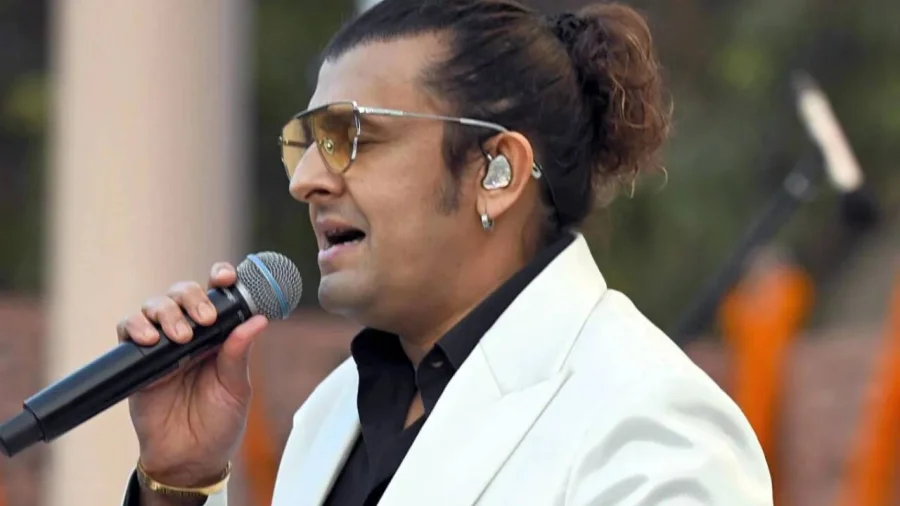
One of Bollywood's most celebrated voices has just said something most singers would rather not admit. Sonu Nigam, long admired for his powerhouse vocals, says he does use auto-tune in some songs — and his explanation is shifting how fans think about pitch correction.
The confession that is sparking fresh debate
Nigam spoke candidly about his recording process, confirming that auto-tune plays a role in certain tracks. He stated that contemporary music production often requires careful pitch adjustments, making the technology a practical necessity rather than a shortcut.
The admission is notable because it comes from an artist widely considered one of India's finest live performers.
Why this matters beyond a single admission
For years, the auto-tune debate in Bollywood has been framed as a battle between "real singers" and "studio-fixed voices." Nigam's comments complicate that narrative.
If a singer of his calibre uses pitch correction, the conversation shifts from whether the technology should exist to how it should be used responsibly.
'Enhance, don't mask' — Nigam's rule for auto-tune
According to Nigam, auto-tune ought to complement powerful vocal abilities instead of covering flaws. He drew a clear line between using the tool as a finishing touch and leaning on it as a crutch.
His stance suggests that even with modern correction software, the quality of the human voice remains the foundation.
A live singer's admission lands differently
Nigam has built a reputation on singing without backing tracks in concerts, delivering hits night after night with raw vocal power. For fans, that makes his confession both surprising and reassuring.
It signals that using auto-tune in the studio does not necessarily diminish what an artist can do live on stage.
The AR Rahman connection: a Santoshi film in the works
Beyond the auto-tune discussion, Nigam mentioned his involvement in Rajkumar Santoshi's latest movie, where he has performed a song crafted by renowned composer AR Rahman.
The collaboration brings together one of Indian cinema's most respected directors, one of its greatest composers, and one of its most loved playback singers.
What is confirmed and what remains unclear
Confirmed: Nigam uses auto-tune in select songs, believes modern production needs pitch correction, and insists the technology should support strong vocals rather than conceal weakness. He is also singing for Santoshi's film on an AR Rahman composition.
Unclear: which specific tracks feature auto-tune, the extent of correction applied, and the title or release timeline of the Santoshi film. No further details have been independently verified.
The fine line between studio polish and vocal honesty
Nigam's remarks highlight a tension every producer knows well. A heavily corrected recording can sound sterile; a raw one can feel alive. Auto-tune, used thoughtfully, sits somewhere between the two.
The singer's own legacy — built on expressive, technically strong performances — gives his argument unusual weight.
How Bollywood playback singing is quietly changing
Pitch correction has become routine across the music industry, from independent pop to film soundtracks. Nigam's confession reflects a broader production reality that listeners rarely get to hear about.
His comments also arrive at a moment when audiences are increasingly comparing studio versions with live performances online.
What this means for aspiring singers
For young artists who grew up with auto-tune apps and home studios, Nigam's message is practical: technology can assist, but it cannot replace discipline, training and natural ability.
His honesty may also reassure newcomers who feel pressured to chase flawless pitch in every single take.
What could come next
With his AR Rahman-composed song for Santoshi's film yet to reach audiences, listeners will soon hear how this production philosophy translates into an actual track.
Whether the song carries Nigam's signature natural tone or shows obvious digital correction will be closely watched by fans and industry observers alike.
Our Take
Sonu Nigam's auto-tune confession matters because it comes from an artist with nothing left to prove. Instead of weakening his credibility, his transparency strengthens a larger point: technology is a tool, and vocal mastery is the anchor. In an industry where many quietly rely on pitch correction, Nigam has chosen honesty — and that alone sets an example worth following.
Frequently Asked Questions
Does Sonu Nigam use auto-tune in his songs?
Yes. Sonu Nigam has confirmed that he uses auto-tune in some of his songs, explaining that contemporary music production often requires careful pitch adjustments.
What did Sonu Nigam say about auto-tune and vocals?
Nigam said auto-tune should complement powerful vocal abilities instead of covering flaws. He believes the technology should support strong singing, not replace it.
Which film is Sonu Nigam singing in with AR Rahman?
Sonu Nigam is part of Rajkumar Santoshi's latest movie, where he has performed a song composed by AR Rahman. The film's title has not been confirmed in available information.
Why is Sonu Nigam's auto-tune statement significant?
It matters because Nigam is known as one of Bollywood's finest live singers. His honest admission shows that auto-tune is a standard production tool in modern music, even for the most talented voices.



