
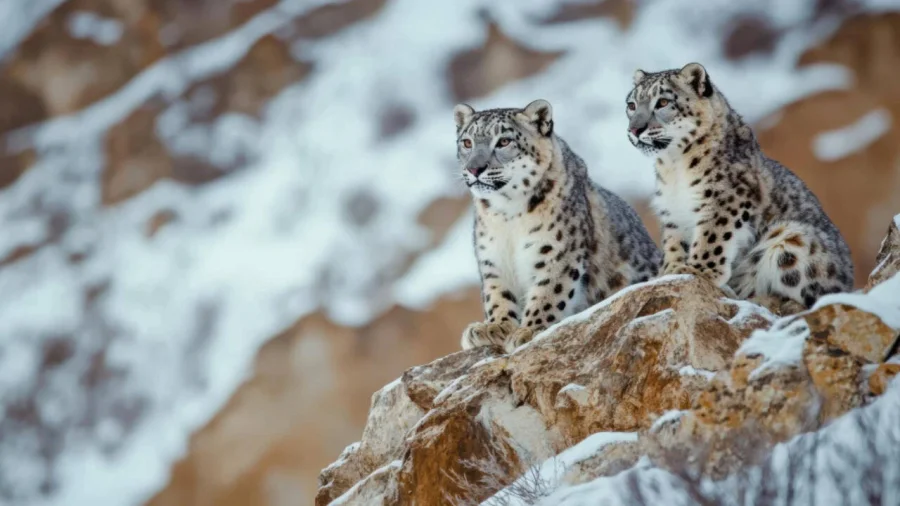
A snow leopard is not a rhino. It does not graze in the open, tolerate crowds, or pose patiently for tourist jeeps. It is a ghost of the high Himalayas — seen by a lucky few after days of searching. That difference now sits at the centre of a fresh conservation debate: should Ladakh welcome safari tourism the way Assam's Kaziranga does?
A safari proposal that divides conservationists
The headline debate — captured in the question "Safari in snow leopard home?" — reflects a growing tension between tourism ambitions and wildlife protection in Ladakh. Reports of the discussion suggest safari-style tourism has been floated as a way to boost the region's travel economy.
Conservationists have responded with a clear message: Ladakh is no Kaziranga. What works for one-horned rhinos in Assam's grasslands cannot simply be transplanted onto the cold desert of the Himalayas.
Why the Kaziranga comparison fails, according to experts
Kaziranga's safari model succeeds because of density and visibility. Rhinos are large, abundant, and found in a relatively contained landscape. Tourists can reasonably expect to see one within hours.
Ladakh offers the opposite conditions. Snow leopards roam territories that can span hundreds of square kilometres. They are solitary, elusive, and adapted to altitudes where oxygen is thin and human presence is minimal.
The ghost of the mountains: snow leopard ecology explained
Snow leopards are built for silence and distance. They are ambush predators that avoid human activity whenever possible. A safari model that promises sightings would, in practice, require either intensive tracking or baiting — both of which worry conservationists.
There is also the question of habituation. When wild animals grow accustomed to tourists, they may change their natural behaviour, abandon hunting grounds, or become vulnerable to conflict with local communities.
What mass tourism could do to Ladakh's fragile terrain
Ladakh's landscape is not built for high-volume tourism. Its soil is thin, its vegetation is sparse, and its wildlife populations are small. More vehicles, more camps, and more waste could leave scars that take decades to heal.
Local herders also share this land with snow leopards. In Kaziranga, tourism exists alongside fairly clear park boundaries. In Ladakh, wildlife, livestock, and human settlements overlap in ways that make blanket tourism zones difficult to design.
What is confirmed and what remains unclear
It is important to separate what is known from what is still speculation. The reported debate itself is real — conservationists are on record in the discussion expressing concern. However, no official government proposal, no detailed safari plan, and no named authorities have been confirmed in the material available.
The framing "Ladakh is no Kaziranga" is a conservationist argument, not a formal policy position. Until official documents or statements emerge, the specific contours of any safari plan remain unverified.
Why tourism and conservation need not be enemies
Conservationists are not opposed to tourism in Ladakh. In fact, the region is already one of the world's most sought-after destinations for snow leopard enthusiasts. Small-group photography expeditions, run by experienced operators, have long coexisted with conservation work.
The objection is about scale and format. A Kaziranga-style model brings hordes of jeeps, fixed safari routes, and a promise of guaranteed sightings. A Ladakh-style model, by contrast, would need to be low-volume, high-value, and deeply respectful of the animal's space.
The wider pattern: India's wildlife tourism boom
This debate is part of a larger national conversation. Across India, wildlife tourism is growing — from tiger safaris in Madhya Pradesh to elephant trails in Kerala. Each landscape demands its own rules.
What works in one ecosystem can fail — or even cause harm — in another. The Ladakh debate is a reminder that conservation strategies must be habitat-specific, not copied from a successful template elsewhere.
What travellers and tourism operators should keep in mind
For travellers dreaming of a snow leopard sighting, the responsible choice is to book with operators who prioritise ethical wildlife viewing: small groups, experienced naturalists, and no guarantee of sightings.
For tourism authorities, the message from conservationists is simple — involve ecologists early, set strict limits on visitor numbers, and design tourism around snow leopard behaviour, not around tourist convenience.
What could happen next
The debate is unlikely to disappear. If safari tourism is formally proposed, it will need environmental impact assessments, wildlife department approval, and community consultation. Each of those steps would provide a clearer picture of what is actually being planned.
Until then, the conservationist position offers a useful caution: a safari is only worth building if the animal at the centre of it remains wild, undisturbed, and free.
Our Take
This story matters because it tests a simple assumption — that more tourism is always good. In Ladakh, the snow leopard's survival depends on remaining unseen. The moment it becomes a reliable attraction, it stops being a wild animal.
Conservationists are not being anti-tourism; they are being protective of a species that has no margin for error. The smartest outcome would be a Ladakh-specific model — small, slow, and expensive — rather than an imitation of Assam's crowded success.
Frequently Asked Questions
Why do conservationists say Ladakh is no Kaziranga?
Because the two landscapes are fundamentally different. Kaziranga has dense, visible wildlife like rhinos in a contained area, while Ladakh's snow leopards are solitary, elusive, and spread across vast high-altitude terrain. A safari model built for one cannot simply be copied onto the other.
Are snow leopards easy to spot on a safari?
No. Snow leopards are extremely difficult to spot. They live in low densities, avoid human activity, and blend into rocky, snowy landscapes. Even experienced guides in Ladakh often track an animal for days before a sighting.
What is the Kaziranga safari model?
Kaziranga National Park in Assam is famous for its one-horned rhinos and structured jeep and elephant safaris. Because rhinos are large, numerous, and relatively visible, tourists can expect reliable sightings within park boundaries.
What would responsible snow leopard tourism look like in Ladakh?
Conservationists generally favour small-group, high-value expeditions led by experienced naturalists, with strict limits on vehicle numbers, no baiting or artificial attraction of animals, and clear guidelines that protect both snow leopards and local herding communities.



