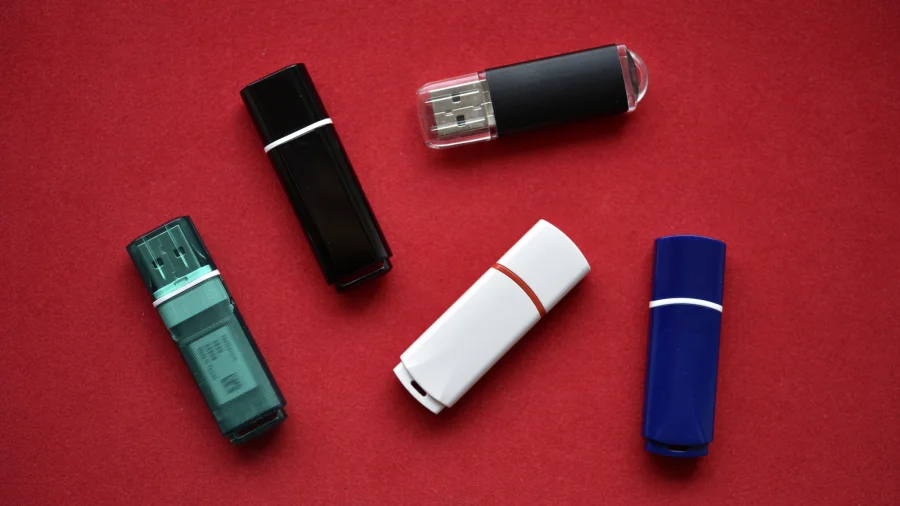
Walk past the USB drive rack at any electronics store today, and a quiet shift becomes obvious. The once-familiar row of tiny 1GB, 2GB and 4GB sticks has almost completely vanished, replaced by shelves full of 32GB, 64GB and even larger models. The original report confirms that smaller drives can still be found — but they rarely earn a spot on retailers' shelves anymore.
Where did the small flash drives go?
Small-capacity drives are not extinct. They live on in discount bins, online marketplaces and specialty suppliers. But mainstream stores have largely stopped stocking them as everyday items.
Retailers respond to what customers actually buy. Since most shoppers now expect a USB stick to hold large files, software installers and media libraries, the demand for ultra-low-capacity drives collapsed.
Why flash drive capacity keeps climbing
The engine behind this shift is the steady improvement in flash memory technology. Manufacturers have figured out how to pack more storage into the same compact physical space while keeping costs controlled.
As the cost of NAND flash memory falls per gigabyte, a drive that once seemed generous becomes the new baseline. The same retail price now delivers several times the capacity it did a few years ago.
The real reason retailers stopped pushing tiny drives
Shelf space is valuable, and stores prefer products that move quickly. A small 4GB drive may cost only a little less than a 32GB drive to produce, but it offers far less value—and far less margin on the shelf.
For retailers, stocking only larger drives simplifies inventory and matches customer expectations. The original story's observation that small drives are missing from shelves is the market doing exactly that.
What this means for budget-conscious buyers
For most consumers, the disappearance of small drives is a good thing. You now get significantly more storage for a modest amount of money, meaning fewer trips to replace a drive that fills up too fast.
The risk is that someone with only a tiny file to transfer may end up paying a little more than they would have for a minimal stick. But the price gap has become so narrow that most buyers are better off with the extra space.
Is there still a place for tiny USB drives?
Yes, but the use cases have narrowed. Legacy devices, embedded systems, firmware updates and simple document transfers still benefit from small storage. Some organizations also buy micro-capacity drives for secure, one-time use.
However, these are niche scenarios. They no longer justify prominent placement on retail shelves, where the average customer expects a drive that can handle photos, videos and backups.
The bigger storage trend behind the shift
This is not unique to USB flash drives. The same pattern appears across SD cards, external solid-state drives and even smartphone storage. Capacities rise, prices per gigabyte fall, and older smaller sizes quietly disappear from the mainstream.
It reflects a broader industry truth: storage technology improves in cycles, and consumers consistently adapt to bigger capacities faster than they expect.
The market logic that pushes flash-drive makers upward
For manufacturers, concentrating on higher-capacity drives also makes operational sense. Producing fewer product variants reduces complexity, while advanced manufacturing processes yield more storage chips per silicon wafer.
Rather than spending money on old packaging lines for 2GB drives, makers shift volumes toward the sizes that dominate demand. This economics-led focus keeps the entire market moving upward.
What to look for when buying a flash drive now
When shopping today, focus on your actual needs rather than the smallest possible capacity. If you mainly move documents and presentations, a mid-range drive is enough. If you regularly transfer photos and videos, choose a noticeably larger capacity.
Also consider read and write speeds, build quality and brand reliability. Capacity is only one part of the equation; a drive that fails to keep up with your workflow can be frustrating regardless of size.
Confirmed facts vs what remains unclear
What is confirmed: The original story states that small drives can still be found but rarely appear on retail shelves.
What remains unclear: The exact capacity threshold that retailers now consider "small," and whether manufacturers still produce those drives in meaningful volume. No specific data or company statements are available on those details.
Future outlook: will small drives ever return?
It is unlikely that tiny flash drives will make a mainstream comeback. As storage needs keep growing and manufacturing costs keep falling, the center of gravity will move further upward, making 64GB, 128GB and beyond the new normal.
That said, there may always be a small niche for ultra-low-capacity drives in industrial, academic or specialized applications. Just don't expect to see them displayed next to the latest USB sticks at your local store.
Our Take
The vanishing small flash drive is a healthy sign of technological progress. Consumers are getting more value per rupee or dollar, and the market is shedding products that no longer make economic sense. Still, the shift serves as a reminder that not every buyer needs the latest and largest storage option. The best purchase remains the one that matches your real workload — not the biggest number on the package.
Frequently Asked Questions
Why are small flash drives not sold in stores anymore?
Retailers mostly stock capacities that sell well. As flash memory prices have dropped and storage needs have grown, demand for very small drives has faded, so stores focus on larger capacities instead.
Are tiny USB drives completely gone?
No. They can still be found through online sellers, specialty shops and industrial supply catalogs, but they are rarely displayed in mainstream retail stores.
Does the end of small drives mean less choice for consumers?
Not really. Because prices per gigabyte have fallen, buyers can often buy a larger drive for only slightly more money, which usually serves them better than a tiny, easily outdated stick.
What capacity should I buy now?
That depends on your usage. For everyday documents and basic file transfers, a mid-range drive is fine. For photos, videos and backups, choose a capacity bigger than you think you need to avoid frequent replacements.